
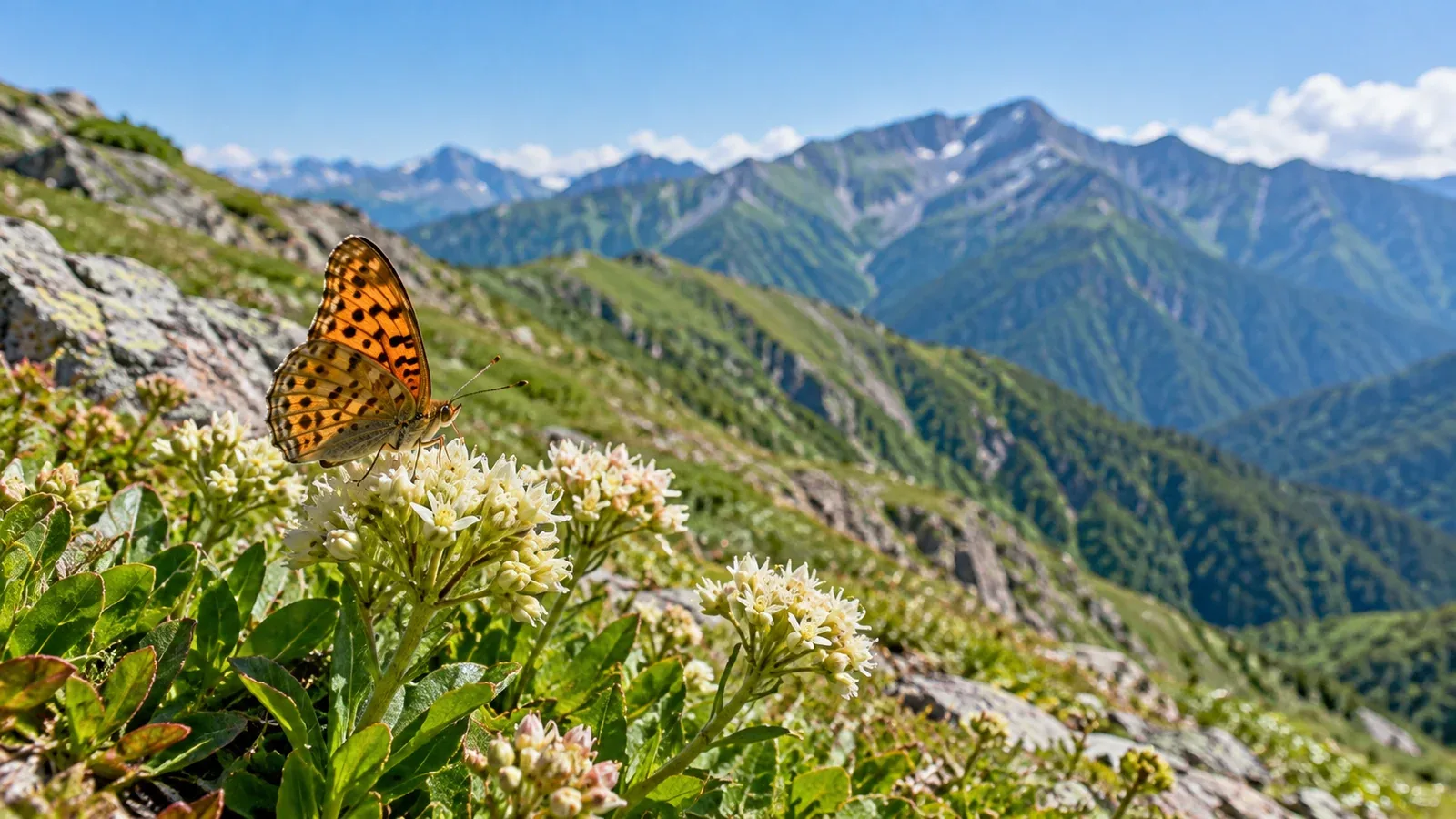
A butterfly settles on a flower out of the wind, and from somewhere near your feet you hear a chirp. To see more of the insects in Japan’s mountains, pay attention to sunlight, water, and flowers as well as the season.
Here’s what you might see from snowmelt through autumn, how to watch insects from the trail, and how to prepare for stings and bites.
How the insects change with the seasons
Insect activity depends on temperature, snowmelt, and the plants they feed on. On the same day, different flowers may be blooming at the foot of a mountain and on the ridge, drawing different insects.
Spring to early summer. Flowers start opening where the snow has melted. Bumblebees carry pollen from one flower to another. Compare slopes that lose their snow early and late, and you’ll see that blooms and insect activity can start at different times.
Early to midsummer. You’ll have more chances to see butterflies on grassland and along forest edges. Some depend on particular alpine habitats. In Japan, for example, the butterfly known as usubakichō is found only in Daisetsuzan. Pause somewhere sheltered and watch from the trail as butterflies fly or settle on flowers.
You may meet black flies and horseflies along streams. Pack long sleeves and trousers you can hike in comfortably. If you use repellent, check which insects it’s meant for and follow the label.
Autumn. In the grasslands of lower mountains you may hear crickets or katydids. Autumn darters spend the summer in places such as mountain forests, then return to lowland rice paddies and other breeding sites in autumn. Chestnut tiger butterflies head south in autumn and may stop at flowers along the way.
How elevation and vegetation shape insect habitats
Look at where adults can feed and larvae can grow, as well as the elevation. That makes it easier to work out where you might see different insects.
- Forest edges and grasslands on lower mountains. Where shade meets sun, look for butterflies and bees visiting flowers and listen for insects calling from the grass.
- Mountain forests and streams. Different insects live in leaf litter, dead wood, and running water. From a path along a stream, compare what you see by the water with what you see farther from it.
- Alpine grasslands and rock. Which insects you see depends in part on when the snow melts and whether the plants their larvae feed on grow there.
Vegetation and insects don’t change at the same elevations everywhere in Japan. In national and quasi-national parks, rules on capture vary by zone and species. Capturing any animal is prohibited in special protection zones. On a hike, observe from the trail and leave insects where they are.
Preparing for stings and bites
Think about where you’ll walk and what reactions you might need to deal with. A route along a stream calls for different preparations than a grassy low mountain or a hike with someone who has reacted to a sting before.
Hornets. If you see a nest or hornets repeatedly flying close by, leave quietly. Keep moving away without swatting them. If you’ve had a severe reaction to a sting before, ask your doctor about a plan before hiking.
Black flies. Their bites can itch or swell. Cover exposed skin. If you use repellent, follow the label for target insects, where to apply it, and when to reapply.
Horseflies. Clothing that covers your wrists and ankles helps near streams and other places where they occur. In tall grass, watch for ticks too. Check your clothes and skin when you get back. If a tick is attached, follow Japanese health guidance and seek medical help for removal rather than trying to pull it off by force. Get medical care if you develop a fever or other symptoms afterward.
Trouble breathing, a tight throat, or a change in alertness after a sting can be signs of anaphylaxis. In Japan, call 119 immediately. If the person has been prescribed an adrenaline auto-injector, use it promptly as directed.
Observing alpine insects
You can see butterflies feeding on flowers and bees coming and going by shrubs from the trail. Wait a little and you may see which flowers or spots they choose.
Choose where to stand and how far back to stay before you start watching. That makes it easier to avoid chasing an insect.
- Stay off the plants. Find a place to stop on the trail and watch without entering flower meadows or grass.
- Leave insects untouched. You can watch how wings and legs move when the insect settles on its own.
- Let them fly away. If an insect leaves, wait where you are or move to another spot. Leave rocks and fallen logs in place.
- Photograph from the trail. Use zoom and include the flower or the surroundings in the frame.
Packing for the places you’ll visit
On grassy trails and beside streams, keep clothing that covers your skin where you can reach it easily. If anyone in your group has a venom allergy, share their emergency plan before you go.
If you note the temperature, sunlight, and flowers where you see an insect, you can compare your observations when you return. A day when you see none can also tell you something about the weather or season.
Try it on your next hike
Look up one insect that’s active at your destination at this time of year using a visitor center or nature guide. On the trail, look or listen for it and record the date and where you found it, such as beside a stream or at a forest edge.
Sources
- Snowmelt and pollinators, alpine butterflies, and the movements of autumn darters and chestnut tigers (Japan Ministry of the Environment, Forestry and Forest Products Research Institute, and Kami City)
- Animal protection and capture rules in national and quasi-national parks (Japan Ministry of the Environment)
- Stings and anaphylaxis, repellents and tick precautions (Fukushima and Saitama prefectures, Public Health Agency of Canada, and Japan Ministry of Health, Labour and Welfare)
References and sources
- Japan Ministry of the Environment: What’s happening in Japan’s alpine zones?
- Hokkaido Regional Environment Office: The alpine butterfly usubakichō in Daisetsuzan
- Forestry and Forest Products Research Institute: Forests that support autumn darters
- Kami City: Chestnut tiger sightings and migration
- Japan Ministry of the Environment: Animal protection in national and quasi-national parks
- Fukushima Prefecture: Watch out for hornets
- Saitama Prefecture: Signs of anaphylaxis and emergency response
- Public Health Agency of Canada: Insect bite and pest prevention
- Japan Ministry of Health, Labour and Welfare: Tick-borne diseases