
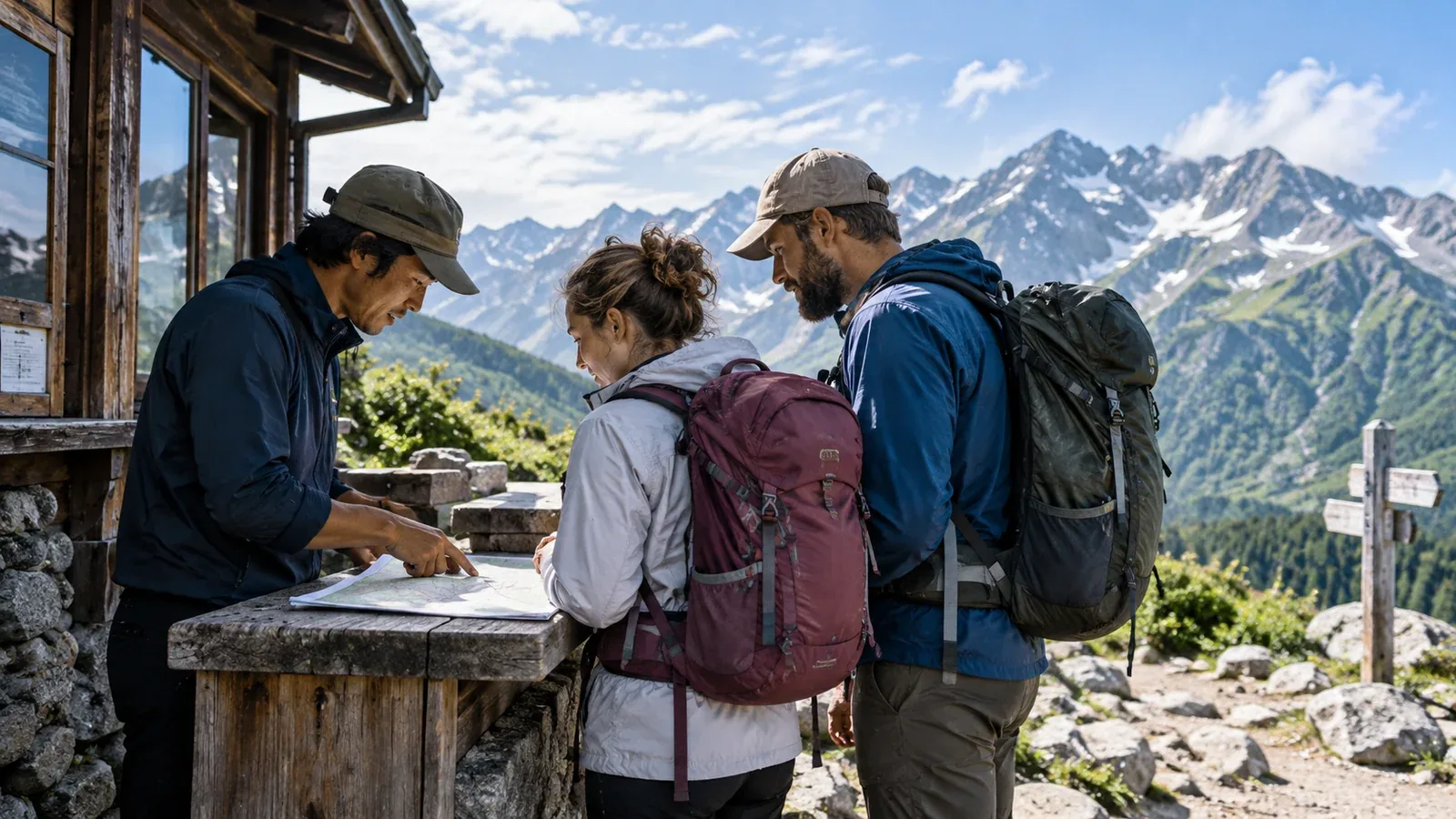
More visitors from abroad are hiking in Japan. On Mount Fuji or in the Northern Japanese Alps, you may hear English, Chinese, and Korean on the trail. Some hikers reach the trailhead before finding out about the local system for filing a climbing plan.
A climbing plan gives search and rescue teams the details they need to begin looking in the right place. It says who is hiking, which route they plan to take, when they expect to finish, and whom to contact in an emergency. Encouraging hikers to file can be difficult even when the forms are familiar and available in their language.
This guide explains how the filing system works and how visitors can find a way to submit a plan. It can also help local hikers explain the process to their companions.
What a climbing plan is
A climbing plan, also called a tozan-todoke, records the route, dates, group members, equipment, and emergency contacts before a hike. The receiving authority varies by area. Common options include filing with the relevant prefecture or police department and using an official drop box at the trailhead.
Whether filing is mandatory depends on the route. Local ordinances can require a plan and, in some cases, provide for a penalty for failing to file. Nagano, for example, requires a plan for designated trails. Gifu's ordinance provides for penalties in areas it covers. Authorities generally recommend filing for safety even where it is voluntary. Check the official instructions for your route.
Hikers who are unfamiliar with the system may not realize a filing process exists. Other countries may use different procedures or have no equivalent. A sign in Japanese at the trailhead can leave a visitor unsure what to do.
Finding forms and information in other languages
Availability varies by location. Mount Fuji publishes information in English, Chinese, and Korean, including its seasonal entry procedures. Check those entry requirements separately from instructions for filing a climbing plan. In the Northern Alps, Tohoku, and Hokkaido, the languages available at the trailhead can vary. Look online before you go. Hokkaido Prefectural Police, for example, publishes an English form.
Compass is an online service that can file climbing plans for participating areas. It lists options including English, Korean, and simplified and traditional Chinese. Check the official service for current language options and local instructions before relying on it.
Timing is another obstacle. Visitors often look up sightseeing and transport before traveling and discover the climbing plan at the trailhead. Finding the right form in advance gives you time to fill it in and check how to submit it.
How to help visitors file a plan
When you explain the procedure, tell hikers how the information is used in an emergency. These steps can help you walk someone through it.
Explain how the plan helps rescuers
A practical way to explain filing is to say that if someone goes missing, the plan tells rescuers where to begin looking. That makes its purpose clear whether filing is required or recommended on the route.
Show the available ways to submit it
- Trailhead drop box. If forms are available, fill one in and put it in the box. Foreign-language forms depend on the area.
- Online filing, including Compass where accepted. You can file from your phone in advance. Check the service's official site for language support and the local authority's instructions for accepted submission methods.
- In person, by mail, or by fax. Some areas accept plans at a designated police station, police box, or other office. Confirm the recipient and accepted methods before you send it or go there.
Go through the fields together
Hikers can prepare the usual details in advance. Use the fields on the official form for your route.
- Name and nationality. If requested, use the spelling and details from your passport.
- Start date and expected finish. Include the date and approximate time.
- Route. List the trailhead, summit or waypoints, and where you will come down.
- Emergency contact. A contact in Japan who knows your itinerary can be helpful, such as a local friend or your accommodation if appropriate.
- Equipment. Note whether you are carrying a tent or emergency bivouac gear.
Visitors may have no personal contact in Japan. A hotel, mountain hut, or tour guide may be an option. Confirm that the person or business can act as a contact and knows your itinerary before listing them.
What local hiking partners can do
Tell companions and hikers you meet about the filing system. If you are explaining it in English, try “This is the climbing plan form. In an emergency, rescuers can use it to find you.”
In some areas, trailhead volunteers and hut staff tell visitors how to submit a plan. These conversations can help people who cannot use the forms and instructions at the trailhead.
Hiking communities can help spread the information before people reach the mountains. If you are in touch with visiting hikers through a community like Nordwand, share the procedures for the specific route when you start planning.
What makes the system easier to use?
Translation helps hikers read the form. They also need to understand why to file, where to submit it, and how it will be used.
Availability of translated forms. Popular areas have added support in more languages. For lesser-known routes, check whether the available forms are in Japanese only.
Access to online filing. It is convenient to file digitally, but a trailhead may have no signal. The service may also require an account.
What happens after submission. Explain who receives the plan and how the information is used. Hikers may be more willing to file when they understand how it helps.
Trail managers, municipalities, and mountaineering organizations can work together on these issues. Check local government or tourism association sites for current initiatives and available forms.
What to do next
If you are hiking with someone visiting from abroad, check where and how to file the plan together before you leave. If you intend to file online, check the coverage and submit from a reliable connection. Confirm whether filing is mandatory or recommended and where the plan goes on the official site of the prefectural police or the authority responsible for your route. Nordwand's certified guide request feature and hiking community may help visitors learn the local procedures in advance.
Further reading
- National Police Agency annual mountain incident reports
- Prefectural police mountain rescue and climbing plan information
- Compass online climbing plan service
- Japan Tourism Agency visitor safety initiatives