
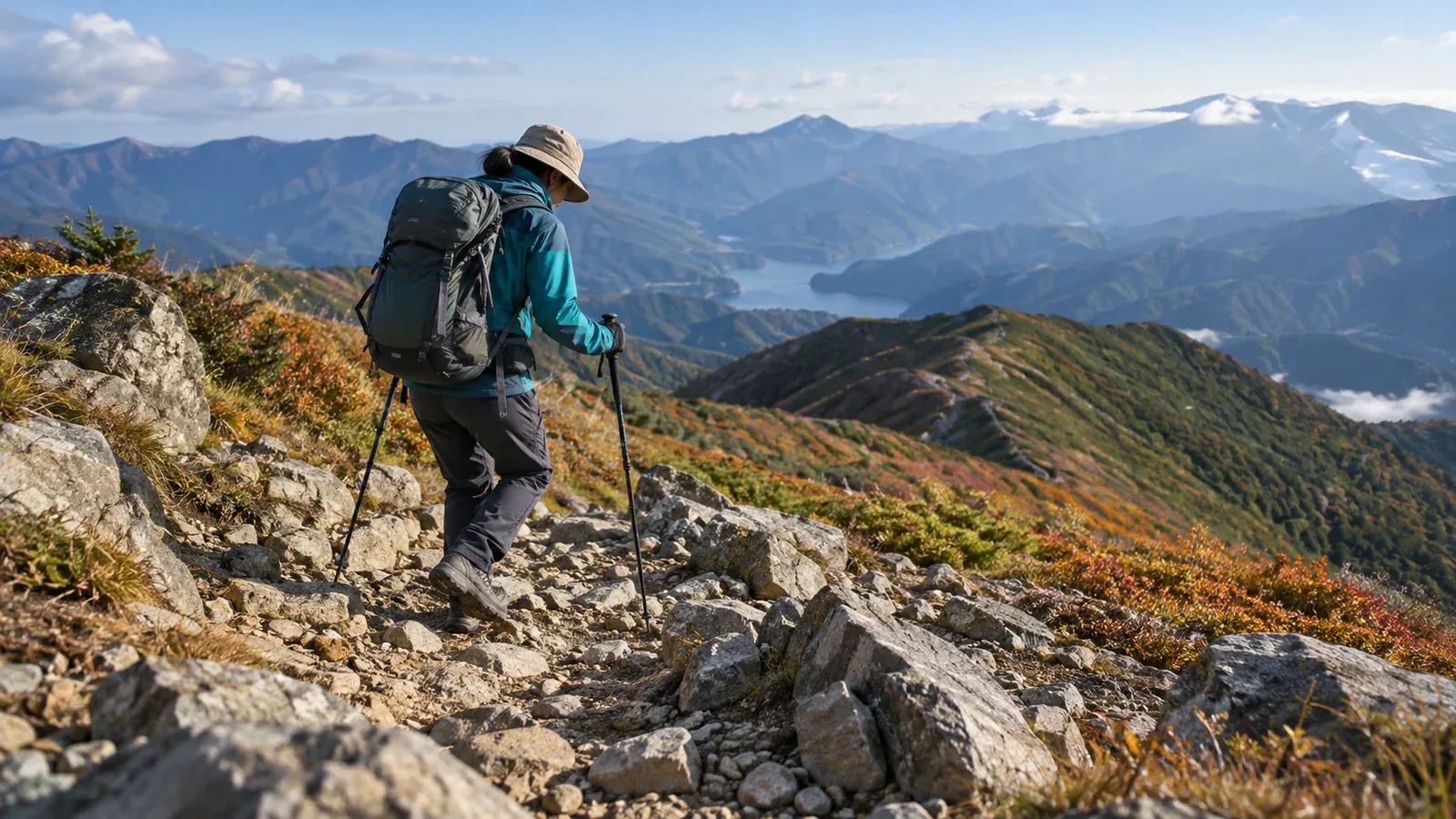
Finishing the climb does not mean the hard part is over. Nagano’s mountain safety bulletins describe people tripping or sliding on descents. Fatigue, fading daylight, weather and a slippery trail can all make it harder to control your next step.
Here is how walking downhill loads the legs, which changes to watch for and when to slow down, stop or change plans.
What changes when you walk downhill
On an ascent, your muscles raise your body against gravity. On a descent, they absorb energy and control how quickly your weight moves down with each step. The footing determines how much grip you have while doing this.
Research on downhill walking shows that the knee extensors, including the muscles at the front of the thigh, do much of this braking work. When your legs tire, it can become harder to control a step down or recover if a foot catches on something.
What fatigue can look like
Watch for changes in step length, toe clearance and where you are looking. These can vary by person and terrain.
Your steps get longer or less controlled. A big step down puts your foot farther from your body and may be harder to slow. Choose a closer foothold if you cannot land steadily.
Your toes start catching. When you are tired, you may drag a foot or fail to clear an uneven step. Repeated catches on roots or stones are a reason to slow down and stop in a safe place.
You look only at your feet. Check the next foothold and look several steps ahead from stable ground. This gives you time to choose a route around wet stone or a loose step.
When to pay particular attention
Watch how you move and what is underfoot. A tired hiker on loose or wet ground needs more time and room to stop.
When your legs start to tire
There is no fixed point in a descent when fatigue starts. Check before leaving the summit or hut, again before harder sections and any time steps become less stable. Shaky legs, repeated stumbles and pain are useful signals to stop and reassess.
When the ground changes
- Repeated uneven steps. Check the height and footing of each step. Give yourself room to land and stop.
- Wet soil, leaf litter and mossy rock. Slow down before entering. Leaves can cover smooth rock and roots.
- Sudden changes in slope. Pause on secure ground before going from a gentle path to a steep descent. Adjust your speed and steps before committing.
When your attention shifts elsewhere
The trailhead may be in sight while the last stretch still has roots and loose stones. Stop somewhere safe before using a phone. Give the descent your attention when talking, checking the time or hurrying to meet transport.
Walking and decisions that can reduce risk
Adjust your steps to the surface
Keep your steps short and controlled. Place each foot on stable ground and avoid taking a step so long that you cannot control the landing. Slow down before the steepest sections.
Use the foothold that gives you stable contact. A wet slab, loose stones and a firm path require different choices. Check the surface before transferring your weight. Turn back or choose a safe alternative if you cannot find reliable footing.
Use poles on suitable terrain. Poles can help with balance and may share some of the load. Check that the tips are secure before leaning on them. Put them away if you need both hands on rock, ladders or chains.
Decide early
Take a break in a stable place before tiredness affects every step. Drink and eat as needed, and reassess how steadily the group can walk before leaving.
Look at fatigue, the remaining descent, the weather and the time together. Any serious change can justify stopping or choosing an easier route. If someone can no longer walk safely, get help early.
What changes in autumn
As days shorten, wet leaves, colder temperatures and an early loss of light can coincide. Allow more time to get down and use a headlamp before you can no longer see the ground clearly.
Check local sunset times using the National Astronomical Observatory of Japan and work back from the time you need to finish. A valley or forest can lose usable light before sunset, so leave a margin and set a turnaround time.
Before your next hike
Before starting down, ask whether everyone can still place their feet steadily and how much time and elevation remain. Take an early break or shorten the route if you notice repeated stumbles. Check trail reports before departure and save your actual moving and finish times for future planning.
References
- National Police Agency mountain incident statistics
- Nagano Prefecture and prefectural police mountain safety bulletins
- National Astronomical Observatory of Japan sunrise and sunset data
References and sources
- National Police Agency — Japan’s 2025 mountain incident figures
- Nagano Prefecture — November 2025 mountain safety bulletin
- Nagano Prefecture — Hiking safety guidelines
- Research on the mechanics of uphill and downhill walking
- Research on knee extensor work during downhill walking
- National Astronomical Observatory of Japan — Sunrise and sunset calculator