
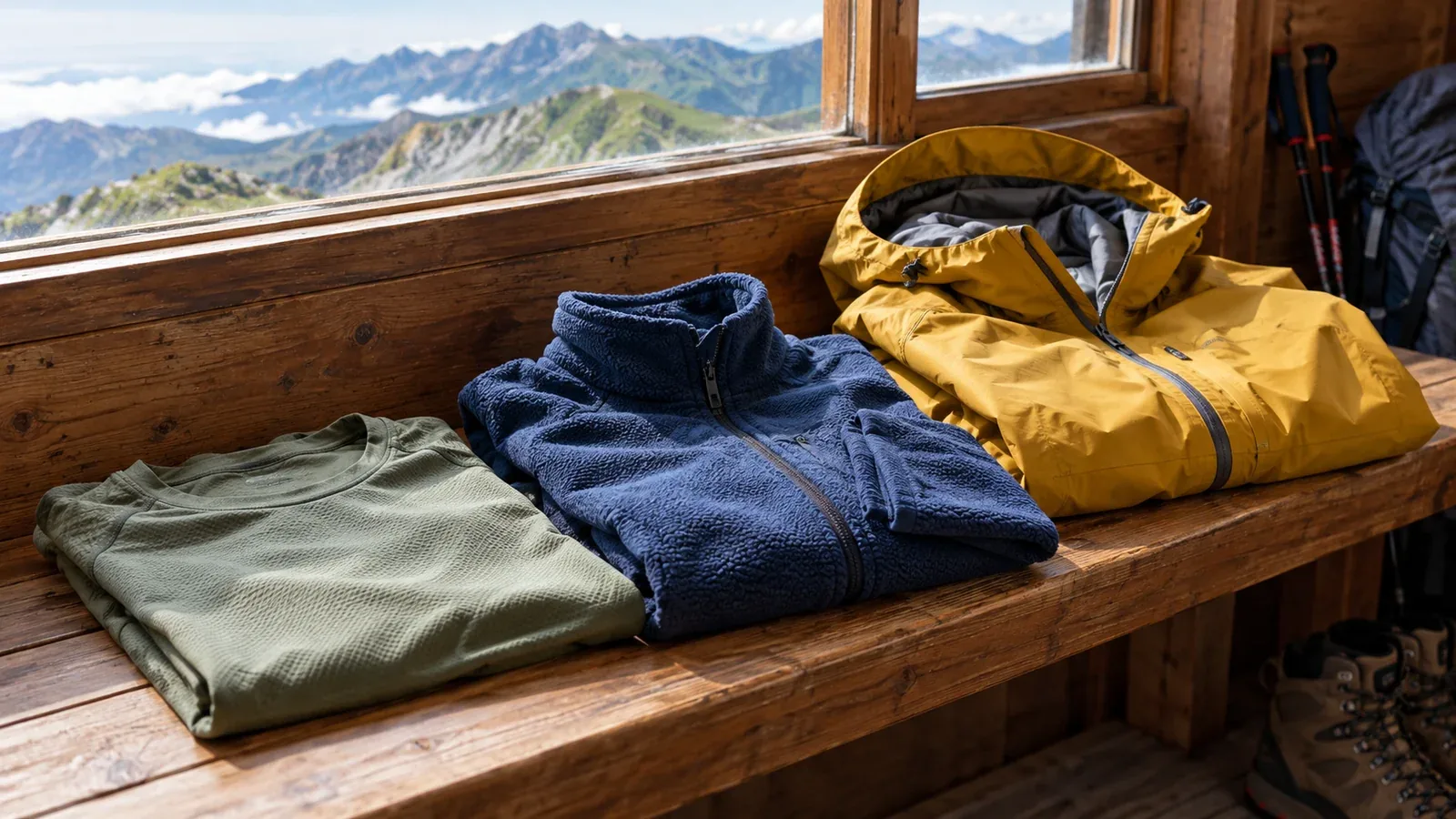
Layering means wearing clothing with different jobs to regulate body temperature on a hike. Instead of just dressing more heavily when it is cold, give three layers separate roles in handling sweat, wind, rain and changes in temperature. Understanding this makes a difference to comfort and safety on the trail.
Conditions can change quickly in the mountains. You might sweat heavily uphill and then be exposed to strong wind as soon as you reach a ridge. A single cotton T-shirt can stay damp and keep drawing heat away, contributing to hypothermia. Layering lets you manage that risk by taking clothing off and putting it back on.
What each of the 3 layers does
The basic system consists of three layers: base, mid and outer. Each has a distinct job.
The base layer, next to the skin, moves sweat away. Materials such as polyester or merino wool manage moisture and dry relatively quickly. Cotton dries slowly and loses much of its insulation when wet, making it a poor choice for hiking.
The mid layer holds warmth. Fleece, down and synthetic-insulated jackets belong here. Adding or removing this layer is the main way to adjust for temperature and how hard you are working.
The outer layer is a shell that keeps out wind and rain. Rainwear made of waterproof, breathable fabric such as Gore-Tex keeps raindrops out while allowing some water vapour from inside to escape.
Layering works when you adjust it as you go
More important than having all three layers is getting into the habit of adding and removing them as your activity changes.
At the start of an uphill walk, you may still feel cold and choose to wear a mid layer. After about 10 to 15 minutes, when you begin to warm up, remove it before you sweat and stow it in your pack. Take it off when you start to feel warm. Once sweat soaks the mid layer, it insulates less well.
When stopping for a break, put the mid layer back on before you cool down. You generate much less heat at rest and can cool faster than you feel. On a ridge or summit, adding a shell over the mid layer to block the wind can make a substantial difference.
Choosing layers for the season and mountain
Your layering system changes with season and elevation.
On lower mountains in summer, at roughly 1,500 m or below, a base layer and shell are often the two main layers. High temperatures mean you may seldom wear a mid layer while walking. Carry a light fleece or wind shell for an afternoon shower or a sudden drop in temperature.
The mid layer matters more in autumn and winter and at higher elevations. Ridges are often much colder and windier than the plains. On autumn and winter hikes, a down jacket is commonly carried as a spare insulating layer to put on when you stop.
Down is light and warm but loses much of its insulation when wet. Synthetic fill retains some warmth when wet and can be useful in a rainy season or on routes along streams.
Common beginner mistakes
Even when you understand the system, there are easy mistakes to make on the trail.
Waiting too long to take a layer off is a common one. A base layer soaked with sweat can leave you prone to cooling throughout the day. Adjust as soon as you start getting warm.
Relying on a shell for warmth is another mistake. A shell blocks wind and rain and provides little insulation of its own. Putting on rainwear when you feel cold can help temporarily. For lasting warmth, wear an insulating layer under it.
Packing layers where you cannot reach them makes adjustments harder. Keep your mid layer and shell at the top of the pack or in an accessible external pocket.
Useful terms when choosing fabric
These are some of the terms you will see when choosing equipment.
- Quick drying: the fabric dries quickly after taking up sweat, a priority for a base layer.
- Wind resistance: the fabric lets little wind through. Wind shells and outer layers serve this purpose.
- Waterproof and breathable: the fabric keeps liquid water out while allowing water vapour to escape. Gore-Tex is one example.
- Insulation: the material helps retain body heat. Down and synthetic fill provide insulation in mid layers.
These functions are difficult to get from one garment. Layering gives each garment a separate job.
What to do next
Check your pack for something to cover all three roles: base, mid and outer. If you only have cotton shirts, start by trying a quick-drying base layer. For advice specific to the season and mountain, ask local managers or a hiking shop. Nordwand can also help you find a certified guide or partner shop to discuss equipment.