
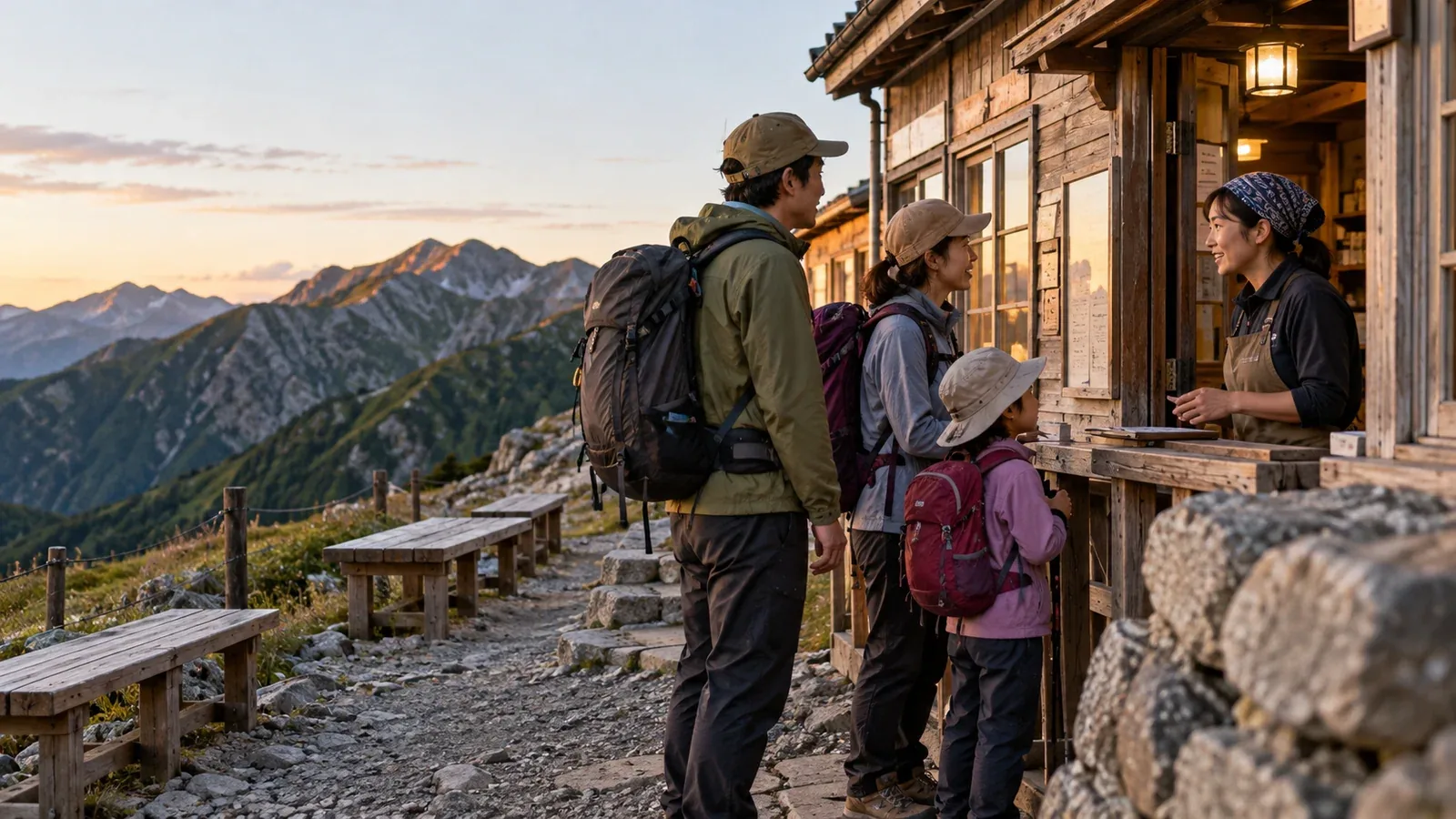
Before booking a family hut stay, check which ages and dates the hut can accept. Bedding, meals, lights-out, toilets and arrival times vary. Tell the hut what your family needs in advance.
Have the children’s ages and numbers, meal and bedding needs and any questions about facilities ready. Check the official booking form and guidance and use the hut’s preferred way to contact them.
Check which ages and dates the hut accepts
Use the hut’s official guidance to check the age policy, dates and how to book. Some huts have conditions for babies and toddlers. If the booking form doesn’t let you enter the child’s age, ask the operator before booking.
Even if children can stay, check the room type, sleeping arrangements and location of the toilets. Consider whether the altitude and walk to the hut suit your family.
Six things to share when booking
In addition to dates and headcount, check the following six points. If the form doesn’t cover them, send a short note through the contact method the hut lists.
1. Ages and number of children
Say, for example, “two adults and one seven-year-old.” Check the rate category and how many people need beds and meals.
2. Bedding and room preferences
Say whether your child needs separate bedding and ask if the room is private or shared. Even if a plan allows shared bedding, Japan’s Children and Families Agency advises putting babies under one year on their backs on a separate firm, flat sleep surface in the same room as an adult. Ask before booking if an appropriate space is available.
3. Food allergies and dietary restrictions
For allergies, medical or religious restrictions, name the ingredients to avoid and say whether you need to avoid cross-contact from shared utensils. Leaving out an ingredient and preventing cross-contact require different measures. Ask what the hut can provide. If it can’t meet your needs, ask about bringing food and consider another hut if needed.
4. Lights-out and wake-up times
Check lights-out, breakfast and early departure rules. If bedtime or nighttime toilet trips are a concern, ask about room or bed placement and what the hut can offer.
5. Facilities you need to use
If you need hot water, somewhere to prepare formula or baby food, or a place to wash bottles, ask where and when facilities are available. Bring what you’ll need and check how to handle rubbish and diapers.
6. Health conditions that matter for the stay
Share any medical condition or support needs that affect the hike or stay. When asking your child’s clinician, share the hut’s altitude and itinerary. Make sure family members know about medication and what to do in an emergency.
What to check before the trip
Once the booking is confirmed, check four things before you leave.
Changes and cancellations. Check when fees apply and how to change or cancel the booking.
Calling about delays or emergencies. Save the hut’s contact details and check where phones might work and how to give your location. In the mountains in Japan, call 110 or 119 if emergency rescue is needed.
Expected arrival. Give a realistic time with breaks and check that you’ll make check-in and dinner. If you’re running late, contact the hut early as instructed.
Toilets at night. At check-in, show your child the way to the toilet and how to use the lights. An adult should go along after dark and light the ground according to the hut’s rules.
Check what the total includes
Children’s rates vary by age, meals, bedding and room type. Check the total, including meals, private-room fees and taxes, and how to pay.
Iōdake Sansō, for example, explains how the rate for preschool children depends on meals and whether they need separate bedding. Each hut sets its own terms. Check what’s included in the current rates for your date.
Share the booking details with the family
Share what you told the hut, its response, cancellation terms, arrival plan and contact information. Make a backup plan for poor weather or if your child is unwell.