
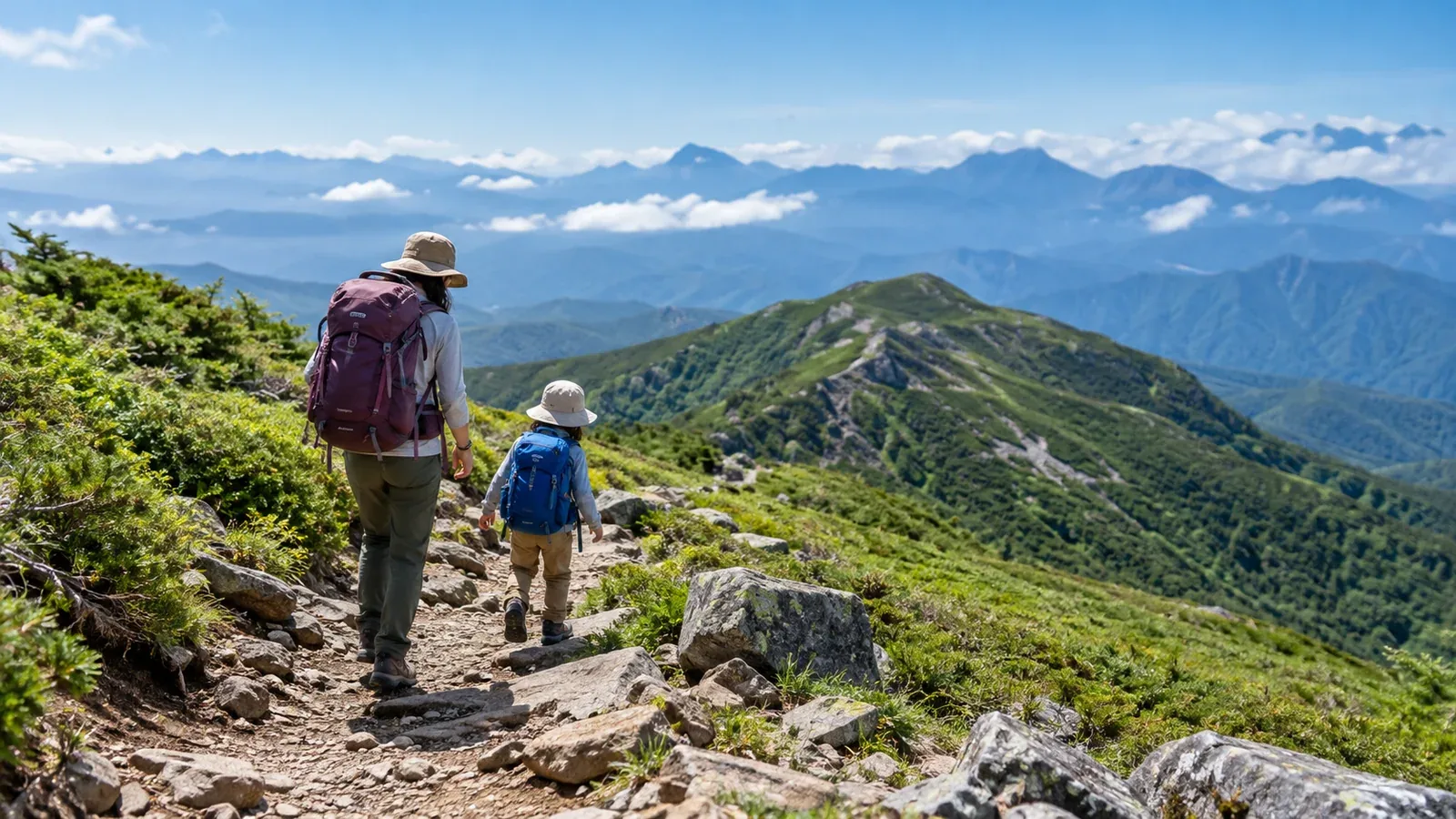
For your first family hike, pick a short trail where you can easily turn back. Leave time for the kids to look around and rest, and plan to return in daylight.
Think about how far your child normally walks and whether they can keep a steady pace after slopes and steps. Age is a rough guide. Experience and stamina vary widely among children of the same age.
Start by seeing how things go in a nearby park or on a woodland trail. The age ranges 3–5, 6–8 and 9–12 can help you choose a route and a goal.
How to estimate hiking time with children
Published trail times are estimates. The assumed pace and conditions, and whether breaks are included, depend on the source. Estimate your time using the child’s pace and allow for breaks, looking around, meals and the descent.
Base your estimate on experience on similar trails. Think back to the time you took, your pace going up and down, and how often you stopped. Add a cushion. For your first hike, choose a short trail and an early turnaround point.
Children may have trouble putting tiredness into words. If their gait, expression or pace changes, stop somewhere safe for water and a rest. If they still seem different from usual, rethink the plan there.
Around ages 3–5: Start with a short walk
At this age, aim for a fun place your child can reach comfortably. Start on a park-like trail and get a feel for your child’s pace while looking for colorful leaves or listening to birds.
What to look for in a trail
- A maintained path where it is easy to see the ground
- Gentle slopes and little climbing or descent
- A way to avoid rock, chains, steep descents and exposed sections
- A starting point near the parking lot or bus stop
- A place to turn back before the child gets tired
Start by walking a short section and turn back while everyone has energy. Allow time for breaks, food and stops to look at insects or plants.
On descents, even a small step can trip someone up. Take one step at a time and rest if your child gets tired or sleepy. If you use a child carrier, follow the manufacturer’s fit and use requirements and choose a path on which the adult carrying it can stay sure-footed with the added weight.
Around ages 6–8: Pick a small goal the child can walk to
Some children start to enjoy walking farther and reaching a goal on their own. Pick a visible milestone along the way, such as a viewpoint or bridge, and build gradually from paths they’ve already walked.
What to look for in a trail
- A modest increase in distance or elevation from familiar routes
- Enough time to walk, take breaks and get home
- A way to avoid steep rock and chain-assisted sections
- A clear goal the child can picture, such as a viewing deck or bridge
- Something fun afterwards, such as a park, if you still have time and energy
Bring shoes that fit and rainwear. If your child wants to carry a small backpack, keep it light. Before you leave, check that their toes don’t hit the front and their heels don’t lift when walking downhill.
Leave time for the descent. Even if you arrive early at a viewpoint or summit, keep the pace easy on the way down. Rest in a safe place. When the child is tired, take shorter steps and check slippery spots and steps one by one.
Around ages 9–12: Learn to make route and weather decisions together
Consider a longer hike once the child can comfortably walk shorter routes on similar ground. Look at how they step on descents, whether they can tell you when they’re tired and what you’ll do if the weather changes.
How to widen your choices
- A route that is easy to trace on a map, with junctions and turnaround points you can explain
- Terrain where the child can build experience step by step while avoiding steep rock and chain sections
- Longer outings or hut stays after experience on similar terrain
- A route selected by its actual distance, elevation change, surface and current trail conditions
Start with the map, check the forecast together and look for places to turn back. Talk about why you chose this route and what you’ll do if the weather changes. An accompanying adult makes the final decision.
Watch for changes in how your child feels. Agree before leaving that they should tell you right away if they are thirsty, cold or unwell. If they seem different from usual, stop somewhere safe, check on them and turn back. In emergencies such as changes in consciousness or breathing, call 110 or 119 for rescue in Japan.
What to check before choosing a route
After narrowing down a route, get current information on three things.
1. Trail conditions and restrictions. Use official park or local government guidance for opening seasons, access restrictions and closures due to construction or natural hazards.
2. Weather. Check Japan Meteorological Agency forecasts and advisories the day before and the morning of the hike. Turn back early if conditions worsen. If you hear thunder, leave summits and ridges and seek safe shelter promptly.
3. Rest stops and an early return route. Find toilets, places to rest and early return options on the map. If you’re using a mountain hut, ask the operator about opening dates and hours.
Find your first hike
Look for a nearby park or nature trail and select a short out-and-back walk with clear places to rest and an obvious way back. At home, ask your child what they enjoyed and when they got tired. Their answers can help you choose the length and stops for next time.