
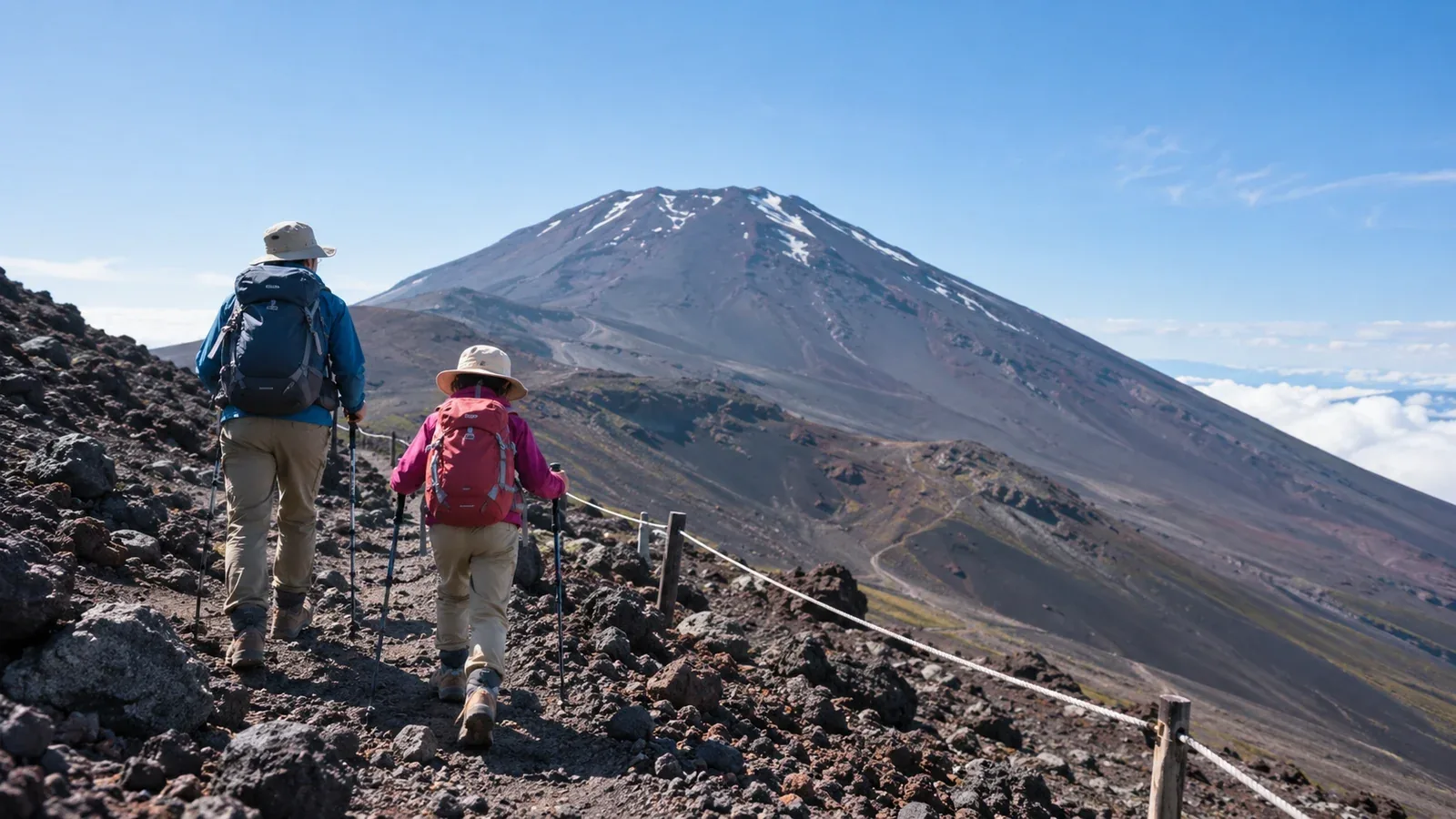
If you plan to climb 3,776 m Mt. Fuji with a primary-school child, account for long climbs and descents, loose gravel and rock, high altitude and fast-changing weather. Plan a shorter option so the child can descend safely on their own feet.
Think back over the trails they’ve walked. Agree on the route, gear and where to turn back if symptoms develop.
What kind of trails has the child walked before?
Mt. Fuji’s difficulty involves more than elevation gain. Some routes have slippery gravel descents, rocky steps and long walking sections. Check these points against how your child normally walks.
- They can walk on similar terrain on their own. Try climbing and descending over rock, loose gravel and steps. See what pace and pauses let them walk the route comfortably.
- They can tell you if they feel unwell. On regular hikes, make it easy to tell an adult right away if their feet hurt, they’re tired or they feel ill.
- They understand the option to turn back. Make sure children and adults know the plan can change because of weather or how anyone feels.
Base your decision on experience with similar footing and the child’s condition that day. If they have a chronic condition or previous symptoms at altitude, tell their clinician the highest point, sleeping altitude and itinerary and ask for advice in advance.
Preparing for altitude and recognizing symptoms
Air pressure drops at altitude and the body takes in less oxygen. Children are affected just as adults are and may find it harder to report a headache, nausea or other symptoms.
The official Mt. Fuji climbing site recommends resting for about one to two hours near the fifth station before setting out. Each route begins at a different altitude. Avoid rapid gains over the whole itinerary and check how the child feels both during the stop and after you start.
Ask how the child feels and look for these changes.
- They say they have a headache, feel dizzy or feel unwell
- They lose their appetite, feel nauseated or vomit
- They become unsteady or respond more slowly
- They are unusually tired or their mood changes
If symptoms appear after going higher, stop ascending and check the child in a safe place. If symptoms are severe or worsening, the child can’t walk straight, or breathing or consciousness changes, call for rescue promptly. Follow the dispatcher’s instructions and descend if safe. In Japan, call 110 or 119.
Make it possible to drink during long walks and gain altitude gradually at an easy pace. Ask a clinician before giving a child medication to prevent altitude illness.
Gear that fits your child
Try clothing and packs at home to check that straps, sleeves and hems allow free movement. Check that the shoes fit.
Shoes and socks. Try both shoes with the socks the child will wear. Check for forward slip, toe contact and heel lift on descents. Choose shoes that let them walk steadily on rock and loose gravel.
Warm layers, wind protection and rainwear. Wind, rain and stops can make you cold at altitude even in summer. Keep warm layers, waterproof top and trousers, a hat and gloves within reach.
Bring a brimmed hat, sunglasses and sunscreen for sun exposure. Check the official gear list for other essentials such as drinks, trail food, a map and a headlamp.
Choose a route and agree when to turn back
Choosing a route and hut
The four main routes are Yoshida, Subashiri, Gotemba and Fujinomiya. Trailhead elevations range from Gotemba at 1,440 m to Fujinomiya at 2,400 m. Routes differ in length, descent, huts, first-aid facilities and return transport. Check the official climbing site for your year’s season, access restrictions, bookings and procedures.
An overnight stay can spread walking over more than one day. Sleeping at a high hut after a rapid ascent also carries a risk of altitude illness. Check the hut’s altitude, arrival time and booking, and allow time lower down.
Agree in advance when to turn back
Set a turnaround point and time so everyone can return in daylight. Check junctions on the descent and plan around the last bus and gate rules.
Review the plan and turn back in the situations below. If you hear thunder, leave summits and ridges and promptly seek safe shelter.
- The child has a headache, nausea or unusual fatigue
- Visibility drops, winds strengthen or a thunderstorm approaches
- You can no longer make the planned descent time or return transport
- The child says continuing is hard, or they are unsteady on their feet
Share turnaround conditions with the family before you go, so you can return even if you don’t reach the summit. If anyone reports a change in how they feel, stop and check first.
Start by checking on a shorter hike
On a nearby hill, see your child’s pace, how they feel after rests and how they step downhill. When planning Mt. Fuji, check your ascent and descent routes, accommodation, return transport and the latest opening information together.
References and sources
- Official Mt. Fuji Climbing Site: Trailheads and route comparison
- Official Mt. Fuji Climbing Site: Health and safety
- Official Mt. Fuji Climbing Site: Things to know before climbing
- CDC Yellow Book: Traveling Safely with Infants and Children
- CDC Yellow Book: High-Altitude Travel and Altitude Illness
- Japan Meteorological Agency: How to stay safe around lightning
- Government of Japan Public Relations Office: Preventing mountain accidents