
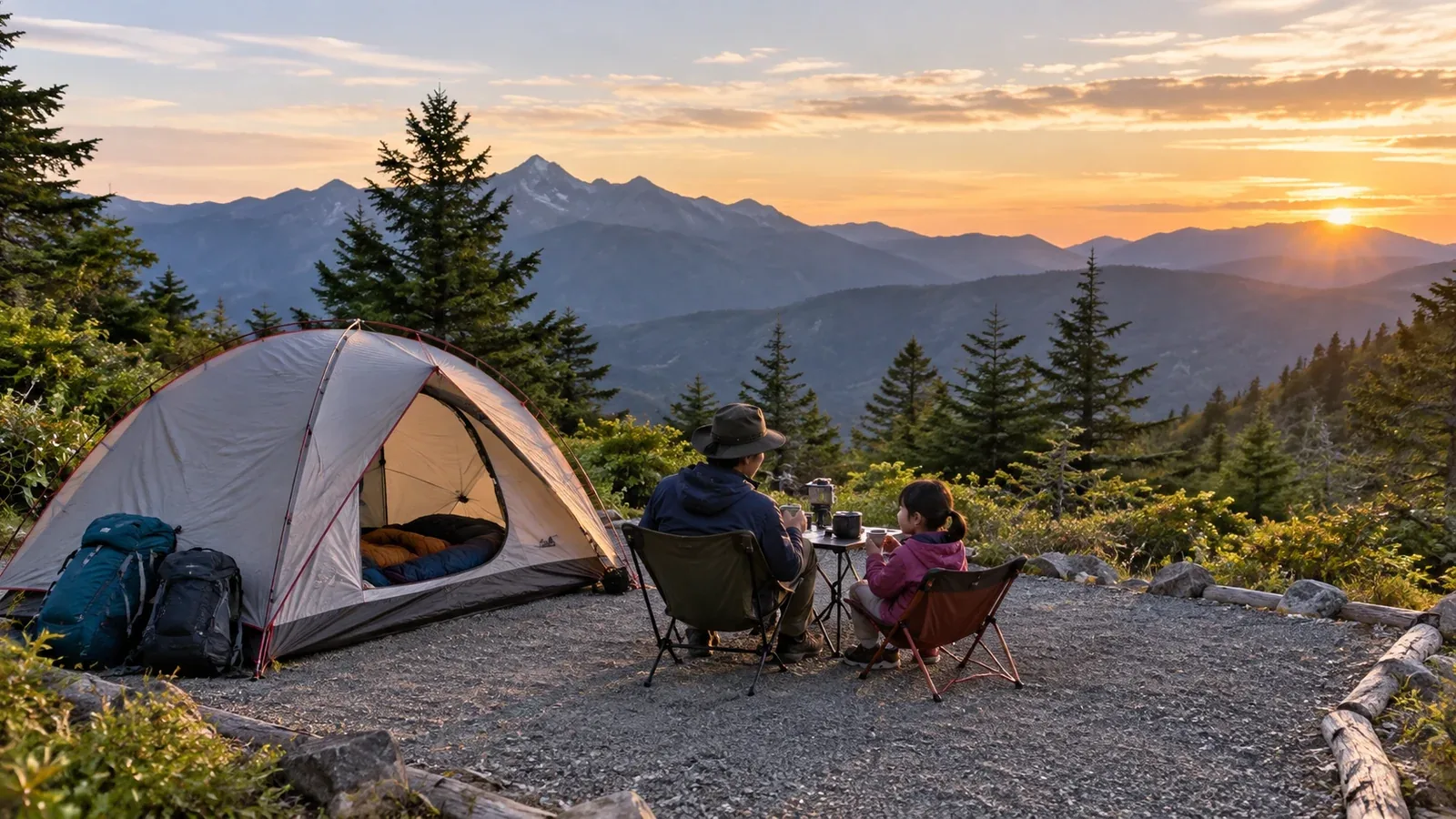
Before sorting sleeping bags and gear for your first camping trip with children, decide where you’ll stay and how you’ll get back. Start with a short approach and a site where you know how to reach toilets and shelter at night.
A developed campground at the foot of a mountain, a designated campsite near a hut and a ridge campsite differ in approach and overnight conditions. Compare them with your child’s experience and health in mind.
What to look for in a first campsite
Check four things when considering a site.
A short approach. Pick a walk that works with your gear, the child’s pace and breaks. Adults can split the heavier items so the family still has energy to set up and return.
An early return and a place to shelter. Check how to leave if someone feels unwell or weather changes and where to shelter from severe weather. Look for gates that close and trails that are difficult after dark.
Drinking water, toilets and a way to call for help. Check whether the water is safe to drink and available at your times, the route to the toilets at night, phone reception and how to contact the operator.
Protection from cold and wind at night. Check altitude, the overnight forecast and wind. Pick a season and facilities you can manage. Even at low elevation, follow the operator’s directions and avoid flood-prone riverbanks and poorly drained ground.
Compare three types of campsite
Compare how the sites are managed, how hard it is to reach them and what shelter is available.
Developed campgrounds near the foot of the mountain
A campground you can drive near or reach on a short walk is an option for a first stay. Check when staff are available, drinking water, toilets and rules for access or walking around at night. If the weather and everyone’s condition allow, take a short walk nearby the next morning.
Designated tent sites near a mountain hut
Even by a hut, facilities for tent users vary: water, toilets, shops and shelter. The Seitaisō site, for example, is a short walk from its trailhead, but the trailhead is above 2,100 m. Alongside the walking distance, check elevation, nighttime temperatures and camping reservations.
Designated sites on a ridge or long-distance trail
A designated site on a ridge or above the treeline takes more effort in strong wind or when carrying your water. For the first night, choose somewhere sheltered with an easy return.
Three checks to narrow down the options
Once you have a candidate, check whether you can walk there, set up and get back the next morning.
1. Use your child’s walking experience.
Think about when your child got tired on a day hike over similar ground. Try a short, safe walk with the planned load and keep the child’s pack light. Choose a distance that leaves energy to pitch the tent and return.
2. Check nighttime conditions and sleeping arrangements.
Check the forecast and facility guidance for nighttime temperature, wind and rain. Match sleeping bags and mats to those conditions and pack dry replacements. For a baby under one, Japan’s Children and Families Agency recommends a separate firm, flat sleep surface in the same space as an adult, with the baby on their back. Choose another place to stay if you can’t set that up.
3. Check rules and booking.
Check where tents are allowed, booking, fees, hours, fire rules and rubbish disposal. Use fuel-burning equipment outdoors in a permitted, well-ventilated area. Keep it out of the tent to prevent carbon monoxide poisoning.
When to choose another site
If any of the following apply, choose an easier place or another day.
- Too long a walk with gear. Look for somewhere you can reach before your child tires.
- Uncertain drinking water. Check if you can carry enough and whether places to fill up are open.
- Unclear nighttime toilet access or footing. For a first stay, choose a site with usable facilities close by.
- Exposed ridgeline or no safe shelter. If strong wind or lightning is forecast, change the destination or postpone.
- Heavy rain or rising water. Be especially cautious by rivers and in low spots, and stay home if bad weather is forecast.
Decide when to leave without camping
Before you go, talk about when to cancel, when to turn back and where to shelter at night. If the child’s color, responses or gait changes, stop somewhere safe and check how they’re doing.
If you hear thunder or otherwise know lightning is approaching, leave the tent and promptly seek the safe building or hard-topped vehicle you identified in advance. Consider postponing when strong winds or heavy rain are expected. For abnormal breathing, changes in consciousness or another emergency, call 110 or 119 in Japan and follow the dispatcher’s directions.
Confirm the site and the way back
Pick a site and ask the operator where pitching is allowed, how to book, where to find drinking water and toilets, whom to call and where to shelter. Plan to arrive and set up before dark, with a way to leave early for weather or health.
References and sources
- Japan Consumer Affairs Agency: Staying safe outdoors
- Japan’s Ministry of the Environment: National park etiquette
- Seitaisō: Hut and campsite information
- Japan Meteorological Agency: How to stay safe around lightning
- Japan Children and Families Agency: Helping babies sleep safely
- Government of Japan Public Relations Office: Preventing mountain accidents