
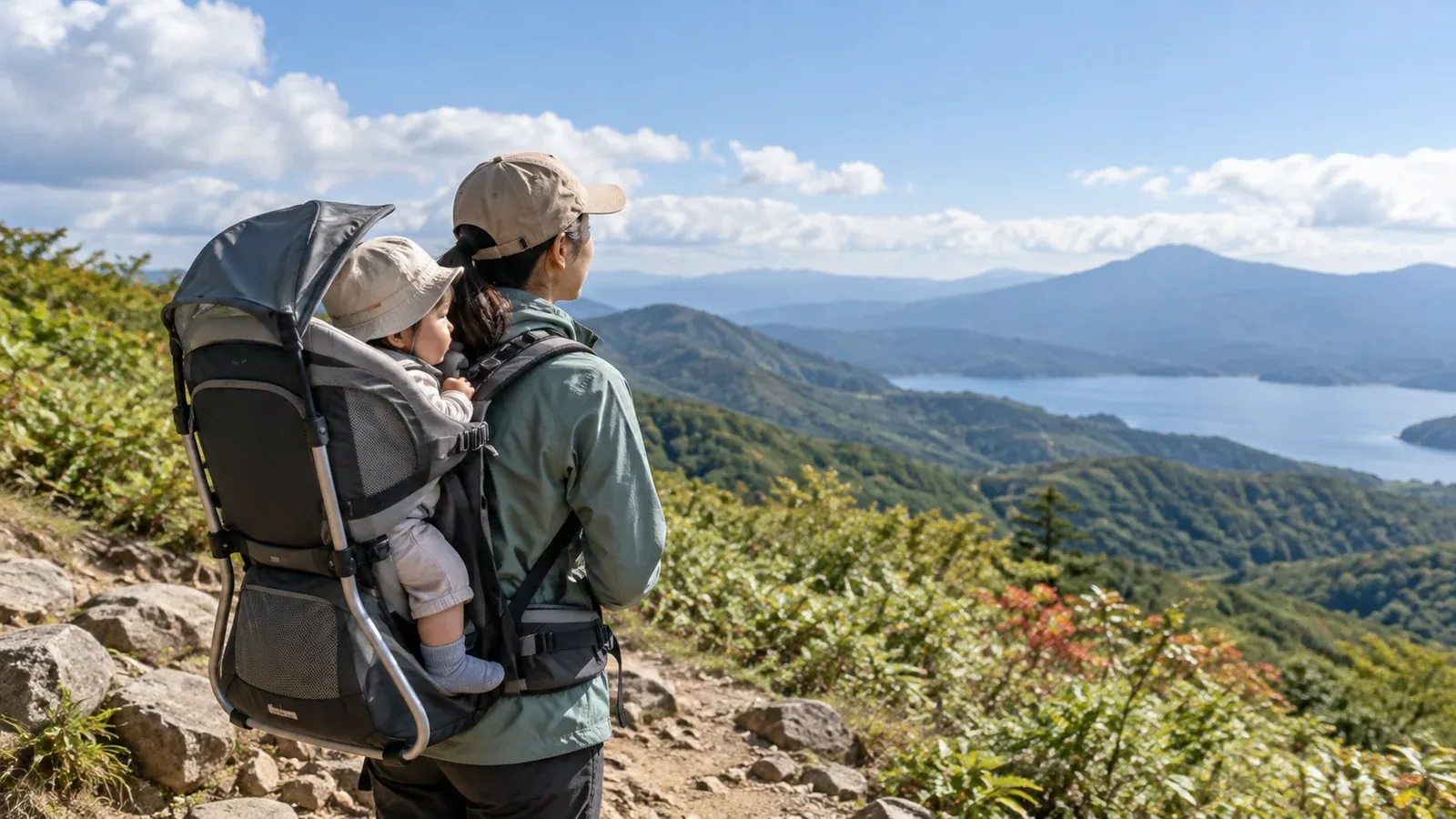
Before taking a baby for a walk outdoors, check their development and health, the carrier’s requirements and the route. Falls and positions that interfere with breathing matter even on flat ground.
For a first walk, pick a place close to home or somewhere you can easily return from. A baby can’t tell you they’re cold or short of breath. Check their face, breathing and position frequently.
Age, development and the carrier’s requirements
Read the instructions for age, weight and developmental requirements. Check how well the baby can support their head and body. Use the carrier only once it meets all the conditions for your child.
Even with good head control, sloping ground can change the adult’s balance and the child’s position. Practise fitting the carrier and checking the child’s position on level ground before choosing a route.
Osprey’s Poco and Poco Premium, for example, require a child to be at least six months old and able to sit upright unaided. They also set limits for child weight and total load. Check the manual for the model you’ll use. If your child was born prematurely, has a respiratory or other condition, or you have concerns about development or health, tell their pediatrician which carrier and route you’re considering and ask in advance.
Soft and framed child carriers
Models differ in intended use, fit and which children they can carry. Check the instructions even for a familiar carrier to see if it’s suitable for where you plan to go.
Checks when using a soft carrier or sling
Following the Consumer Affairs Agency and American Academy of Pediatrics guidance, check your baby’s position and breathing while fitting the carrier and during the walk.
- Keep the mouth and nose clear of fabric and the adult’s body, with the face visible
- Make sure the chin isn’t pressed into the chest and the position allows free breathing
- Fasten buckles and straps as shown in the manual and check that the child can’t slip down
Checks when choosing a framed carrier
A framed carrier has a seat and restraints. Its added weight changes the adult’s balance. Some models put the child’s head above the adult’s, so watch for branches and low roofs.
Practise with the carrier itself and check the following.
- Who can use it. Check the model’s limits on age, weight, position and development and the maximum combined weight of the child, gear and carrier.
- Sunshade. Check how to use it so it gives shade, lets air circulate and leaves the face visible for breathing checks.
- Child restraints. Adjust and fasten them as directed each time and check that the child stays in position.
- Adult hip belt and shoulder straps. Adjust them to the person carrying the child and practise walking comfortably on level ground.
Fit, adjust and remove the carrier on flat, stable ground. If bending forward while using a soft carrier, support the child with your hand, and never leave a child alone in a carrier.
Choosing the route
Carrying a child changes visibility and balance. Even on familiar ground, check that you can walk steadily without using your hands and can turn back along the way.
Trail conditions to avoid
- Chains, ladders and unstable rock. Avoid terrain where you’d need your hands and any steep, slippery paths.
- Going rapidly to high altitude. The CDC notes that children can be affected by high elevation and that very young children have difficulty communicating symptoms. Ask a pediatrician before planning to go to high altitude.
- Exposed ridges. Pick a route with shelter from sun, wind and rain or a quick way to return if conditions change.
- No quick way back. Pick somewhere you can leave early if the baby seems unwell, the adult is tired or the weather shifts.
Start by considering a short nature trail
Choose a short, maintained section with gentle slopes and an easy way to turn back. Check current information from the operator on footing, closures, places to rest, toilets and transport home.
Weather, feeding and emergencies
Check the baby and the person carrying them on the day, as well as temperature and wind.
Temperature and sun. A baby in the carrier may feel heat and cold differently from the adult walking. Keep the face visible and check breathing and comfort often. Think about shelter from wind, rain and sun and bring suitable clothes and dry replacements.
Feeding and changing. Use your normal feeding method and schedule as a starting point. Find a safe place to stop where you can prepare feeds hygienically. Include feeding and changing breaks in your timing.
Calling for help. Check phone reception, how to give your location and how to get back. Discuss who will do what. For abnormal breathing, poor responsiveness or other emergencies, call 119 in Japan and follow the dispatcher’s directions.
When to postpone
Even if your gear and route are ready, decide whether to go after checking conditions that day.
- The baby’s health or feeding is different from usual
- Rain, thunder, strong wind, heat or a cold spell is expected
- The adult is too tired or unwell to walk steadily
- A closure or cancelled service removes your planned return route
If you’re unsure about setting out, choose another day or take a walk close to home that you can quickly end.
Practise before leaving
Read the carrier instructions, consider the baby’s health and development and practise fitting it in a safe, level place. Choose a short path, a turnaround point and places to rest and feed, and keep the plan flexible for weather and how everyone feels.
References and sources
- Japan Consumer Affairs Agency: Falls and suffocation in baby carriers
- American Academy of Pediatrics: Baby Carriers — Backpacks, Front Packs & Slings
- Osprey: Poco and Poco Premium owner’s manual
- CDC Yellow Book: Traveling Safely with Infants and Children
- Government of Japan Public Relations Office: Preventing mountain accidents