
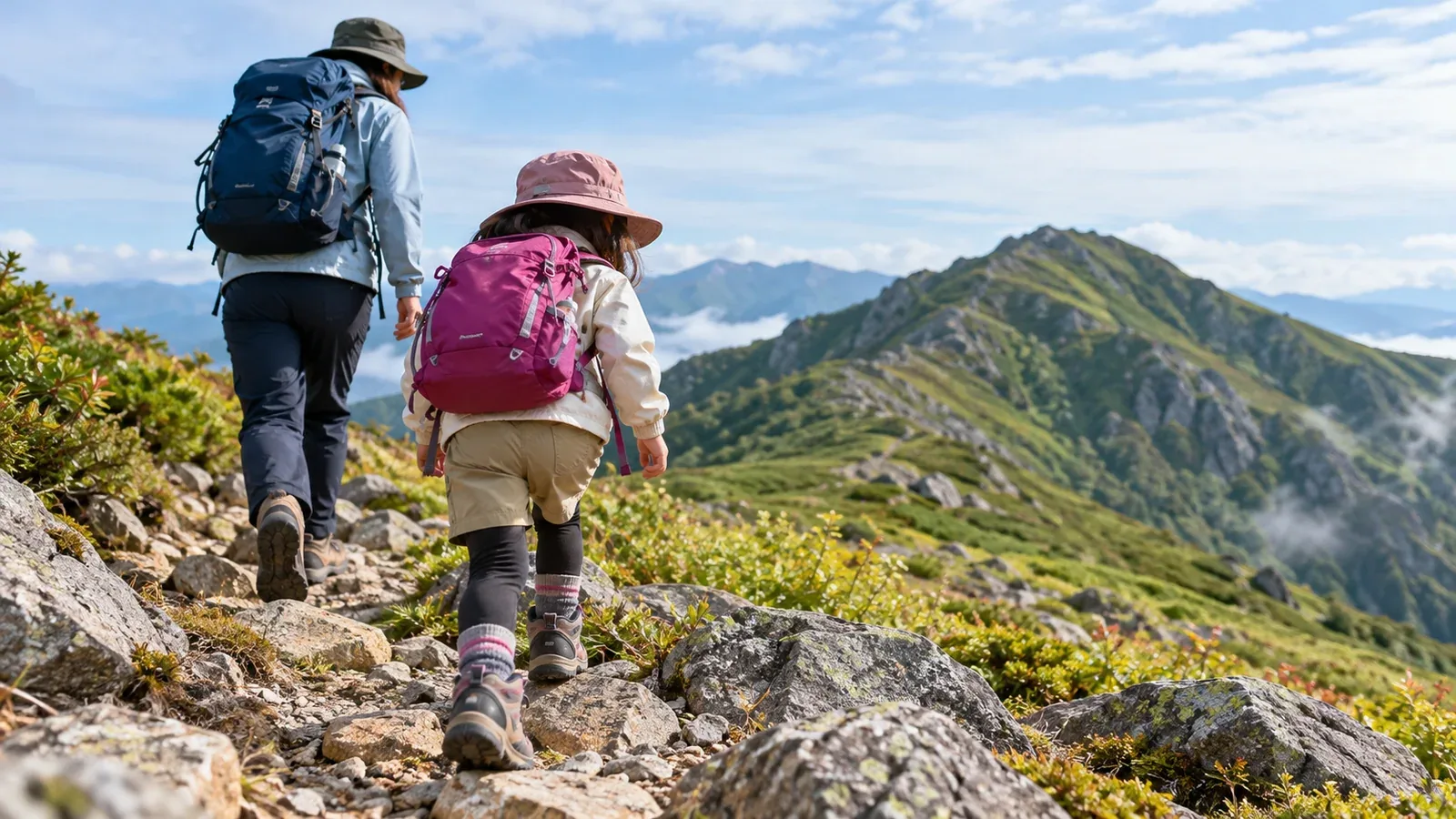
Choose children’s hiking gear for the trail and expected weather. As sizes change, you can use clothes you already have or rent gear if it fits and does what you need.
Check how your child feels after sweating on a climb and while taking breaks in the wind. Before you leave, see whether they can move easily in their layers and whether their shoes fit well.
What to check before walking
The American Academy of Pediatrics recommends several thin, warm layers in cold weather and avoiding wet clothes. On a hike, children move and stop, sometimes in the wind, so layers that are easy to change are useful.
If they get hot on the climb, adjust layers where you can stop safely. When the wind picks up or you take a break, add an insulating or windproof layer before they get cold. If clothing gets wet from rain or sweat, change into something dry in a sheltered place.
On uneven ground it can be harder to place the foot when a shoe slips or pinches. If a shoe hurts or slips, stop and check the laces, wrinkles in the socks, debris and fit.
How to choose clothing and layer it
Combine a base layer, insulation and a shell
Start with three layers: a base layer next to the skin, a middle layer to keep warmth in and an outer layer to block wind and rain. Add and remove layers as heat, cold, wind and rain change.
Rainwear blocks wind and rain. Check that sleeves and hems don’t run too long and that the child can move their arms and legs over other layers. Look for a hood they can see out of and adjustable cuffs and hems.
Pick a base layer that dries readily. Moisture-wicking synthetics and wool blends are options. Wet clothes can make the child cold. Pack dry replacements according to the outing.
Use insulation at breaks or when the child gets cold. A light fleece or another layer that’s easy to put on and quick to reach in the backpack is useful.
Adjusting for the season
Even on low hills in spring and autumn, walking in the sun can feel hot while shade and wind feel cold. Keep the insulating layer in an easy-to-reach part of the pack.
Even in summer, altitude, wind, rain and time of day change how it feels. Before leaving, check the forecast for the destination and local guidance, and consider conditions through your return.
Choosing shoes for fit as the child grows
Match the footwear to the trail
For a well-maintained, easy path, consider hiking shoes that fit and have grippy soles. On rougher ground, look also at underfoot stability and how the shoe holds the foot. If a rocky or stream section is beyond your group’s gear and experience, choose another route.
Shapes and widths vary, even among children’s shoes. Try on both shoes and check the width, heel and toes, using the size label only as a starting point.
How to check the size
Buying too large to allow for growth lets the foot slide inside. Try shoes with the socks the child will wear and check toe movement, heel lift and pressure across the foot. On a test slope, see whether the foot slides forward and the toes hit the front.
Check before the season, after a long period without wearing the shoes and whenever they feel tight. Try both shoes to catch a pressure point on either side.
When to buy or rent
For occasional use, consider rentals you can try on or secondhand gear in good condition. Check for worn or peeling soles, damaged fasteners and tears in rainwear. Ask a specialist store if you need help with fit or use.
Small details that matter
Socks and hats
Choose socks that suit the shoe’s fit, resist bunching and dry readily. Wool blends and synthetics are options. Pick a hat for the expected sun or cold.
Backpacks and sharing the load
Even if the child wants to carry a pack, keep it light and let adults take heavy items and spares. Walk with it on and check that the straps stay in place, the pack sits close and the child’s gait stays natural.
Gloves and gaiters
In cold weather, use gloves for warmth and check that the child can grip objects. Ankle gaiters are an option if sand or snow can get into shoes. Find out beforehand whether the terrain calls for extra equipment.
Replace gear based on fit and condition
Decide when to replace gear by its current fit and condition. Use those checks as the child grows.
- Base layers, socks, hats and gloves. Check that they sit comfortably and stay in place, and that they suit the outing.
- Hiking boots and shoes. Check the fit on both feet and the condition of the soles before use.
- Rainwear and packs. Even with adjustments, check freedom of movement, fasteners and seams.
Adjustable clothing and packs can sometimes last longer. Consider a repair or replacement if the child can’t move comfortably, the shoes pinch or parts are damaged.
Try the gear at home first
Have your child put on their hiking socks and shoes, layer insulation under rainwear and take a short walk with a light backpack. Check toes, heels, straps, sleeves and hems before setting out.