
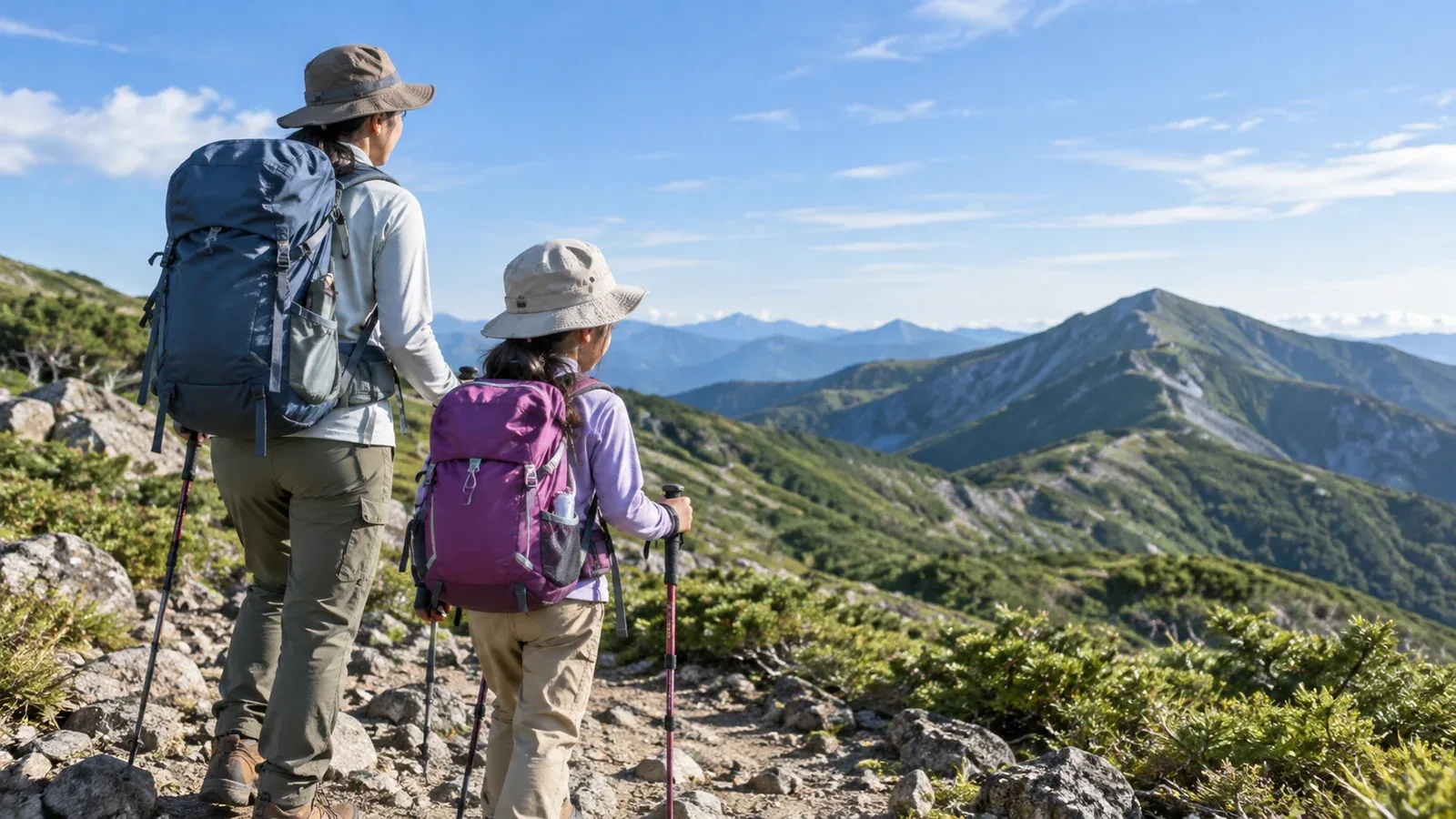
If your child wants to use their own pack, start with light items such as a towel. Bring the water and rainwear you need and make sure adults can take over if the child has trouble walking with the load.
Decide what goes in the bag, what to check when your child puts it on and how to share the load again on the trail.
Start light if your child wants to carry something
When children choose and pack their things, they know what they brought and where it is. If they don’t want to carry anything, an adult can carry it and they can still help pack or get ready for breaks.
Remove or adjust the pack if the child’s shoulders or back hurt, they feel numbness, or their gait changes. Ask their clinician if pain continues with a lighter load or if you have other health concerns.
Test the weight by walking
School backpack guidance sometimes uses a percentage of body weight. On a hike, slopes, footing and time change. Use age as one consideration and try the pack empty first.
Choose what to add one item at a time as you check these points.
- Empty backpack. Use both straps and check that the bag sits close without sliding.
- One light item. Put in something like a towel and ask the child how heavy it feels and how the straps sit.
- Walking. Check that the child can walk normally on flat ground and gentle slopes without leaning forward.
- Conditions that day. Reduce the load based on heat, trail length, ground and fatigue. It’s fine to start without a pack.
Lighten the load if it feels heavy, painful or unstable. Leave room in an adult’s pack to take the items.
Choose what goes in the backpack
Start with light, easy-to-reach items that don’t put the safety of the whole family in one backpack.
Light things to try first
- A lightweight bottle of a suitable size. Put in what the child can comfortably carry and let adults carry the rest of the water.
- A familiar lightweight trail snack. Put it somewhere easy to reach at a stop.
- A small towel, light gloves or similar items you can move to another bag.
Items to split with adults
- Rainwear. Decide who carries it so you can get it out as soon as it’s needed.
- Dry clothes. Bring enough for the season, sweat and rain, including in the adults’ packs.
- First aid kit, map and compass. Keep them with an adult who can use them quickly and show the child where they are and how they work.
Shared equipment adults manage
Adults split shared gear such as tents, fuel, cooking gear, first aid and communication tools. If your child carries a small light or whistle, show them how to use it.
Checks before leaving
Check the weight and fit the day before and again before you leave.
- Check the contents together. Identify what you’ll use at breaks and what an adult will manage.
- Walk a short distance with it on. Ask about weight and movement, and adjust anything that slips or hurts.
- Leave room in an adult’s backpack. Make space to take the child’s gear if they tire earlier than expected.
- Ask during breaks. Make it easy to say when the pack is heavy or they’re tired, and look for changes in their gait.
Move items between packs on the trail
Before leaving, agree that you can change who carries what. Stop somewhere safe to pass items to an adult or hand over the whole pack.
If the child slows down, leans forward, pulls on the straps or steps unsteadily, stop early and ask how they’re doing. Shorten the route or return if resting and taking weight out don’t help.
If the child wants to carry more, first make sure you can comfortably return on the current hike. On the next short outing, try changing one or two items.
Try it on the next short hike
Choose a short day hike and lay out the contents together to decide who carries what. Test the loaded pack near home and make sure an adult can take the items on the day.