
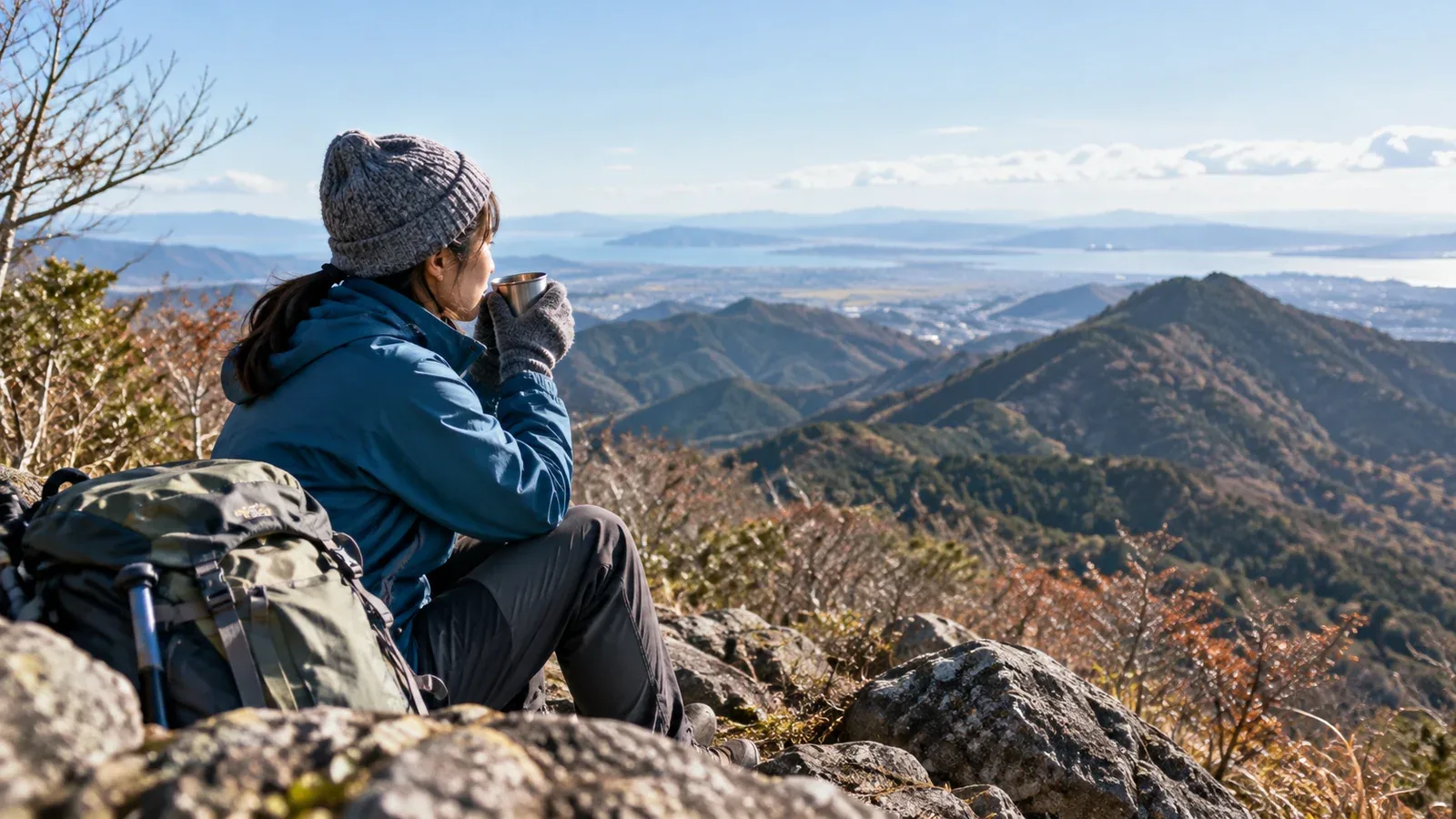
After sweating on a climb, you may notice your hands and feet getting cold when you stop at the top. It depends on the air temperature, how wet your clothes are, whether you are sheltered from wind and how long you stop.
If your hands and feet get cold easily, here are the moments to watch for and ways to adjust your clothing and breaks.
How cooling changes when you walk and stop
Your legs generate heat on a climb, and you may sweat if you have too many layers on. Before you begin sweating heavily, stop somewhere sheltered from wind and rain and adjust a layer.
When you stop moving, you generate less heat. Clothing damp with sweat or rain and exposure to wind can cool you faster. Get out of the wind and change into dry clothing when you can.
You warm up differently at the start, on climbs, during breaks and on descents. Stop somewhere safe to check how you feel and how wet your clothing is.
Three times when you can get cold
Taking a break on a summit or ridge
If it is windy on the summit or ridge, you can feel much colder than you did on the climb. Numb fingers can make it hard to unzip a jacket or get the map out.
Before a longer break, choose a place sheltered from the wind and get your jacket and gloves out early. If the wind is strong, keep the summit stop short and rest elsewhere.
Slowing down on the descent
Fatigue and changes in the surface can slow you down. The air can also cool as the sun drops. Stop somewhere safe to add a warm layer before or during the descent.
Clothing gets wet from rain or sweat
Wet clothes can chill you even when temperatures are only cool. Keep rain gear handy and protect a dry change of clothing with a waterproof bag or similar cover.
Layer for wind and wet conditions
Combine a layer next to your skin, an insulating layer and a shell against wind and rain. Plan for the weather and for how your needs change between walking and resting.
Base layer. On a hike where you expect to sweat, choose quick-drying synthetics or wool. If you take a change of clothing, pack it where it will stay dry.
Insulating layer. Keep a fleece or another warm layer where you can reach it before a break. Bring a shell that protects from wind and rain.
Gloves and socks. Keep gloves within easy reach so you can put them on early. If thicker socks make your boots tight, try a different shoe and sock combination.
Food, breaks and signs of hypothermia
Carry food and drinks and stop somewhere safe to take them. A warm drink is an option on a break for someone who is alert and can swallow unaided.
Strong shivering, clumsy hands, slurred speech or reduced responsiveness can be signs of hypothermia. In Japan, call 119 immediately. When safe, get out of the wind and rain, remove wet clothing and insulate the centre of the body with dry layers. Give nothing to eat or drink to anyone who is not fully alert.
What to check before heading into the hills
Even on low mountains, you can get cold on a windy ridge, in rain or as the sun goes down. Check the following before you leave.
- Weather and wind. Check temperature, rain and wind and look on the map for exposed sections such as ridges.
- Sunset and turnaround time. Allow for walking, breaks and delays so you get back in daylight.
- Current trail information. Check the latest notices from local authorities or trail managers for closures and available rest areas.
If your hands or feet get very cold in everyday life, or pain or numbness persists, speak with a healthcare professional.
Plan your next walk
Find a sheltered rest spot on the map. Put warm layers and gloves within reach and keep a change of clothing dry. You can find companions through the Nordwand community.