
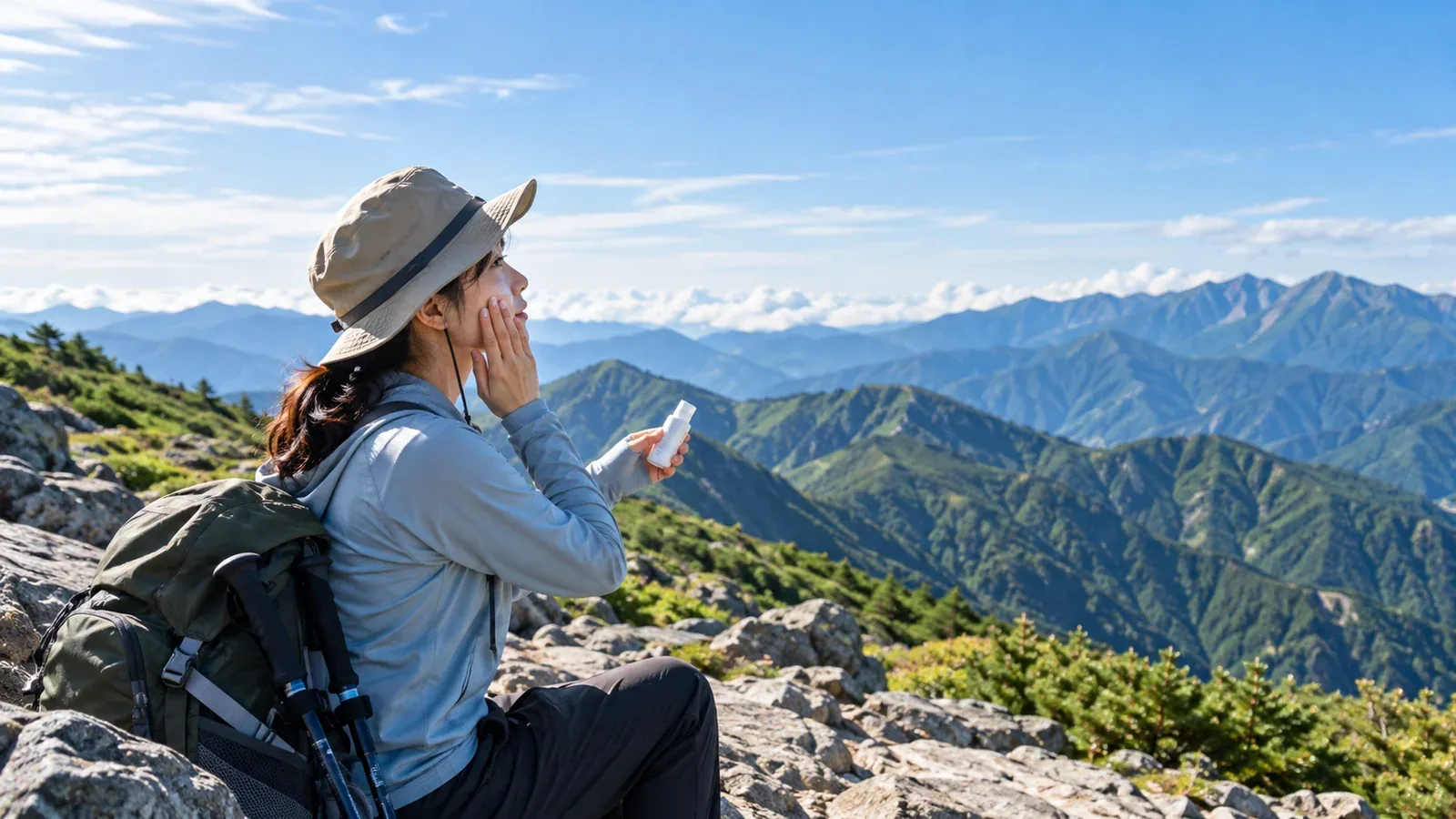
When you leave a shaded trail for an open ridge, you spend more time in direct sun. Ultraviolet exposure in the mountains depends on altitude, clouds, snow and when you walk.
Check the UV forecast before leaving, then plan how to use shade, clothing and sunscreen together. Think about when you can reapply sunscreen along the way.
Why UV exposure changes in the mountains
At higher elevations, there is less atmosphere above you, so UV tends to be stronger. The actual level also depends on the time, weather and ground surface.
You are also exposed to UV reflected by surfaces such as snow. Where snow remains, reflected UV can reach the underside of your face and your eyes.
UV still reaches the ground on cloudy days. Even if it feels cool, check the UV Index and how much shade you will have on the route.
SPF, PA and choosing sunscreen for a hike
Check the label for protection against both UVA and UVB.
- SPF (Sun Protection Factor). This indicates how much protection the product gives against skin reddening, caused mainly by UVB.
- PA (Protection Grade of UVA). A UVA protection rating used in Japan and elsewhere. More plus signs indicate higher protection. Other countries may use different labels, such as broad spectrum.
For outdoor use, broad-spectrum sunscreen with SPF 30 or higher is a useful starting point. If you expect to sweat, check for water resistance. Apply it to exposed skin according to the directions.
When to reapply
- Time outdoors. Follow the product directions and generally reapply about every two hours outdoors.
- Heavy sweating. Reapply even a water-resistant product after sweating, following its directions.
- Getting wet or towelling off. Reapply after drying your skin.
- Rubbing from straps or clothing. Check exposed areas where straps or a collar may have rubbed sunscreen away.
Check the directions for how much to use. Cover easy-to-miss areas such as the ears, neck and backs of the hands.
Combine a hat, clothing and shade
Use shade where you can. Cover up with a hat and clothing, and apply sunscreen to the skin that remains exposed.
Protect your face and neck
Wear a wide-brimmed hat. Cover your ears and the back of your neck with a hat flap, collar or neck covering.
Choose sunglasses labelled as blocking UV. On snow or where glare is strong, consider a shape that reduces light entering from the sides.
Protect your arms and hands
Breathable long sleeves or arm covers can protect your arms. A UPF rating can help you judge how well a fabric blocks UV.
Apply sunscreen before leaving to uncovered areas such as the backs of your hands.
What to do if sunburn hurts
If your skin feels hot and sore, get out of the sun and cover it with clothing. Redness may be harder to see on some skin tones.
Cool the skin with a cool shower or a damp towel. Keep ice and cold packs off the skin.
After cooling, use an unperfumed moisturiser if needed. Leave any blisters intact and keep the affected skin out of direct sun until it heals.
Seek medical advice promptly if you have blisters, swelling, severe pain, fever or dizziness.
Adjust your plans for the season and time of day
UV is generally stronger when the sun is high. When the UV Index is 3 or higher, combine measures such as clothing, a hat, shade and sunscreen.
Allow for reflection where snow remains, even in a cool season or on a cold day. Check Japan Meteorological Agency UV information and account for the terrain and snow cover.
Prepare for your next route
Look on the map for exposed stretches and shade. Bring a hat, sunglasses, protective clothing and sunscreen. Keep the sunscreen handy so you can reapply it at a break.