
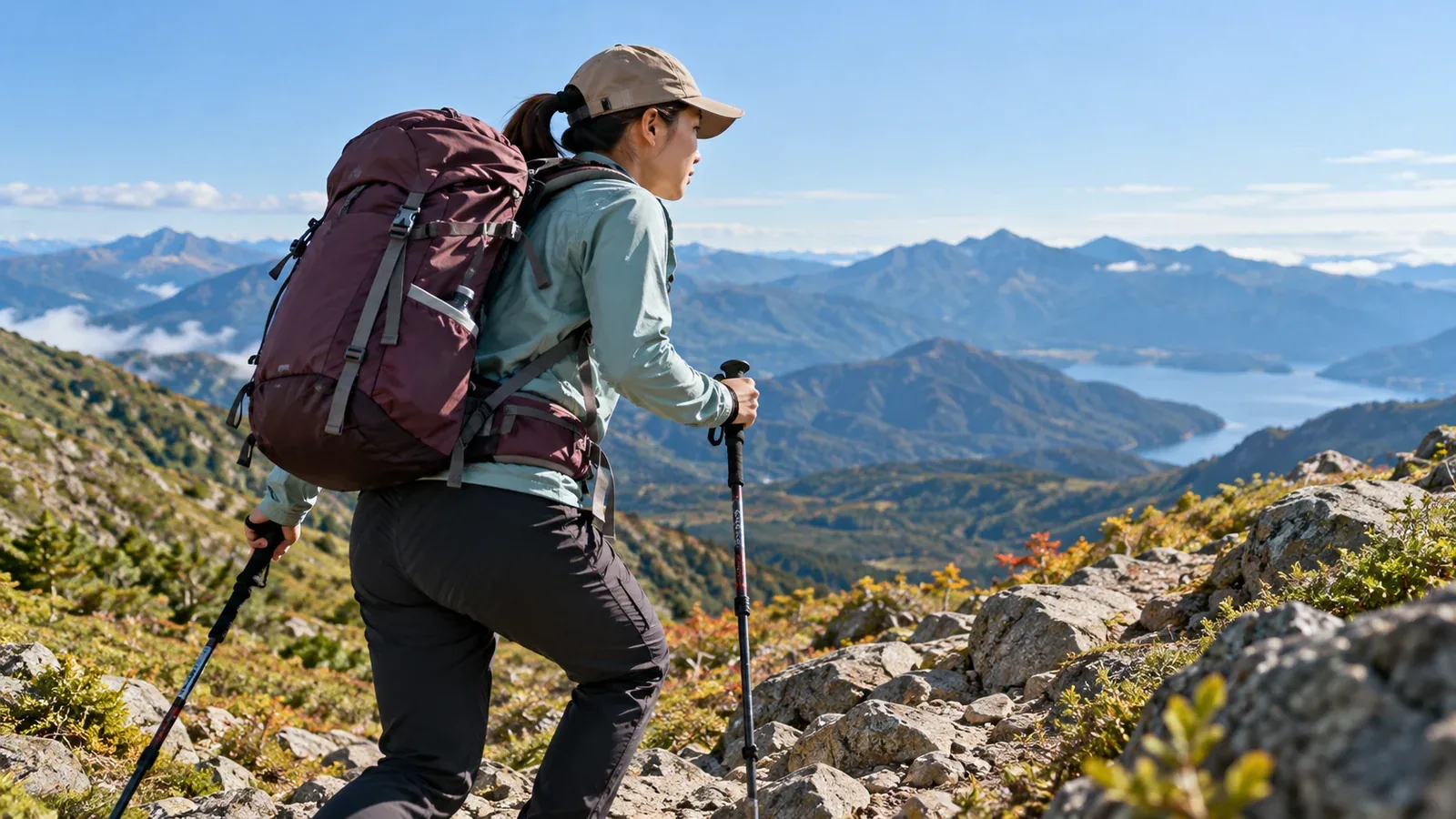
If the shoulder straps dig in, the pack sways or you keep hunching your shoulders on climbs, stop somewhere safe and check the position of the pack and the distribution of its load.
Choose a pack with the right torso length, then fit the hip belt, shoulder straps and sternum strap. Here is what to check before leaving and during the first part of the walk.
If pain is severe or persists, or if you have arm numbness or weakness, speak to a healthcare professional.
When shoulders get tired on a hike
Your upper body shifts with the slope and with any movement in the pack. Think about where your shoulders started to bother you, how long you had been walking and how the pack was loaded.
First, check the weight and how it is distributed. See whether the contents have shifted to one side or whether the strap presses on one small area.
Next, watch how your upper body moves on climbs. Your body leans to match the slope. If the pack moves away from your back or you keep shrugging your shoulders, stop on easy ground and adjust the fit.
Adjust the pack with your gear inside
Load it as you will for the hike and follow the maker’s instructions. On a pack with a hip belt, fit that to your hips before adjusting the shoulder straps.
Torso length and shoulder straps
Check the manufacturer’s measuring instructions and size chart to see whether the torso length fits. Adjust the straps so they follow the shape of your shoulders without lifting away or digging in.
Position and tension of the hip belt
Set the padding to wrap around the top of your hip bones and tighten it enough to stay in place when you walk. Check for pain or pressure and follow the instructions for your model.
Sternum strap
The sternum strap adjusts how far apart the shoulder straps sit. Set its height and length so you can still take a deep breath comfortably.
Fine-tune the fit once you start walking
After a few minutes, you can feel movement or pressure that you might miss while standing still. Stop somewhere safe to make changes.
What to check on the trail
- Look at your feet and a little further up the trail. Pay attention to your next foothold. Stop to read a sign or look at a distant view.
- Check if your shoulders are tense. Relax your shoulders at a rest stop and see whether pressure from a strap is concentrated in one spot.
- Take the pack off at a break. Set it down somewhere safe and check whether the load has shifted or the belt has slipped. Put it back on and walk a little to see how the adjustment feels.
If you use trekking poles
Practise adjusting the length and placing the tips on safe ground first. If your arms and shoulders stay tense, review your grip or the length.
Check how much you carry and how you pack it
Check which equipment you need, including water, rain gear and a map. Review any items that duplicate each other or that you do not expect to use.
Pack heavy items close to your back and balance the weight from side to side. Secure anything that shifts while you walk. Keep water and rain gear easy to reach.
Take a short walk with the loaded pack before leaving. Check the pressure of the shoulder straps, the position of the hip belt and whether the load moves. Adjust one thing at a time.
Review the fit after the hike
Note when and where your shoulders started to hurt, how much you carried and what you changed at a break. It can help the next time you choose or pack a bag.
If you are unsure what fits, try on several packs with a load in an outdoor equipment shop. You can compare models with different torso lengths and hip belts.
If strong pain persists after rest, your arm feels numb or you have difficulty using it, seek medical advice before increasing the load.
Try the fit before your next hike
Pack the equipment you intend to take, adjust the hip belt and shoulder straps, and go for a short walk near home. Check whether the straps dig in or the belt slips. If needed, ask an outdoor shop for a fitting.