
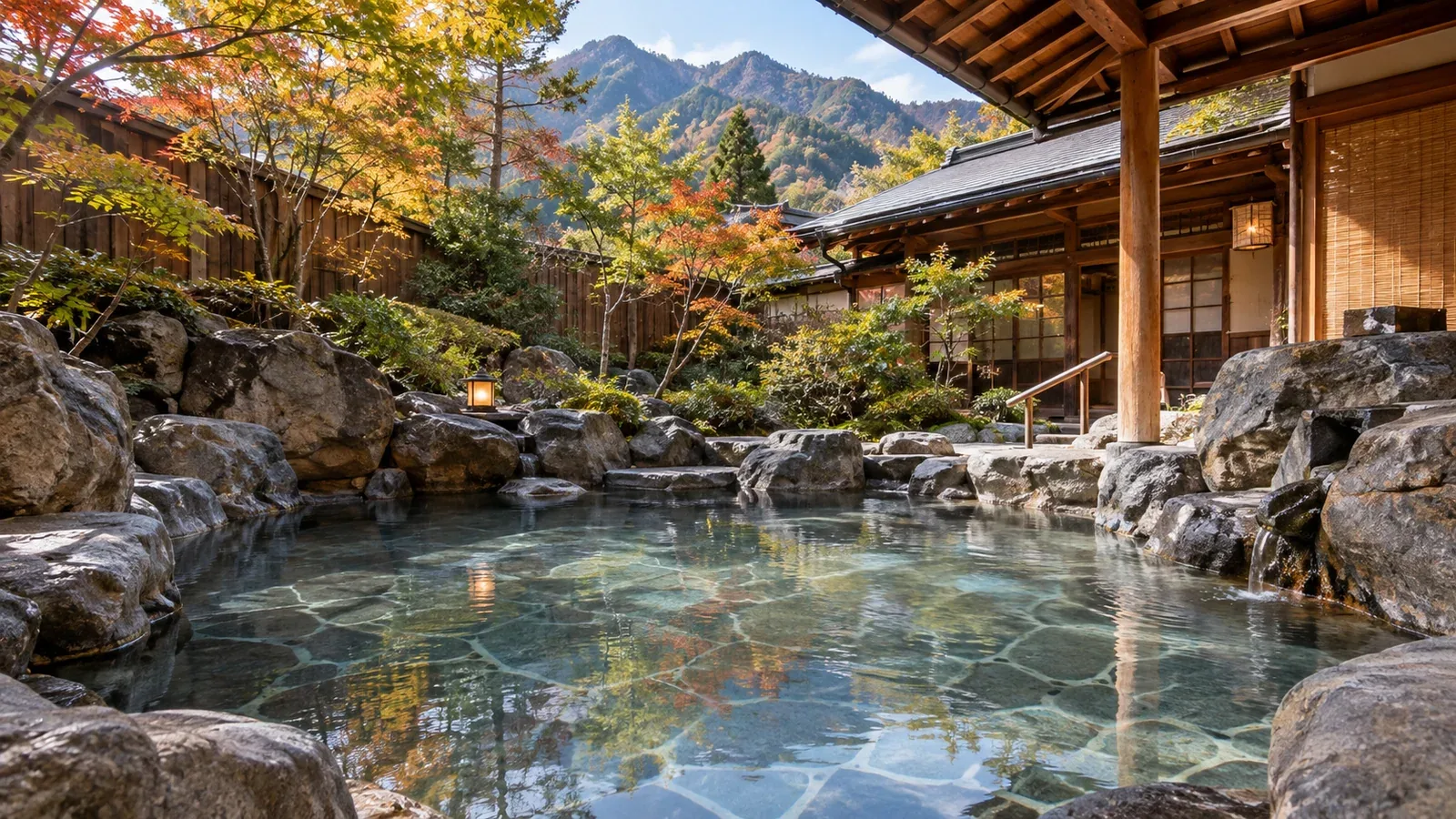
Shinshū, another name for Nagano Prefecture, is a major hiking destination, with the Northern and Southern Japanese Alps, Yatsugatake and the Jōshin’etsu mountains. It also has some of Japan’s best-known hot springs. Many hikers like the idea of a soak after coming off the mountain. Decide which trail and onsen go together, how far you will have to travel and when you can get into the bath. Planning those details up front makes it easier to reach the baths and leave enough time to rest.
This guide matches Nagano’s main hiking areas with nearby hot spring towns and explains what to check when putting an itinerary together. Facility names and prices can change. Consult each facility or municipality’s official information before making your choice.
Match hiking areas with hot spring towns
Nagano covers a large area. Start by looking at where the hot springs are in relation to the mountains you want to hike.
In the Northern Japanese Alps around Ōmachi, Hakuba and Azumino, Ōmachi Onsenkyō, Hakuba Happō Onsen and Hakuba Iwatake Onsen are near trailheads or main railway stations. The onward journey from exits at Ōgisawa or Sarukura is relatively short, which can make a stop practical for hikers on public transport.
Around Kamikochi and Norikura, options include Asama Onsen in Matsumoto, secluded Tobira Onsen, Norikura Kōgen Onsen and Shirahone Onsen. Private cars are restricted year-round in Kamikochi, so take a bus or taxi. Check the connections to the baths, what runs that day and whether you need to book.
Around Yatsugatake, Chino and Kobuchizawa, look for a facility near your exit in Hara Village, Fujimi, Tateshina or the Lake Shirakaba area. The road back varies by trailhead. Momi-no-Yu in Hara Village is scheduled to close from November 1, 2026, through the end of March 2027. Check its reopening date or pick another bath.
In the Southern Japanese Alps around Ina and Iida, consider Takatō Onsen and Hirugami Onsen. Both can be a long way from some trailheads, so check the travel time on a map. For access to Kitazawa Pass from the Ina side, also check the operating days and last Forest Road Bus to or from Todai Park.
In Jōshin’etsu around Shiga Kōgen and Yudanaka Shibu Onsen, options include Yudanaka Shibu Onsenkyō and Nozawa Onsen in Nagano, and Kusatsu Onsen across the prefectural border in Gunma. If you are based in Nagano City or Nakano, check the distance from the mountain to the baths before deciding between a day trip and an overnight stay.
Four decisions when planning a hike and soak
1. Estimate travel time and how much energy you will have
After a long hike, an hour or more behind the wheel or several connections can feel like a lot. Work out the journey time from the end of the trail to the onsen. If you are short on time or energy, choose somewhere closer or skip the stop. If you are sleepy or very tired, stay off the road and consider resting, switching drivers or staying overnight.
2. Check when day visitors can enter
Each facility sets its own last admission time for day bathing. Leave room for a late finish on the trail or transport delays. Work forward from your latest expected descent time to see when you would reach the onsen. Call or check its website beforehand to make sure day admission will still be open.
3. Consider the spring water and how you feel
Nagano has highly acidic, sulfur, chloride and simple hot springs. The water can sting scrapes or blisters, so look up the type of spring and its bathing guidance. Skip the bath if you have an open wound. Ask a doctor if you have a skin concern or an existing medical condition.
4. Decide whether to stay overnight
The best combination depends on whether you are making a day trip or staying one or more nights. On a day trip, favor a bath close to the end of the trail. For an overnight stay, you can also use an onsen inn as a base and head to the trailhead the following morning. The closer the inn is to the trailhead, the easier it is to get there and start early.
What to check if you use public transport
Many hiking areas in Nagano are accessible by public transport, but some bus routes run infrequently. Compare the bus schedule with the time you need to get to the bath and soak. This is how you can fit in an onsen stop and still catch the last bus.
Services from stations such as Matsumoto, Ōmachi and Chino to trailheads sometimes increase during hiking season and thin out considerably outside it. Check current information with Alpico Kotsu, other Nagano bus operators or the municipality’s tourism site.
Check how to get from the onsen to a station or bus stop as well. Can you walk to the nearest station? Is there a local bus, or will you need a taxi? Knowing the answer keeps your return itinerary workable.
What to check by season
Autumn, especially around October, marks the end of the hiking season in Nagano and brings more visitors to the baths. Many high-elevation buses and mountain huts finish their seasons between mid-October and November. Check both whether your hike is feasible and whether the bath will be open.
Roads to higher trailheads can close in winter. More routes require winter equipment and experience, while many onsen towns operate year-round and offer a chance to soak with a view of the snow. Allow for winter travel risks such as ice and tire requirements.
Snow often lingers in spring, so the mountains you can reach from an onsen town differ from those accessible in summer and autumn. Conditions vary considerably from year to year. Keep checking with land managers and mountain huts right up to your trip.
Plan your own itinerary
Find your starting and finishing trailheads on a map and make a list of onsen towns within 30 minutes to an hour. Check opening hours, day admission and the spring type on the facility’s official site or by phone. If using public transport, compare bus times with your expected descent while planning. Nordwand’s partner directory can help you find outdoor shops and mountain huts nearby. Use Base Camp if you would like to find someone to hike with.
Further reading
- Nagano Tourism Organization (official travel information)
- Japan Meteorological Agency (weather forecasts and warnings)
- Official information from trail managers and visitor centers
- Alpico Kotsu (bus routes and timetables in Nagano)
- Nagano Prefectural Police (hiking plans and mountain incident information)
References and sources
- Go Nagano official travel site: Hot spring towns and resorts
- Kamikochi official site: Vehicle restrictions
- Alpico Kotsu: Buses from Kamikochi toward Shin-Shimashima and Matsumoto
- Hara Village: Momi-no-Yu closure for renovation
- Ina City: Southern Alps Forest Road Bus
- Nagano Prefectural Police: Mountain information