
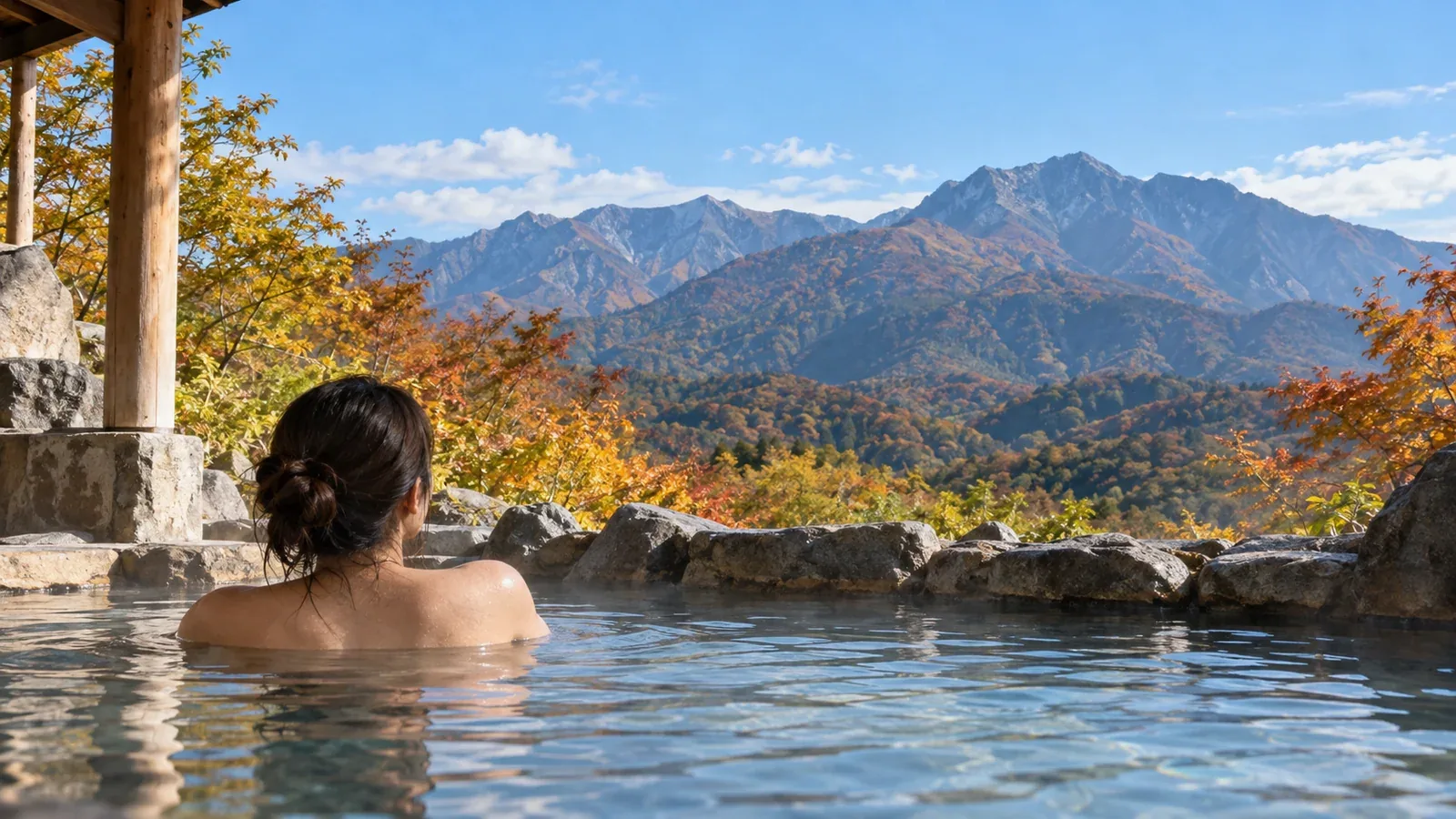
A hot spring can be a sensible starting point for a hiking plan. Once you know where you want to bathe, you can narrow down the mountains you can reach and work backwards from the time you need to get home. Think about the hike and the bath as one outing.
Okutama, Tanzawa, Hakone, Nasu, Nikkō and the Tanigawa-dake area are all close to hot spring districts, so you can often combine a hike and a bath in a day. A bath can be close on the map and still be awkward to fit into your route. This guide explains how to plan the two together in Kantō.
Decide what comes first: the hike or the onsen
Start by deciding what matters most to you.
If the hike is the main event and the bath is a bonus, choose the mountain first, then look for an onsen you can reach after coming down. Check the distance and transport from the end of the trail. Without a car, the timetable and the last bus may decide what’s feasible. Some trailheads have only a few buses a day.
If you want to stay at an onsen inn and hike while you’re there, choose the hot spring district first and look for a route you can walk that day or the next morning. This makes longer walks harder to fit in, but you can spend several nights at the same inn and hike different mountains from there.
If you leave your priorities undecided, you may end up with less time than you wanted for both the hike and the bath.
Mountain areas and hot springs to combine
These are some common pairings around Kantō. Opening hours, prices and closing days can change. Check with the facility or consult official local tourism information before you go.
Okutama and Ōme
Okutama is in Tokyo and offers mountain hikes with substantial elevation gain. Mitake, Ōtake and Kumotori give you options from day hikes to overnight trips. There are onsen around Okutama Station and towards Ōme. Trains and buses make it possible to go without a car, but some bus services are infrequent. Check the official Okutama tourism information for transport details.
Tanzawa, Kanagawa
Tō-no-dake and Nabewari are among the region’s best-known day hikes. Yamakita, Hadano and Matsuda have several baths. Map the end of your route, for example the Ōkura Ridge trailhead, and your bath before you leave. For access restrictions and land leech activity, check Kanagawa Prefecture, Hadano or Yamakita’s information.
Hakone, Kanagawa
Hikes on Kintoki, Myōjin and Myōjō are close to Hakone’s hot springs. It’s easy to plan a trail followed by an inn stay, and Hakone has a rail and bus network. Inns can book up well ahead during the autumn colours and New Year holidays.
Nasu, Tochigi
Chausu-dake, also called Nasu-dake, is an active volcano you can visit on a day trip from Kantō. The ropeway can shorten the approach to the ridge. Check the operator’s latest service updates and Japan Meteorological Agency volcano information. The Nasu hot spring district spreads out just below the mountain.
Nikkō and Oku-Nikkō, Tochigi
Hikes on Nantai and Nikkō-Shirane or walks in Senjōgahara are close to Yumoto Onsen and inns by Lake Chūzenji. Nikkō-Shirane is an active volcano, so check the JMA alert level before you climb. Autumn colours bring traffic, and there can be restrictions for private cars. Check notices from Tochigi Prefecture and Nikkō City.
Tanigawa-dake and Minakami, Gunma
Weather can change quickly on Tanigawa-dake. Prepare carefully and leave extra time. Minakami Onsen and Tanigawa Onsen are both at the foot of the mountains. The Minakami tourism office and Tanigawa-dake Mountain Guidance Centre provide updates.
How to plan the outing
Work through the details in this order.
- Set the date and decide whether to stay overnight. This determines which mountains and baths you can combine.
- Check how you’ll travel. Trains and buses give you a different range after the hike than a car. The last bus sets a deadline.
- Estimate difficulty and walking time. Work back from when you need to get home. Allow time for the bath and for changing.
- Map the trail exit and the onsen. The bath may be close to the mountain but on the opposite side from where you finish, with a long detour between the two.
- Check hours, closing days and when it gets busy. Baths can fill up after weekend hikes. Ask the facility directly.
What can go wrong after the hike
Sweat, mud and packs all need some thought. Day-use baths may have limited locker or bag storage. If you have a large pack, check ahead.
Timing can slip. Weather, fitness and queues on the trail affect walking time. Leave at least an hour or two between the time you expect to finish and the bath’s last admission, with more time if transport is uncertain.
Hot spring inns can fill up during busy periods. Hakone, Nasu and Nikkō are popular over long weekends and during autumn colours. Book ahead for an autumn trip.
Pay attention to how you feel. A long, hot bath can add strain when you’re exhausted. If you have a heart or blood pressure condition, ask a doctor about bathing before making plans.
How to plan by season
The best way to combine a hike and a bath changes with the season in Kantō.
Spring (March to May). Snow can linger high up in Nasu, Tanigawa and Nikkō. Check current trail conditions and choose a snow-free route if the terrain is beyond your equipment or skills. Check the date each bath reopens.
Summer (June to August). Watch for land leeches in areas such as Okutama and Tanzawa. Kanagawa Prefecture reports activity from April to November, especially June to September and around rainfall. Follow local guidance, such as using a repellent suitable for shoes and clothing.
Autumn (September to November). Foliage brings more hikers, so weekend car parks and baths get busy. Peak colour varies with altitude in Nasu and Nikkō. Check current traffic and foliage updates.
Winter (December to February). Many people pair a low mountain walk with a day-use onsen. High mountains require winter equipment. Lower routes are generally easier to combine with a bath, subject to ice and snow.
For your next outing
Choose a mountain or a hot spring district and check how they fit on the map. Use official timetables and the facility’s current hours before settling on your plan. If you’d like company, try Nordwand’s Base Camp to find hikers interested in the same area.
References
- Japan Meteorological Agency, volcano information for Nasu-dake, Nikkō-Shirane and other active volcanoes
- Official tourism and hiking information from Okutama, Hadano, Yamakita, Nikkō, Minakami and their prefectures
- Mountain incident statistics from the National Police Agency and prefectural police
References and sources
- Japan Meteorological Agency | Eruption warnings and notices
- Okutama Tourism Association | Hot springs in Okutama
- Kanagawa Prefecture | Land leeches
- Hakone Tourist Association | Hakone hiking map
- Nasu Ropeway | Frequently asked questions
- Nikkō City | Traffic congestion on Irohazaka
- Tanigawa-dake Information Centre | Hiking information