
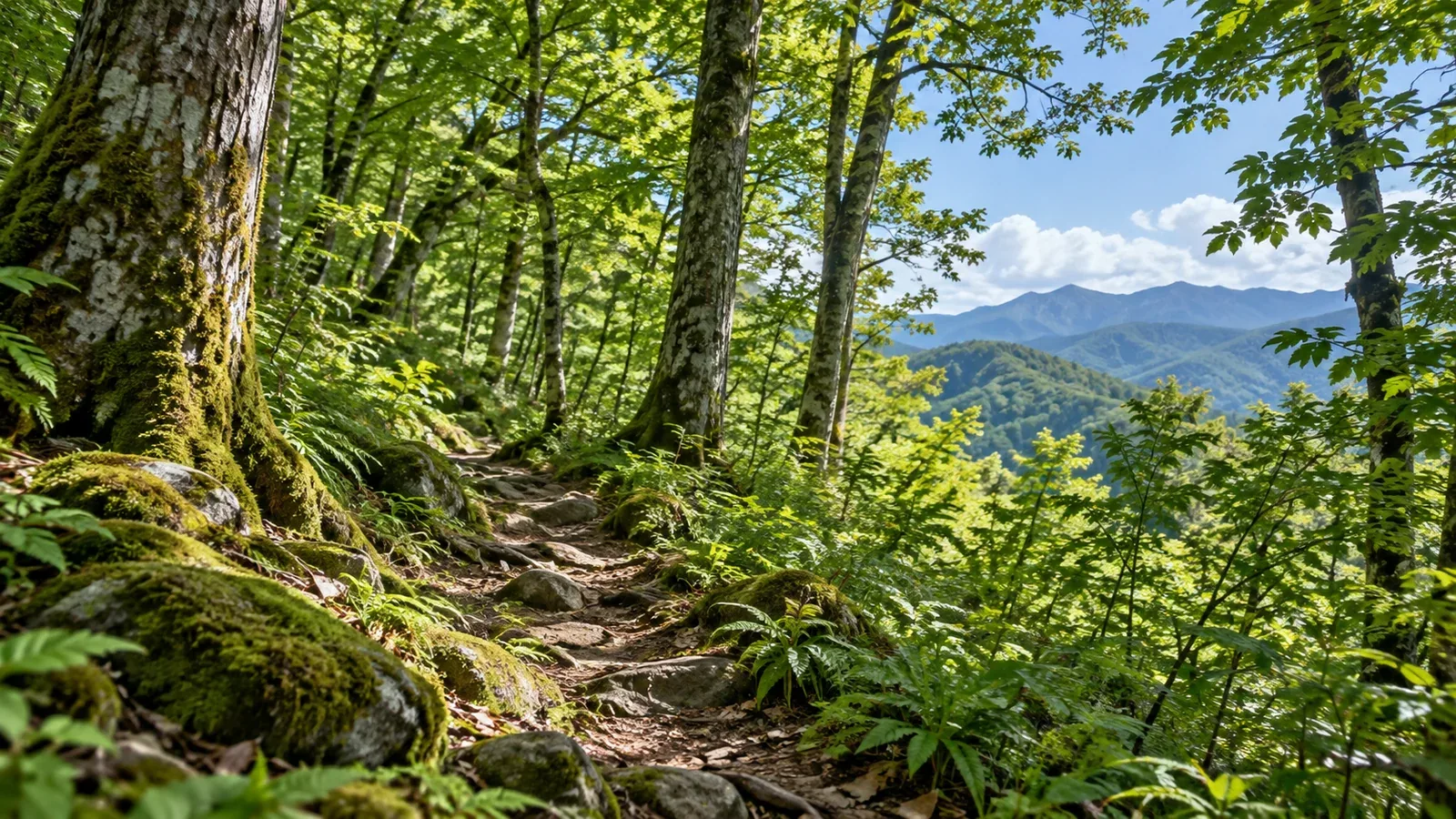
Walking among the trees, you might notice the cool shade, softer ground or the sound of birds. You can start on a short path through the hills, with time to enjoy the forest without rushing to the summit.
Japan’s Forestry Agency introduced the term shinrin-yoku, or forest bathing, in 1982 as a way to spend time in forests. It means taking in the colours, scents and sounds of the woods as you go.
What researchers saw in forests and cities
In a study conducted at 24 forests in Japan, healthy young men walked in forest and city settings and spent time looking at each landscape. Immediately afterward, measures including salivary cortisol, pulse and blood pressure tended to be lower in the forest settings than in the city settings.
In a forest, the scent of trees is influenced in part by volatile compounds the trees release. You may notice that Japanese cedar, Japanese cypress and deciduous woodlands smell different.
You can also notice the things you see. Light through the leaves, the colour of moss and the patterns on trunks change with the season and time of day, even along the same path.
Then there are the sounds around you, such as wind, running water and birdsong. The experiment compared the forest and city as whole environments, so it cannot tell us how much each scent, sight or sound contributed.
Enjoying the forest on a hike
On a low mountain, the slope, vegetation and breeze can change as you walk. Even on a short stretch, you can notice differences around you.
Adjust the effort. Breathing gets faster on climbs. On a day you want to enjoy the forest, keep a pace that lets you talk.
Look for changes in vegetation. On some mountains, the trees and the amount of light differ between the foot and the ridge. If there are nature interpretation signs, stop where there is room to read them.
Leave time to rest. The walks in the experiment lasted about 16 minutes and took place with a limited set of participants and conditions. Make your own outing short enough to feel comfortable.
Find an easy pace in the forest
Look at the map before leaving for places where you can slow down or stop for a break.
Pick places to slow down
Concentrate on your footing on slopes or where roots cross the path. At a roomy rest area, move out of the way of other walkers and take a moment to look and listen.
Use your senses one at a time
Stop somewhere safe to look at the map or take a photo. While you are there, notice one thing about the place, such as a sound or the colour of the soil underfoot.
Choose the weather, season and kind of forest
The way light falls and the state of the path change from fresh spring leaves to the leafless months. Consider heat, rain and slippery surfaces as well as what you would like to see.
What to look for as a beginner
For your first outing, choose a short walking trail with places to rest and turn back. The Forestry Agency’s recreation forest listings can help you find maintained paths.
- A gentle grade. Check the elevation gain and walking time. Choose a route you can walk both ways at a conversational pace.
- Time among the trees. Look for a route with places where you can stop and take in the view without hurrying.
- Steady footing near streams. Avoid wet rocks or streams in spate. Enjoy the sounds and views of the water from a maintained path.
Check the latest notices from the local authority or forest or trail manager for closures and access conditions.
How you feel and trail safety
If you are very tired or feel unwell, shorten the walk or go to a local park. If you develop a headache, palpitations or similar symptoms, stop somewhere safe and attend to them. If you have a chronic condition and are unsure how much activity is appropriate, speak with your clinician before increasing the effort.
Even in shade, heat and humidity can make it hard for your body to cool. Check the forecast and WBGT heat index before leaving, then avoid the hottest hours or choose a different day.
Choose a first forest walk
Find a short route in a nearby forest where you can stop and rest. Check the map, access notices and forecast. If you head onto mountain trails, file a hiking plan. You can find walking companions through the Nordwand community.