
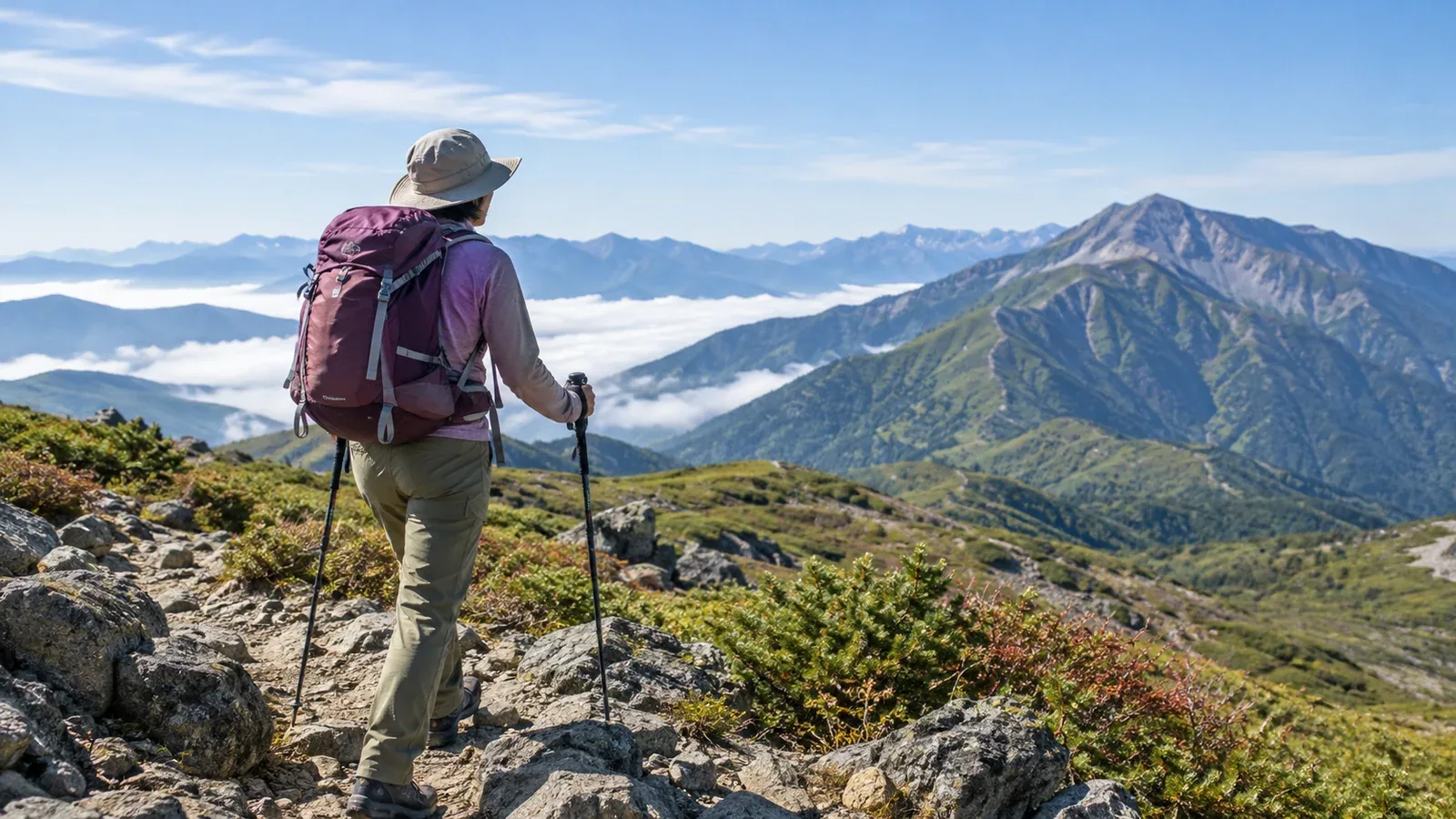
Staying active is one way to support brain health as you age. If you want to build a walking habit, a short trail in the hills is one option.
WHO lists physical activity among the measures for reducing dementia risk. The research discussed here does not establish whether hiking lowers that risk more than walking on flat ground.
What walking a mountain trail involves
Both level walking and hiking can be aerobic activities, depending on pace and duration. On a trail, you more often have to adapt to the slope and your footing.
You step around rocks and roots and adjust your posture as the slope changes. On tricky ground, give your full attention to how you walk.
At junctions, check your position on the map. Noticing birdsong or the trees can also be part of enjoying the walk. Stop somewhere safe to read the map or look around.
What we know about physical activity and the brain
Physical activity guidelines and individual experiments answer different questions.
Everyday health. WHO includes increasing physical activity alongside managing health factors such as blood pressure and making other changes to daily habits.
Changes in parts of the brain involved in memory. In a 2011 trial of 120 older adults, the aerobic exercise group showed changes in anterior hippocampal volume and spatial memory. The study examined an aerobic exercise programme.
Walking and attention. Choosing where to step and checking your location are tasks you need on a trail. That trial did not measure whether doing these tasks repeatedly on hikes affects the onset of dementia.
How to think about exercise and dementia risk
The second edition of the WHO guidelines, published in 2026, recommends combining measures such as physical activity and managing health conditions for adults without dementia.
Combine hiking with activities you can do regularly, such as walks around your neighbourhood. Adjust the time and effort to how you feel.
Walking with others is also a chance to see people and talk. Choose a short route with someone of similar fitness and pace so you can keep an eye on each other.
Plan hikes you can keep doing
When choosing where to go, think about what suits your condition and how you can return safely.
Find a manageable pace
Walk at a pace at which you can talk. If you become too breathless, slow down and rest. If you are new to hiking, choose a short path with gentle slopes.
Read your map somewhere safe
At a junction or rest area where you can safely stop, check your location against the map and the signs. Bring a map you can use without mobile reception.
Notice nature during breaks
Where you can safely rest, notice the trees, birdsong or shapes of valleys and ridges. Talking with a companion about what you saw can be part of the walk.
Choose a route you can repeat
Find a short path that is easy to reach. Check the distance, estimated time, surface and access notices with the local authority or trail manager.
What to check before you start
Choose the route and equipment with your fitness, health and any effects of medication in mind.
If you have a chronic condition or symptoms during exercise. If you have heart disease, diabetes or joint pain and are unsure how much you can walk, tell your clinician the distance and gradient you have in mind.
Leaves and mud can be slippery even on low mountains. Wear shoes that fit and grip. If you use poles, practise first in a safe place.
While you are getting used to trails, walk with someone experienced and submit your hiking plan to the designated authority. Tell a friend or relative where you are going and when you expect to return.
Choose your first route
Find a maintained path nearby and decide how long and how fast to walk based on how you feel. Start with a route where it is easy to turn back and that you can walk again. You can find companions through the Nordwand community.
References
- WHO: guidelines on reducing the risk of cognitive decline and dementia, second edition, executive summary
- Erickson et al. (2011): aerobic exercise, hippocampal volume and spatial memory
- Japan’s Ministry of Health, Labour and Welfare: 2023 Physical Activity and Exercise Guide for Older Adults
- Government of Japan: safety tips for hiking