
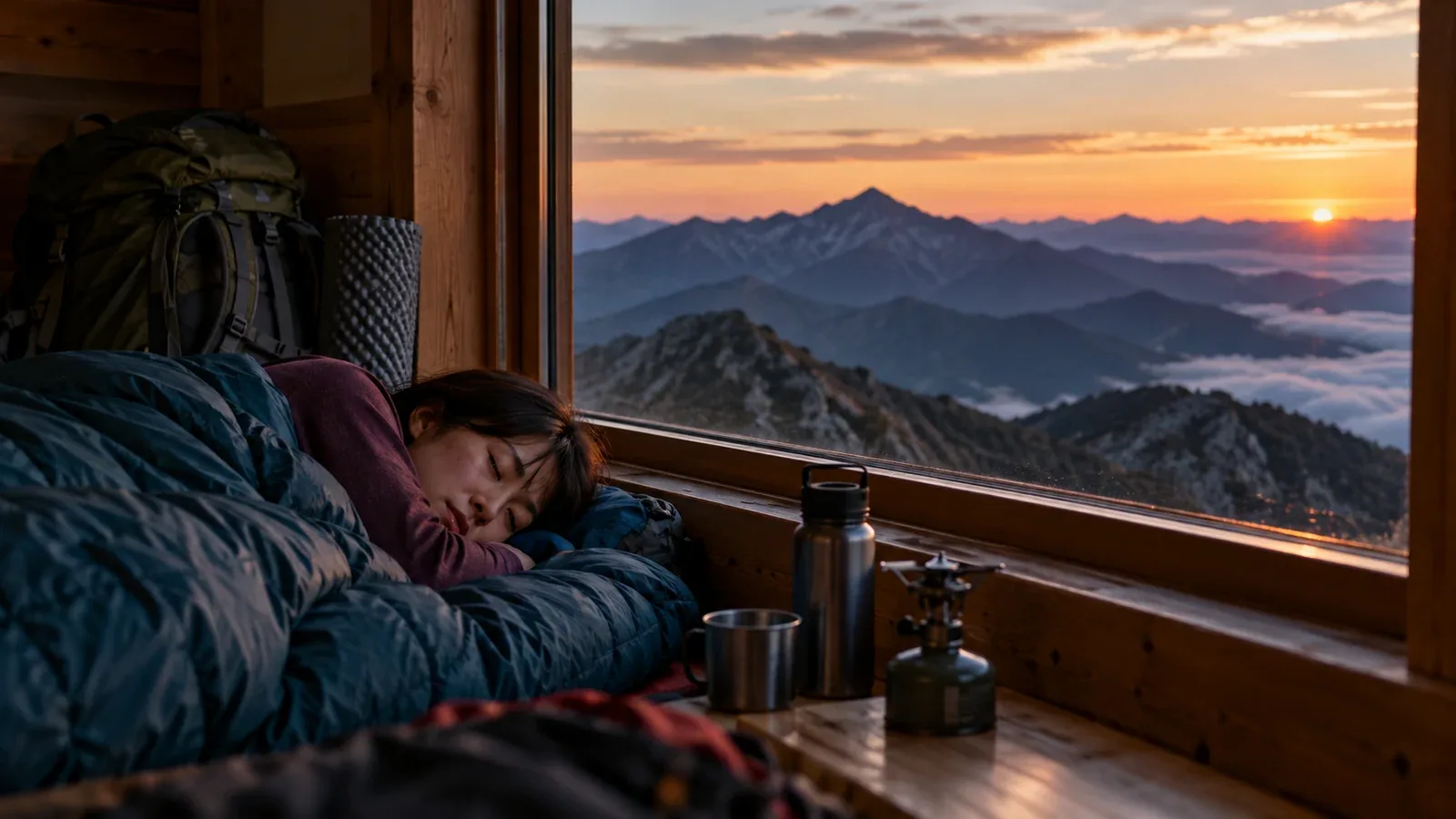
Some nights after a hike you fall asleep right away. Other times you are tired but struggle to drift off. To understand how you slept, look at how hard you walked and what you did from before you left until bedtime.
Daylight and activity can affect your sleep rhythm. Pain after an unfamiliar descent or getting home late may make it harder to rest as usual.
How daylight and activity affect sleep
Japan’s Ministry of Health, Labour and Welfare says in its sleep guide that daylight exposure and regular exercise can help support good sleep. Walking outside during the day can give you both.
In the evening, dim the lights and spend less time looking at bright screens right before bed. If you get home late from a hike, make your room dark and allow a little time to settle.
How rested you feel the next morning also depends on how long you walked, how steep the route was, when you went to bed and how you felt that day.
When it is harder to sleep after hiking
If you struggle to fall asleep or wake in the night, think about what was different from your usual day.
Leg or joint pain lingers
A long descent you are not used to can leave your thighs or knees tired or sore. Next time, choose a route with a shorter descent and allow time for breaks. Seek medical advice if the pain is severe or persists.
There is little time between getting home and going to bed
If the trip back takes a while and you have to eat or get things ready as soon as you arrive, you may miss your usual bedtime. Factor transport home and time to settle down into the plan.
You are still thirsty when you get home
Bring water and food for the walking time, temperature and places where you can refill. Take breaks to eat and drink along the way so you do not have to make up for it all at home.
You are sleeping at high altitude
At a high mountain hut, reduced oxygen pressure can alter the rhythm of your breathing and interrupt sleep. If you develop a headache with nausea or dizziness at altitude, consider altitude illness and stop ascending. If symptoms worsen, descend as safely as you can.
Before, during and after the hike
Plan the day from departure to return so you have time for your usual amount of sleep and for recovery.
The day before. If you are leaving early, finish packing in time to get enough sleep. If you are very short on sleep, reconsider the start time or the outing.
On the trail. Pack water and food according to the temperature and time you will spend walking. Stop to eat and drink.
After the descent. If fatigue or drowsiness makes driving unsafe, rest. Switch drivers or take other transport if necessary. At home, allow time to wind down before your usual bedtime.
Turn down lights and screens before bed and avoid caffeine late in the evening or alcohol as a sleep aid. Leave enough time for a meal and bath so you do not have to rush just before bed.
Choose a route with recovery in mind
Look at walking time, total ascent and the surface, and choose a route that leaves enough energy for the descent. If you repeatedly feel very tired the next morning, reduce the distance or choose an easier descent next time.
Make a short note of how long you walked, when you finished, how easily you fell asleep and how rested you felt the next morning. Even on days with little soreness, sleep can vary with weather, how you feel and changes to your schedule.
While you are still tired, hold off on increasing the effort. Take a walk close to home or rest. On days you do not hike, try to keep your wake time and daytime activity close to your usual rhythm.
Health conditions and medication
If sleep medicines leave you drowsy or unsteady the next morning, or if a chronic condition makes it hard to judge how much you can do, discuss your medication and activity with your clinician. Seek medical advice if trouble sleeping or strong daytime sleepiness persists.
Plan your next outing
Choose a route that gives you more time than usual to get down. Note when you got home, how easily you fell asleep and how you felt the next morning. Use that information to choose the distance or start time next time. You can share route and pace information with others in the Nordwand community.