
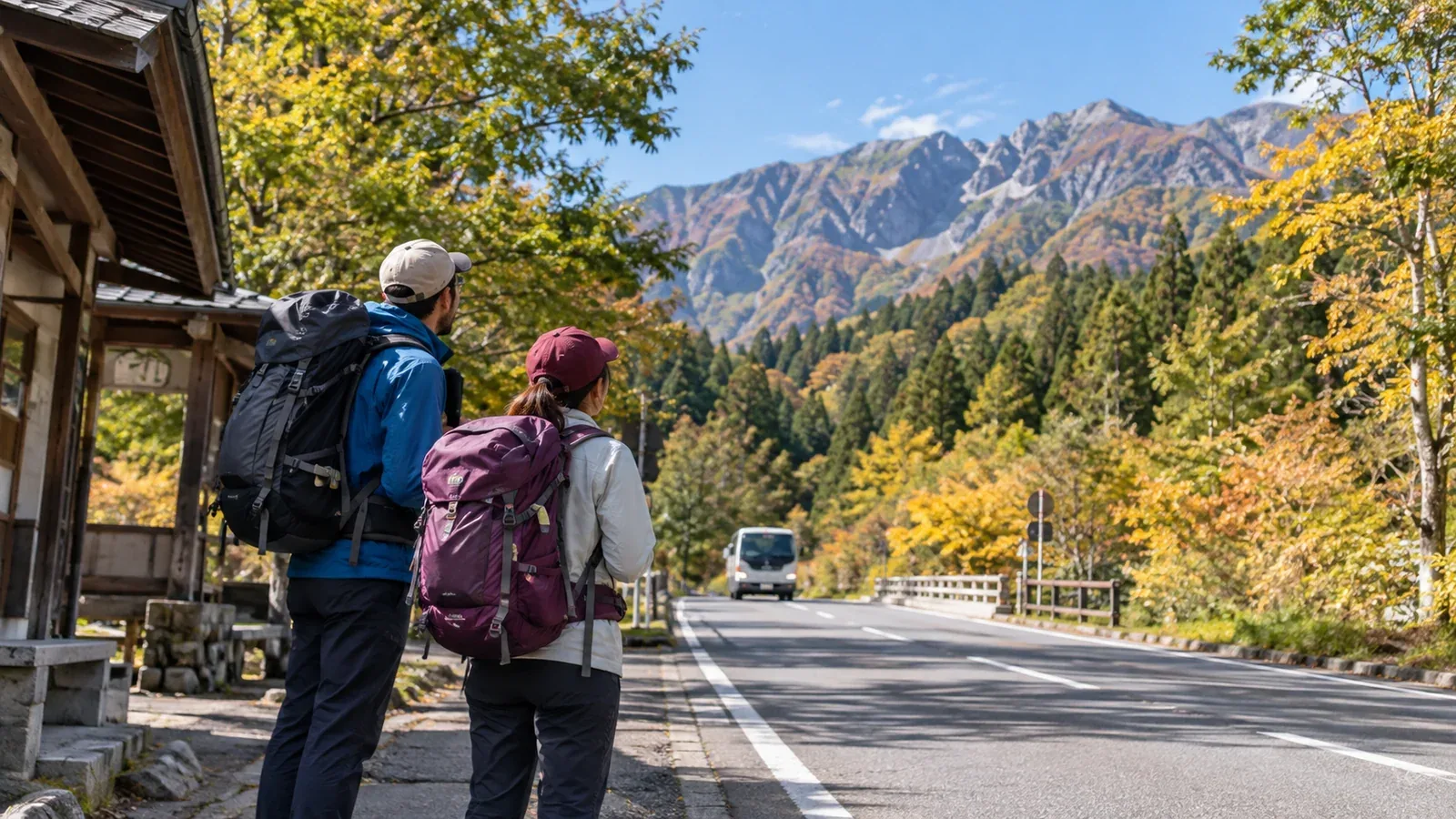
Many trailheads in Japan are a long way from a railway station or bus stop. Even local hikers sometimes find getting there the hardest part of the day. If you're visiting from abroad, you may also have to work out Japanese-language schedules, transit cards, booking systems and which services run in your season.
This guide is for both visitors planning a hike and people in Japan helping friends from abroad. It explains why access can be difficult, where plans tend to go wrong and how to prepare.
Why trailheads can be hard to reach
Public transport doesn't go directly to many trailheads. Where there is a bus, it might run only in certain seasons or on weekends, or require advance booking. The details are spread across operators and local authorities, and they aren't always available together in English.
Local hikers often use guidebooks, hiking communities and regional tourism sites together. If you're visiting, you may find the freshest information only in Japanese or come across English pages that haven't been updated.
Off-season service can be especially easy to miss. Many buses to trailheads in the Northern and Southern Japanese Alps run mainly during summer, with services tapering off or ending in autumn. A summer trip report can look like a useful guide until you find that the bus doesn't run on your autumn dates.
Common transport hurdles for visitors
Paying by transit card, cash or credit card
Payment varies by operator and route. Some services take transit IC cards and others are cash-only. Visa or Mastercard contactless payment may be unavailable on rural buses. Getting a Suica at an airport doesn't mean you can use it on every connection. Check where the card is accepted and where you can top it up.
Before boarding, check the bus operator's official information or ask the local tourism association about payment.
Booking buses when the form is only in Japanese
Some buses to major Northern Alps access points such as Kamikochi, Murodo or Oritate may require a reservation or advance ticket purchase. If the form is only in Japanese, translation tools can help, though they can miss the meaning of error messages or booking conditions. Check the operator's English booking page where available. For example, Alpico publishes English booking and service information for buses between Matsumoto and Kamikochi.
If the operator doesn't publish the information in your language, ask in advance whether it can answer booking questions in English by email.
Booking a taxi in advance
If the bus doesn't run when you need it, a taxi may be an option. At a rural trailhead, don't count on finding one waiting. Book in advance, ideally by the previous day, and check whether the company can take a booking in English.
Some areas offer shared taxis for hikers. Tourism associations and mountain huts sometimes list them. Try searching for the mountain or trailhead name plus “shared taxi,” or the Japanese terms “tozanguchi” and “noriai takushī.”
Four things to check when planning
Before committing to a route, confirm the following.
- Bus season and frequency. Check the operator or local tourism association for the exact dates of your hike. Service can be reduced or suspended outside the main season.
- How to board and pay. Confirm whether you need to reserve and whether the service accepts cash or transit IC cards.
- Parking and private-vehicle restrictions. Some areas limit car access in peak season. Confirm dates with the local authority, national park office or hut.
- The last departure. Missing the last bus can leave you waiting overnight or trying to arrange a taxi. Work backward from the final service and identify a fallback before setting out.
Helping a visiting hiking companion
If you're organizing travel for someone visiting Japan, check the current timetable even if you used the same bus last year. Rural operators can change schedules, discontinue a route or replace it with a different service. Check again shortly before your hike.
Share station names, bus stops and boarding bay numbers as screenshots or printed timetables. Romanized place names can differ between a website and the sign at the stop. Save both spellings if you see them.
Why a taxi may be hard to arrange on the day
A trailhead may have no mobile signal, and the nearest taxi operator may require advance bookings. Plan for those limits before relying on a taxi as your only fallback.
Decide in advance what you'll do if your first option falls through. Ask your hut or accommodation near the trailhead what people normally do when a bus is unavailable. Staff often know the area well.
What to do next
Check the tourism association or bus operator for the dates you plan to hike, then confirm booking, payment and car access rules. Share screenshots or a printed itinerary with your companions. Nordwand's Base Camp can help you ask hikers who know the area about access. Confirm travel details with the operators.
Further reading
- Ministry of Land, Infrastructure, Transport and Tourism, regional public transport information.
- Ministry of the Environment, national park management office guidance.
- National Police Agency, mountain incident reports for background on access-related risks.