
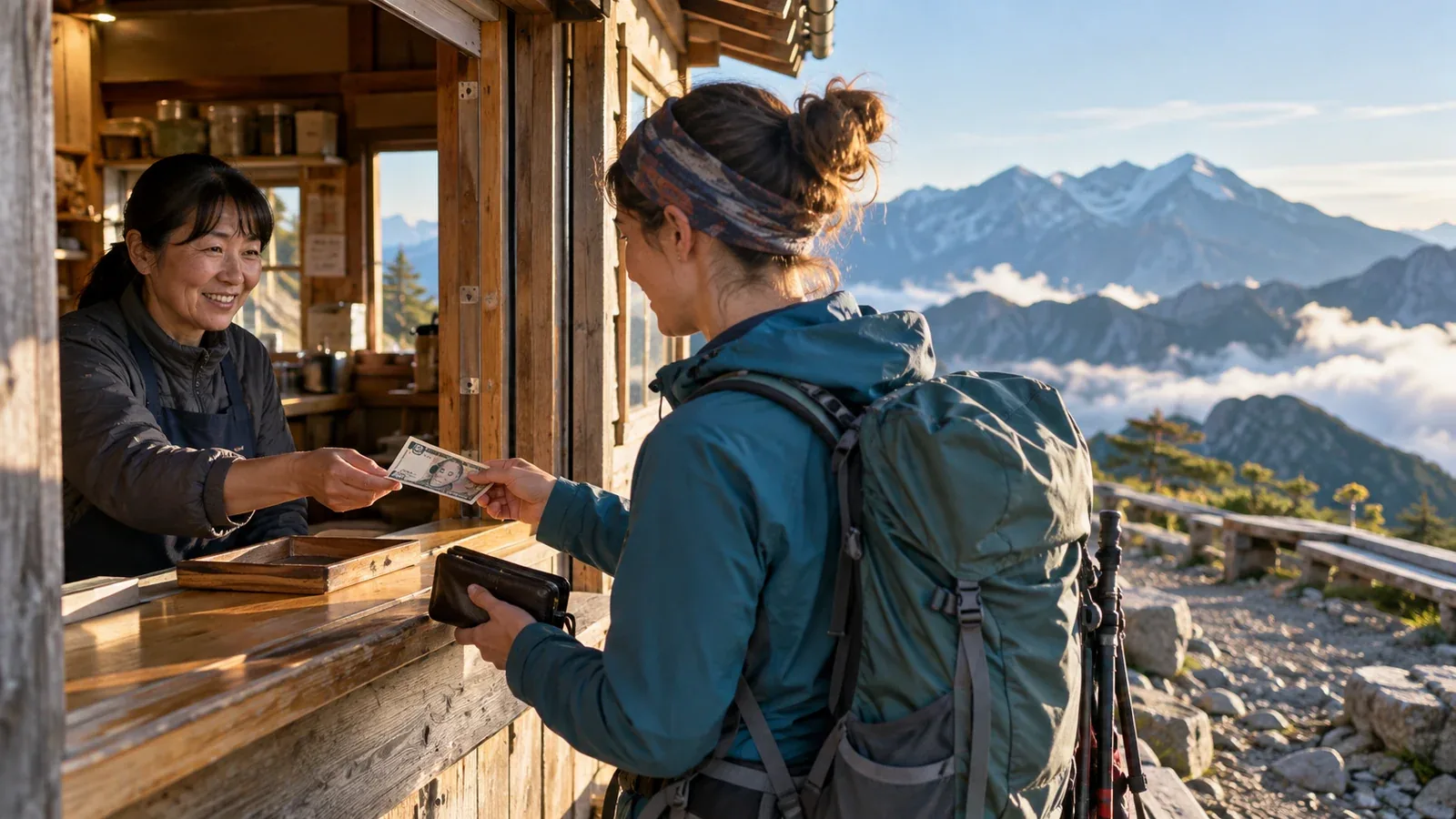
Many Japanese mountain huts still take cash only. Before leaving, find out where to pay, what you will owe, and which currency or payment methods the hut accepts. If you usually pay by card or phone, running out of cash on a mountain can leave you with few options.
This guide explains how hut payments generally work and what to check when setting aside cash. Prices and payment methods can change, so confirm the details with each hut or the area's official information.
Why you may need cash at a mountain hut
Mountain huts often have limited communications infrastructure. Most card and electronic payment terminals depend on an internet or phone connection. Signals on ridges or deep in the mountains may be weak or unavailable. Even huts with a payment terminal may be unable to use it that day.
Huts are often small operations that provide lodging, meals, and a shop. Equipment and processing fees can make cash simpler for them. Some huts now offer cashless payments. Check each hut before heading into the mountains with the same amount of cash you usually carry at home.
Where and when to get yen
There are fewer places to get yen as you approach the mountains. Airports and major stations are good places to look for currency exchange or ATMs. In towns, look for ATMs at convenience stores or other facilities. Seven Bank and AEON Bank provide English screens and accept some overseas-issued cards. Confirm your card network, fees, and withdrawal limits with the operator and your bank before leaving.
Towns near the trail, such as Fujiyoshida or Fujinomiya for Mount Fuji or Matsumoto on the way to Kamikochi, may have bank or post office ATMs. Some machines are unavailable on holidays or early in the morning. Aim to have your yen by the previous evening so you can start the hike without needing to find an open ATM near the trailhead.
How much cash to carry
Rates vary by mountain area, hut, and season. Start by listing the costs you expect on your own trip.
Main costs to include
- An overnight stay with dinner and breakfast. This is usually the largest cost if you stay at a staffed hut. Ask which room-only or meal options are available.
- A stay without meals or a campsite fee. Most designated campsites charge a fee even if you bring your own tent.
- Extra food and drinks. You may need cash to buy snacks, water, or other drinks at the hut shop.
- A reserve for changes to the plan. Bad weather or illness may require an unplanned stop. One approach is to carry enough cash for one or two extra nights.
Check the hut's official website, booking site, or information from the authority or mountaineering organization responsible for the area. Some popular huts require advance bookings in peak season. Confirm payment methods when you reserve.
Can you pay in a currency other than yen?
In general, plan on paying in yen. Even on Mount Fuji, check with the individual hut if you need to know whether it makes an exception for US dollars, euros, or another currency.
Exchange or withdraw Japanese yen before going into the mountains.
Cashless payments at some mountain huts
Some huts accept transit IC cards, QR-code payments, or credit cards. Toyokan on Mount Fuji lists several of these options for purchases at its shop. The options can vary by hut and season. Confirm that your overseas-issued card or payment app will work with the system the hut uses.
Carry enough cash to cover the stay even if electronic payments are unavailable. Ask the hut when you book or contact it. Payment options can change during the season, so check again shortly before leaving if you are counting on a particular method.
Payment checklist before you leave
Check these points before the trip so you have fewer surprises in the mountains.
- Payment at your overnight hut. Check the booking page or ask the hut directly.
- Payment at the campsite. Confirm how to pay even if you are bringing a tent.
- Your last reliable place to get cash. Find an ATM on your route to the trailhead, such as at a convenience store or post office.
- Withdrawal limits and fees for your card. Ask your bank before traveling.
- Cash for extra days. Leave room in your budget if the weather or someone's health changes the plan.
What to do next
Email or call the hut to confirm your reservation and ask which payments it accepts. Get yen at an airport or at an ATM in the last town with reliable access before you head into the mountains. Nordwand's partner search can help you look for hut information near your route. See the official site for details.
Further reading
- National Police Agency and prefectural police mountain incident statistics
- Local government information on mountain safety
- Seven Bank and AEON Bank instructions for overseas-issued cards
- Japan Mountaineering and Sport Climbing Association information on mountain huts