
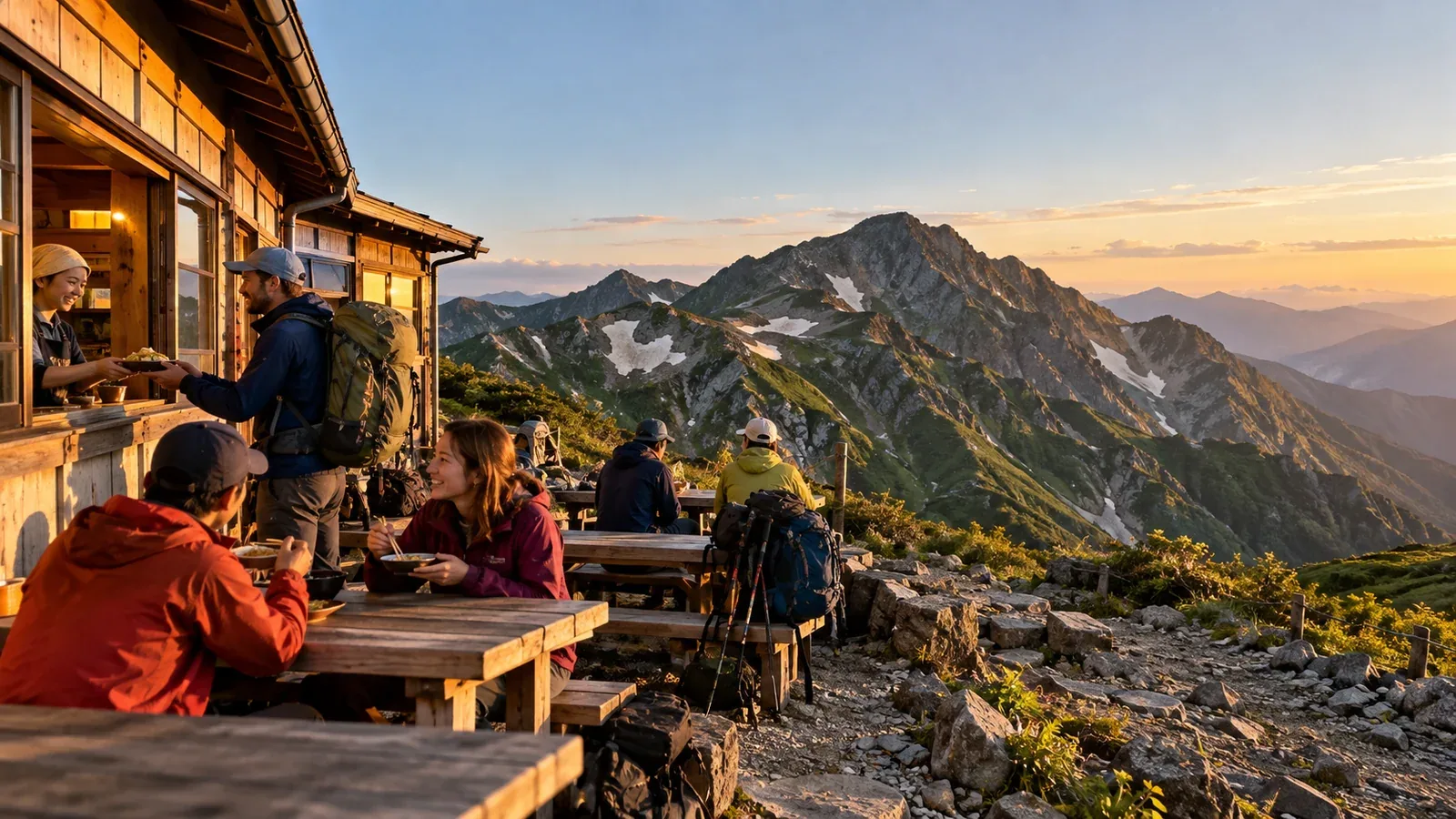
“You can get a hot meal at a mountain hut?” “How are there this many signs on a trail?” Comments like these recur in posts and blogs from visitors hiking in Japan. Mount Fuji and the Northern Alps draw many hikers from overseas. Hearing what surprises them can help people in Japan see their own hiking culture from a different angle.
This article looks at what visitors notice about Japan’s mountain culture, trail infrastructure, and natural landscapes. Details that feel ordinary to regular hikers in Japan may be new to someone arriving from elsewhere.
What visitors notice about Japanese mountain huts
A Japanese mountain hut serves some of the same purposes as a European Hütte or rifugio. The facilities and way of running them can feel different from the huts a visitor knows.
Huts in the European Alps and Rockies vary widely. Some offer basic shelter and a place to sleep, while staffed huts may serve meals. In areas where hikers mostly camp, huts can be farther apart or play a smaller role in an overnight itinerary.
In Japan’s Northern and Southern Alps, a series of huts along a ridge may let you plan a traverse with meals and accommodation at several stages. Some huts have drying rooms, tent sites, or shops. Visitors sometimes compare the experience to a hotel high in the mountains and appreciate being able to carry less between confirmed overnight stops.
Reservations, capacity limits, check-in deadlines, and fixed lights-out times can also take visitors by surprise. Shared sleeping rooms and tightly spaced bedding are common in some huts. Check each hut’s official site or contact it directly for its reservation and accommodation rules.
Well-maintained trails still require judgment
Popular trails in Japan can have frequent signs, ropes, chains, boardwalks, and stone steps. These features can help people follow the route and manage some hazards, even on trails that require little technical skill.
Visitors from places such as New Zealand, North America, and Southeast Asia have commented on how clearly marked some routes are. English signs in better-served areas can make it easier to connect the place names on the ground with a map or plan.
It is easy to put too much trust in a maintained trail. Afternoon thunderstorms, fog, and gusts can become dangerous quickly on an exposed ridge. Check official forecasts and local mountain weather information the day before and again on the day. Be ready to turn back early if conditions deteriorate.
Some hikers prefer routes where they have more room to practice navigation and experience a less developed landscape. Japan has less-maintained routes and winter terrain, both of which demand more experience and preparation. Check current access and closures before choosing one.
Crowded and quiet routes can feel worlds apart
Mount Fuji is known for its busy climbing season. A line of hikers can form on the Yoshida Trail. International coverage often describes the contrast between Fuji as a major sightseeing destination and Fuji as a high mountain people have to climb under their own power.
Away from the most popular destinations, conditions can feel very different. In the Northern Alps or Yatsugatake, a weekday or a less-traveled route can mean fewer people. Quieter periods still call for checking trail access, hut schedules, and seasonal hazards. Japan’s hikers are spread unevenly across a large mountain landscape.
A quiet trail can also mean fewer people nearby to help if you lose your way. A hiking plan gives rescuers a place to start looking. Filing is required in some areas and voluntary in others. Check whether the relevant prefecture accepts plans online, through its police service, or at a trailhead drop box, and file before you go.
Landscapes that change with altitude and season
One striking feature is how quickly the landscape changes as you climb. Vegetation, climate, and views can vary over a short distance from the foothills to higher zones. Japan’s north-to-south range and the amount of mountainous terrain contribute to this variety.
Autumn colors are a highlight for many visitors. In the Northern Alps and Tohoku, slopes can show bands of color at different elevations. The timing and colors depend on altitude and local conditions, giving a different impression as you move along the route.
Summer humidity can surprise visitors, especially on forested lower slopes. You may sweat more than expected, so plan for hydration and heat. Check the availability of water at huts or springs before leaving and follow any advice about treating it before drinking.
Hiking and places of worship
Religious practice and mountain pilgrimage, including Shugendo, are part of the history of hiking in Japan. The summit of Mount Fuji has the inner shrine of Fujisan Hongu Sengen Taisha. Mountains such as Oyama and Hakusan have long been places of worship. Torii gates and stone figures along a path may be new to people accustomed to seeing mountains mainly as places for sport or adventure.
That history can be reflected in rules such as restricted areas, seasonal access limits, and places where photography is prohibited. Rules can protect religious practices, heritage, and the natural environment. The local authority or site manager is a good source for understanding why a rule applies.
Whether you are sightseeing or setting out on a hike, look up the rules for the specific mountain before you visit.
Before you go
Check official local information, hut notices, and signs at the trailhead for current access rules, where to file a hiking plan, and what weather to expect. Nordwand’s Base Camp can help you contact local hikers. If you want help understanding the mountain’s cultural background or choosing a route in current conditions, you can also look for a certified guide.
References
- Japan Meteorological Agency, pre-hike weather information
- National Police Agency and prefectural police, hiking plans and mountain incident statistics
- Ministry of the Environment, natural parks and local access rules
- Agency for Cultural Affairs, sacred mountains and cultural heritage