
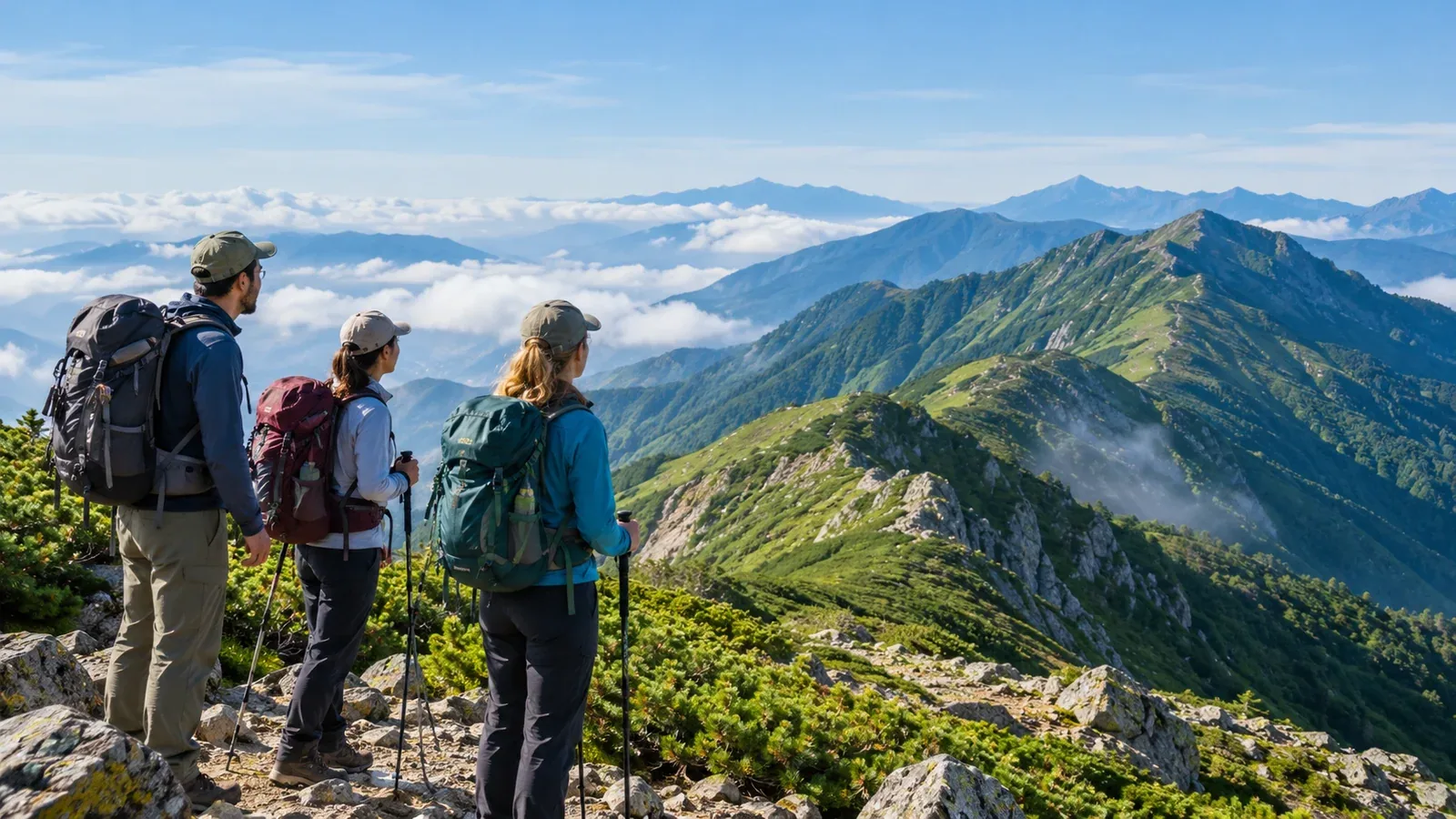
Hikers in Japan are increasingly likely to meet visitors from abroad. You may already have been asked for directions in English at a trailhead or a mountain hut. How do those visitors find out about the mountain in the first place?
English-language information about Japanese mountains reaches readers through a few main channels. Each tends to cover particular places, and the depth and accuracy of the information vary. Knowing where visitors get their information can help hiking communities welcome them and help you share better information with friends overseas.
Where English-speaking hikers get their information
Three broad kinds of sources can help explain how visitors first hear about Japanese mountains.
Travel and tourism websites publish articles such as lists of the best hikes in Japan or complete guides to Mount Fuji. Sites that depend on search traffic often cover heavily searched destinations such as Mount Fuji, Yakushima, and Mount Takao. The quality varies, and some articles still list old fees, timetables, or opening dates. Use them to find an idea, then check the details with the people who run the service or manage the trail.
Hiking and backpacking communities and forums collect trip reports from people who have walked the routes. They may have practical details on places travel sites cover less often, such as the Northern Alps, the mountains of Tohoku, or the mountain sections of the Kumano Kodo. Each report reflects the conditions and experience of the person who wrote it. Check the date and whether the route and circumstances match your trip.
Official and tourism authority websites include English pages from national and prefectural tourism bodies and some municipalities. Yamanashi and Shizuoka also publish detailed English information for Mount Fuji. These are useful sources for rules and current access, though travelers may not find them easily through general web searches.
How mountains other than Fuji appear in English
Beyond Mount Fuji, some destinations have a stronger English-language presence than others.
The name “Japan Alps” is widely recognizable. Blogs and photo-sharing sites introduce places such as Mount Yari, Karasawa, and Kamikochi. Forums often include questions about how to get there or reserve a hut. When a hut has little English information or a booking system that visitors cannot use, that gap can make the itinerary difficult to arrange.
There is less English information about many mountains in Tohoku, Kyushu, and Shikoku. Travel sites often describe them as quiet or overlooked destinations. Yatsugatake and Nasu may appear in articles about trips from Tokyo, though the articles often give few details about the route or equipment.
Where English-language information falls short
The gaps often reflect how and why the information was published.
Seasonal conditions and safety get limited coverage. A general travel guide may leave out rapid changes in mountain weather, winter closures, altitude illness, or precautions around bears and insects. Saying a trail is open in summer may tell you little about afternoon thunderstorms during the rainy season or why an early start can matter.
Mountain hut practices take explanation. Readers need to know about reservations, shared rooms, whether a booking includes dinner and breakfast, and whether they can pay by card or need cash. Few guides cover all of these well. Missing information can leave people planning an overnight route without a confirmed place to sleep or the equipment they need.
Access rules, opening dates, and fees can change. Mount Fuji is one example. Old articles can still appear near the top of search results. Check the latest trail status, fees, and entry requirements with the municipality or authority responsible for the area. Use its English page if it has one.
How to assess an English-language guide
Use these checks when looking up a trip or answering a visitor’s question.
- Check when it was updated. Weather, access rules, and prices can change quickly. Even a guide published less than two years ago may need to be checked against a current source.
- Look for official sources. Useful guides link to the municipality, mountain hut, national park, or trail manager. Follow the link and check that it still leads to the relevant page.
- Look for a season or date range. A guide that presents a route as walkable year-round may have left out important seasonal conditions.
- Read updates and recent comments. Forum users may correct or qualify an old post. Confirm the information with the authority or service it describes before you rely on it.
How hikers in Japan can contribute
What people in Japan share can improve the English-language information visitors find.
Add a short English line to a social media post or photo caption. The mountain, the season, and the route name give readers useful search terms. Writing both Yarigatake and “Mount Yari, Northern Japan Alps” can help people match the place to a map or another guide.
For safety and access, direct readers to the source that manages the trail. A note asking them to check the official site for current conditions can keep older information from being passed on as current.
Putting it into practice
If you meet a visitor who needs help with a booking or an access rule, point them to the official information for that area. Check whether the municipality or trail manager has an English page. Nordwand’s Base Camp and activity communities can also help hikers from Japan and abroad connect.
References
- Japan Tourism Agency, tourism information for international visitors
- Yamanashi and Shizuoka prefectures, official Mount Fuji climbing information in English
- Ministry of the Environment, National Parks of Japan in English