
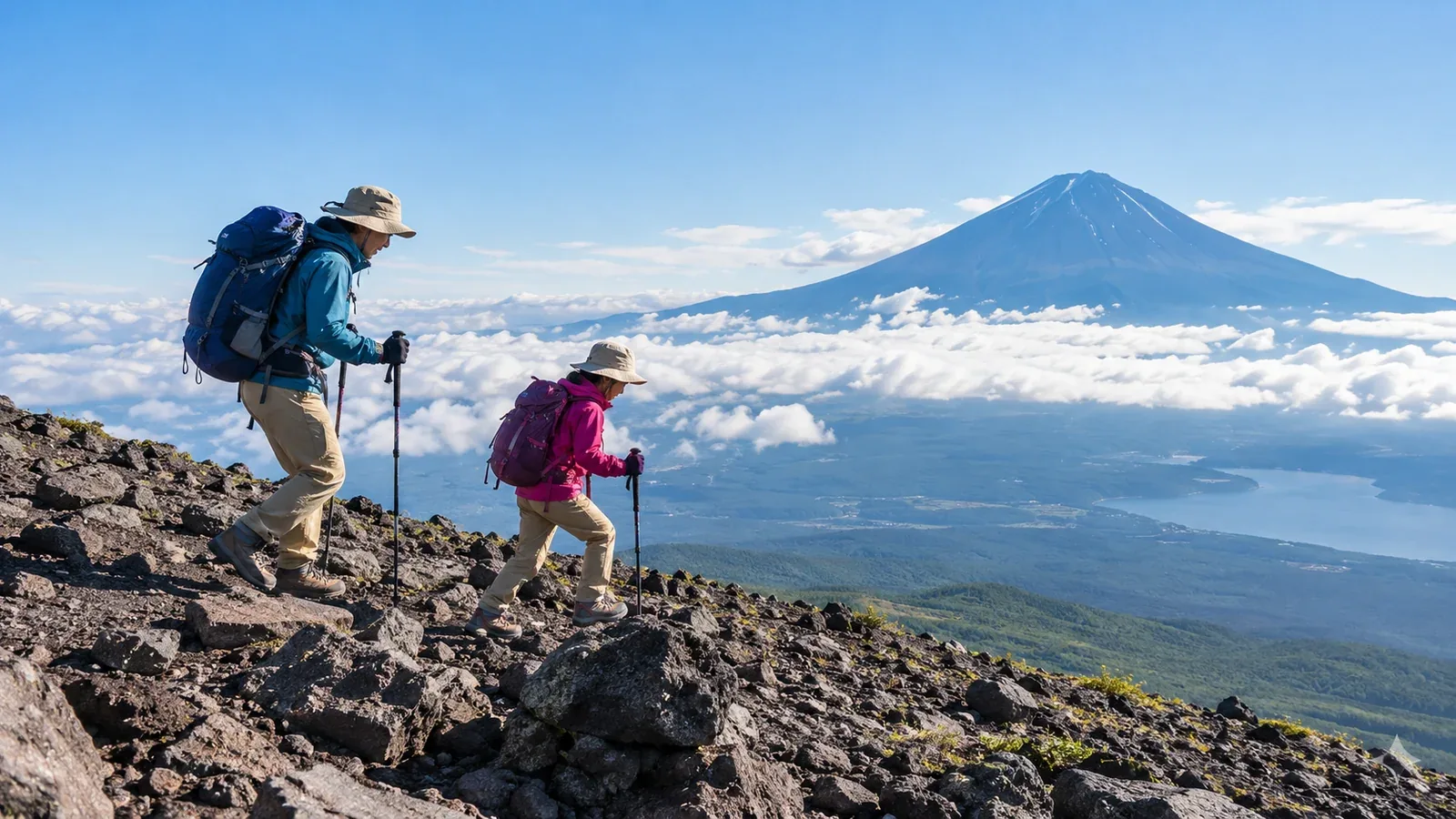
A child’s age is only one part of the decision to climb Mount Fuji. Think about whether they enjoy sustained hikes, can tell you how they feel and can still descend after a long climb. Make a plan that makes turning around easy.
Use this guide to assess experience, recognize altitude symptoms and choose an outing that fits your family. Talk to your child’s clinician if you have health concerns. Check current entry rules and any age policies with the hut or tour operator you plan to use.
Experience and fitness matter alongside age
On the Yoshida Trail, the Fuji-Subaru Line 5th Station is at 2,305 m. The official guide lists about 6 hours 10 minutes up and 3 hours 35 minutes down before breaks. Times differ by route and pace. The summit area is high, and parts of the trail are steep and rocky.
The official Mount Fuji FAQ says many guided tours accept children from fourth grade, depending on fitness and experience. That is a tour guideline. Check the individual operator’s requirements and use easier hikes to see how your child manages both climbing and descending.
Young children may struggle to describe what they feel. Consider a lower outing if you cannot reliably tell how your child is doing, and choose an itinerary that lets you stop early.
Recognizing altitude illness in children
Lower air pressure makes less oxygen available per breath. Children can get altitude illness just as adults can. Headache, nausea and unusual fatigue may appear after gaining altitude. Watch for behavior changes as well as spoken complaints.
Here are changes to watch for.
- Headache, nausea or dizziness that may be hard for the child to describe
- Unusual quietness, irritability, paleness or poor appetite
- A change in walking, activity or sleep in a child who cannot describe symptoms
Ask simple, specific questions and observe how the child walks, eats and responds. The official Fuji guide suggests resting about one to two hours near the 5th Station. Stop ascending if symptoms appear and descend safely if they worsen or do not improve. Confusion, unsteady walking or breathlessness at rest need urgent help. In Japan call 110 or 119 for rescue.
Planning a family outing
Choose the route and overnight stop
Yoshida offers more huts than the other summit trails, mainly on the ascent. Check how far each hut is from the start, where you can turn back, its current availability and whether it accepts children of your child’s age.
A hut stay can divide the climb and make rest easier, though the child still spends the night at altitude. Choose a reachable hut and avoid a sleepless overnight climb. A shorter open trail or suitable lower viewpoint may be a better first outing.
Set timing and watch the weather
Start early enough to have time for breaks and a daylight return or hut arrival. Check official forecasts and trail notices the day before and the day of the climb. Turn back early for deteriorating weather, poor visibility, strong wind or lightning.
Share the load
Use a well-fitting light pack if the child wants to carry one. Have an adult carry the shared equipment, extra supplies and whatever the child cannot carry comfortably. Keep rainwear, warm layers and water within reach and check pack fit on a practice hike.
Agree on when to turn around
Tell the child before leaving that everyone can ask to stop. Decide which changes will lead the family to shorten the outing.
Examples include:
- Headache, nausea or a marked change in behavior after gaining altitude
- Missing the agreed turnaround time or having too little daylight to get back
- Worsening weather or conditions the group cannot handle
Choose an outing with more than one way to enjoy the day. A comfortable walk to a lower landmark can be the whole plan. The adults make the call to turn back when needed.
Clothes and equipment for a child
The upper mountain can be near freezing even in summer. Check the child’s clothes at stops and keep dry layers, a headlamp and a backup ready.
Try the following items together before the trip.
- Rainwear: Pack separate waterproof jacket and trousers that fit over warm layers.
- Gloves and a hat: Choose warm gear the child can put on quickly.
- Footwear: Use well-fitting hiking shoes with traction suited to rock and gravel, already tested on a walk.
- Trekking poles if useful: Adjust them for the child and practice on easy ground. Stow them where hands are needed.
- Food: Pack familiar snacks and enough for delays.
- Water: Carry enough for conditions, time and the child’s needs. Confirm hut services before relying on them.
Practice on a lower mountain first
Choose shorter walks with easy exits, then build up as the child enjoys them and gains experience. Use each outing to see how the child handles the climb and descent.
- How the child feels and moves after sustained walking
- How their shoes, layers and pack fit
- What fatigue or discomfort looks and sounds like for this child
Practice stopping before the child is exhausted and talking about discomfort early. Use those outings to decide whether a Fuji summit itinerary fits now or whether another family hike would be more enjoyable.
Before you go
Test the plan and gear on a lower trail, then confirm Mount Fuji’s season, entry rules, hut and return transport. Agree on an easy turnaround point. You can ask other hikers about family-friendly routes in Nordwand’s Base Camp.
Sources
- Official Mount Fuji climbing website: climbing with children
- Official Mount Fuji climbing website: route comparison and hut information
- CDC Yellow Book: traveling safely with children at altitude
- Japan Meteorological Agency: forecasts and warnings
References and sources
- Official Mount Fuji climbing website — Trails and access
- Japan Meteorological Agency — Weather forecasts
- CDC Yellow Book — Altitude illness
- Official Mount Fuji climbing website — FAQ about climbing with children
- Official Mount Fuji climbing website — A ranger’s advice for families
- Official Mount Fuji climbing website — Health and safety
- CDC Yellow Book — Traveling safely with children