
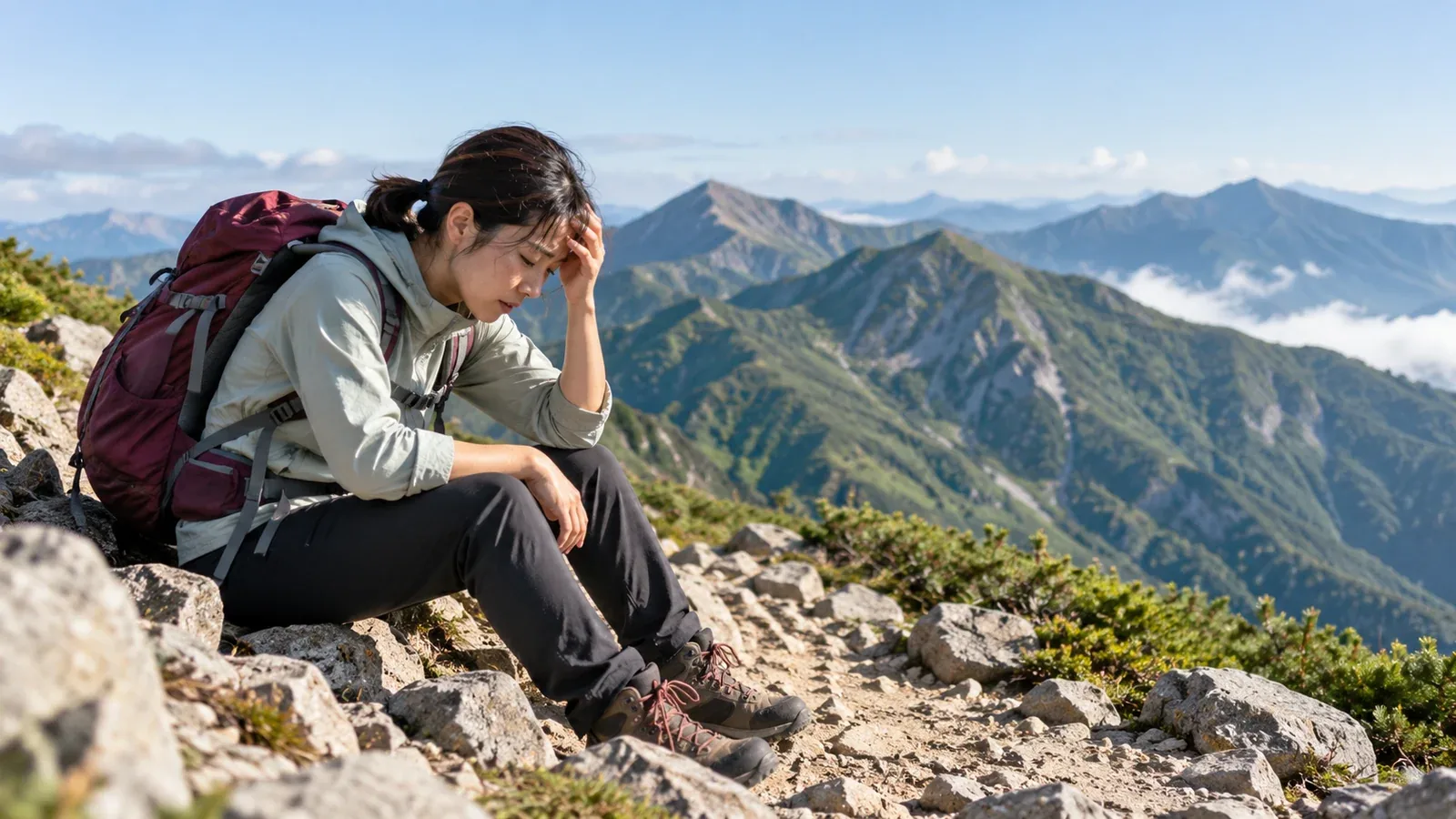
Your legs suddenly feel heavy, you stumble, and even reading the map seems like work. You may have felt this yourself or seen it happen to a partner. Running low on energy is one possible cause. Japanese hikers call this sharibate.
Shari means rice or carbohydrates, and bate means exhaustion. Together they describe a sharp drop in performance when you are running low on fuel. It is a hiking expression, and symptoms alone cannot tell you whether blood sugar is low. Rest and food can help when you are under-fueled. Fatigue and impaired judgment also make it easier to get lost or fall.
Beginners often wait until they feel hungry. When you are concentrating on the trail, it is easy to delay eating. Here is what happens and how to plan snacks and recognize when to stop.
Why hikers can run low on fuel
Hiking keeps the body working. Even on a level ridge, your legs and core constantly adjust your balance. As elevation rises, lower air pressure can make the same effort feel harder. In cold conditions, the body also spends energy keeping warm.
The body uses both carbohydrates and fat during exercise and relies more on carbohydrates as intensity rises. Muscles and the liver can store only so much glycogen. On a long hike, when carbohydrate use outpaces intake, fatigue can build and your pace can drop.
Fat also supplies energy, though it is slower to mobilize than carbohydrate. Carbohydrate-rich foods are a practical source of quick fuel while active.
Changes to watch for
Bonking can feel sudden. These changes can occur when you are low on fuel, but they follow no fixed progression and can also have other causes.
Early changes worth noticing
- Your legs feel heavy and your pace slows.
- You feel a growing need to rest.
- Your attention drifts and you stop taking in the scenery or the conversation.
Changes that warrant a stop to check how you are doing
- Headache or slight dizziness.
- Heavy limbs or trouble putting strength into a movement.
- Feeling low or easily irritated.
Serious warning signs
- Swaying even when standing still.
- Difficulty thinking clearly.
- Severe weakness with nausea.
Stop and move to a safe spot if serious symptoms appear. Take small amounts of carbohydrate or fluid only if you are fully alert and able to swallow safely. Call for rescue immediately if there is confusion, fainting or an inability to walk straight. Altitude illness, heat illness and hypothermia are also possible. Give nothing by mouth to anyone who is not fully alert or cannot swallow safely. If you are at risk of low blood sugar, for example because of diabetes, agree on a plan with your healthcare team before the hike.
When and how much to eat
A practical way to prevent bonking is to eat a little before you get hungry. Small, regular snacks are easier to work into a hike than one large meal after a long gap.
Planning snack breaks
How often and how much to eat depends on the length and intensity of the hike and how you feel. Planning a small snack at each break makes it easier to remember. On a long climb, take an earlier short break and keep your food where you can reach it quickly.
What makes a good trail snack
Look for food that is easy to digest, carry and eat. Rice balls, bread, drinkable energy gels, dried fruit and chocolate are common choices. Foods high in fat take longer to digest and may suit a longer meal break better.
Keeping up with fluids
Take fluids as well as food, with the temperature and effort in mind. Drink in response to thirst and avoid forcing large volumes of water. If eating and resting do not help, consider other causes and whether you need to descend or call for rescue.
Planning and carrying trail food
It is easier to keep up with snacks if you decide roughly where and what to eat before leaving.
- Check your time on the trail. Use the estimated route time to work out how many hours you will be walking.
- Count your snack stops. Look at the route and planned breaks and choose where to eat.
- Divide your food into portions. Put each portion in a small bag you can reach without opening the main pack compartment. Use a waist pouch or the pocket in the lid of your pack.
- Bring spare food. Pack one or two extra portions in case the hike runs long or someone else runs short.
Keep track of whether you are eating as planned. Even noticing that it has been more than two hours since you last ate can help you catch a missed snack.
After you feel better
There is no fixed recovery time. If mild symptoms clear completely with rest and food and you can walk safely, ease back in at a slower pace. If symptoms are severe or return, stop and seek help.
Take the rest of the day's fatigue into account. Compare the time remaining with how you feel. A shorter descent or a turnaround can be the right call.
Before your next hike
Use your expected walking time to plan snack stops, portion your food and choose where to pack it. Notice early changes such as slowing down or losing focus. Agree on snack stops with your hiking partners to help the group keep a steady pace. In Nordwand's Base Camp or a relevant community, you can ask experienced hikers what they carry.