
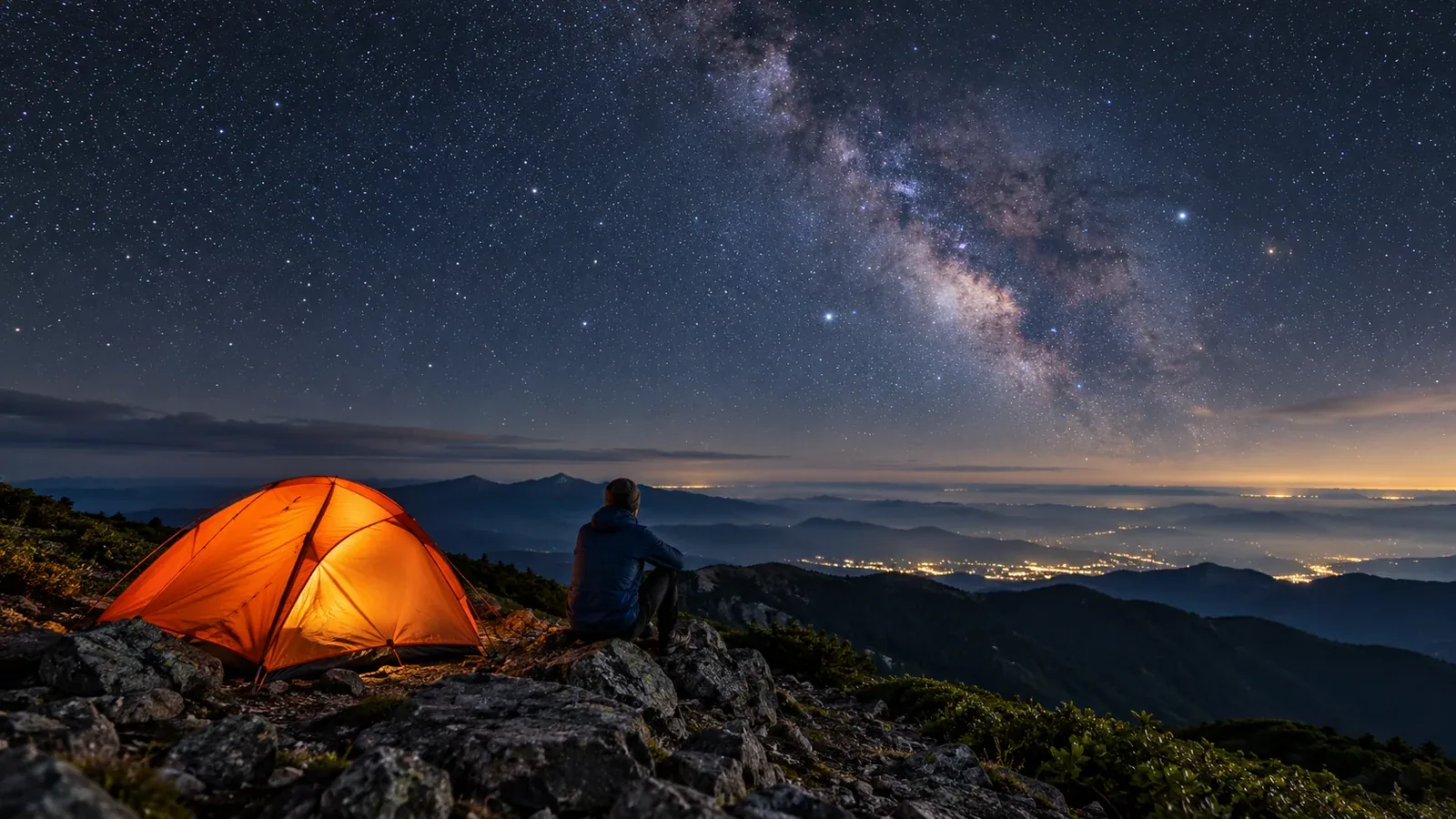
“Where can I go to see a beautiful night sky?” is a surprisingly hard question to answer. Long exposures and image processing can make photos on social media look very different from what you see with your own eyes. Even at the same mountain, the season, weather, phase of the Moon and how well your eyes have adapted to darkness change the view.
To narrow down the options, compare three things: light pollution, how much of the sky is visible, and when and how you can get there safely. You can use these criteria to assess any site you are considering.
Light pollution: Where are the sources of artificial light?
Artificial light is one of the biggest factors in what you can see. A nearby city can cast a glow along the horizon in its direction and wash out faint objects such as the Milky Way.
The Bortle scale rates the night sky from 1 to 9 using visual observations such as the appearance of the Milky Way. Lower numbers mean darker skies. When using a light pollution map, check its legend to see whether the data come from satellite observations, modeled sky brightness or another measure. Clouds, haze, moonlight and dark adaptation also affect what you see.
These are some of the places and conditions to look for when searching Japan for a darker sky.
- Mountain areas away from bright lights are a good starting point. Check for nearby towns, hot-spring resorts and ski areas in the direction you want to look.
- Outlying islands can have dark views over the sea. Some objects in the southern sky appear higher from lower latitudes such as Okinawa than from Honshu. Check the direction of nearby settlements and where you intend to look.
- Mountain interiors in Hokkaido, Tohoku, Shikoku and Kyushu also offer possible sites. Check the lights near each observation point and the direction you want to face.
Elevation alone tells you little about darkness. Look for towns or facilities in the direction you want to face and check for lighting at the observation site itself.
Open views: Which parts of the sky can you see?
Even in a dark sky, trees or a ridge can hide the object you came to see. Choose the site based on the object's direction and height above the horizon.
A wide view of the horizon lets you look in several directions. If you are after one object, an opening in that direction can be enough. Set your location and date in a sky chart app to see where and when the object will appear. Exposed summits and ridges can be windy, so bring warm layers.
The object's elevation above the horizon also matters. A clear view overhead can be enough for targets close to the zenith. For the bright central part of the Milky Way near Sagittarius on summer nights, look for a site where trees and ridges leave the low southern sky open.
The location and orientation of huts and campsites are worth checking, too. Consult the hut's website and trip reports to get a sense of the view from a terrace or designated campsite. Note the dates and seasons of the reports you consult.
Season and Moon: The date and hour change the view
A bright Moon can wash out the Milky Way even at an open, dark site. Plan both the destination and the observation time.
Choose a time with little or no moonlight
Dates around the new Moon are a good place to start. Other dates can work if the Moon is below the horizon during your observing window. The National Astronomical Observatory of Japan's calendar service gives the Moon's phase, moonrise and moonset for locations near your site. Prepare for wind and cold if you will be out before dawn.
What to look for by season
- Summer (July and August) is a good time to look for the bright part of the Milky Way toward Sagittarius and Scorpius in the southern sky once it is dark. Keep checking forecasts for thunderstorms and cloud cover up to departure.
- Autumn (September to November) can bring the central part of the Milky Way low in the southwest early in the evening, depending on the date. Look for the Andromeda Galaxy as well, and prepare for cold nights.
- Winter (December to February) offers good views of Orion and other winter constellations. Winter travel in high mountains requires the right equipment, skills and judgment. Consider suitable viewing sites at lower elevations.
- Spring (March to May) brings constellations such as Leo and is a chance to check summer viewing sites and access routes in daylight. Check for snow, ice and seasonal closures.
Keep checking the forecast until departure
Alongside lowland forecasts, look at expected cloud, wind and temperature near the elevation of your site. Check the Japan Meteorological Agency's warnings and advisories the day before and the day you leave. Postpone plans for an exposed ridge if thunderstorms or strong winds are expected. End the session early if it becomes windier or colder than expected.
Access and safety after dark
A dark, open site with a clear forecast still needs a safe way in and out.
After dark. Choose a viewpoint that is open at night and has a safe way back. Scout the footing and return route in daylight. If staying overnight on a ridge, secure an open hut or a designated campsite you can use and plan to descend the next morning. Pack a headlamp and spare batteries, and schedule day hikes to finish before sunset.
Warmth. Standing still on a summit or ridge chills you faster than walking. Bring insulating layers and a windproof outer layer. Even on summer nights, elevation and wind can make it cold.
Access rules and restrictions. Check hut dates, campsite bookings and restrictions, nighttime opening hours at viewpoints and transport back. Get current details from the site managers and transport operators.
How to narrow down your options
Use these steps to shortlist sites and plan your outing.
- Start with a light pollution map. Read the legend, find darker areas and check the direction of nearby sources of light.
- Check where to look. Use a sky chart app to find the direction and elevation of the target or a meteor shower's radiant, then look for an opening in that part of the sky.
- Check nighttime access or overnight options. Confirm opening hours, return transport and availability at huts or designated campsites.
- Plan around moonrise and moonset. Look at dates near the new Moon or times when the Moon will be below the horizon.
- Make the final call using mountain forecasts and weather alerts. Check cloud, wind and temperature at the site and look for thunderstorms or strong winds.
A good night at one site may be a poor one at another. Keep several options so you can adjust the location or timing around the weather and the Moon.
Next steps
Start by checking the Moon's phases, moonrise and moonset over the next two or three months with the National Astronomical Observatory of Japan. Choose dates and times that work, narrow the list with a light pollution map and confirm nighttime access or overnight stays with the site managers. You can share local updates with others heading to the same area in Nordwand's Base Camp.
References
- National Astronomical Observatory of Japan: Calendar calculations
- Japan Meteorological Agency: Weather forecasts
- Ministry of the Environment: National park etiquette
- Sky & Telescope: How Dark Is Your Night Sky?
References and sources
- National Astronomical Observatory of Japan: Calendar calculations
- Japan Meteorological Agency: Weather forecasts
- Ministry of the Environment: National park etiquette
- Sky & Telescope: How Dark Is Your Night Sky?
- NASA: How to Find Good Places to Stargaze
- National Astronomical Observatory of Japan: Monthly sky charts
- Japan Meteorological Agency: Weather warnings and advisories
- Ministry of the Environment, Shiretoko Rausu Visitor Center: Mt. Rausu and Shiretoko range FAQ
- NASA: The summer Milky Way and the Great Rift
- NASA: Skywatching guide, including the Andromeda Galaxy