
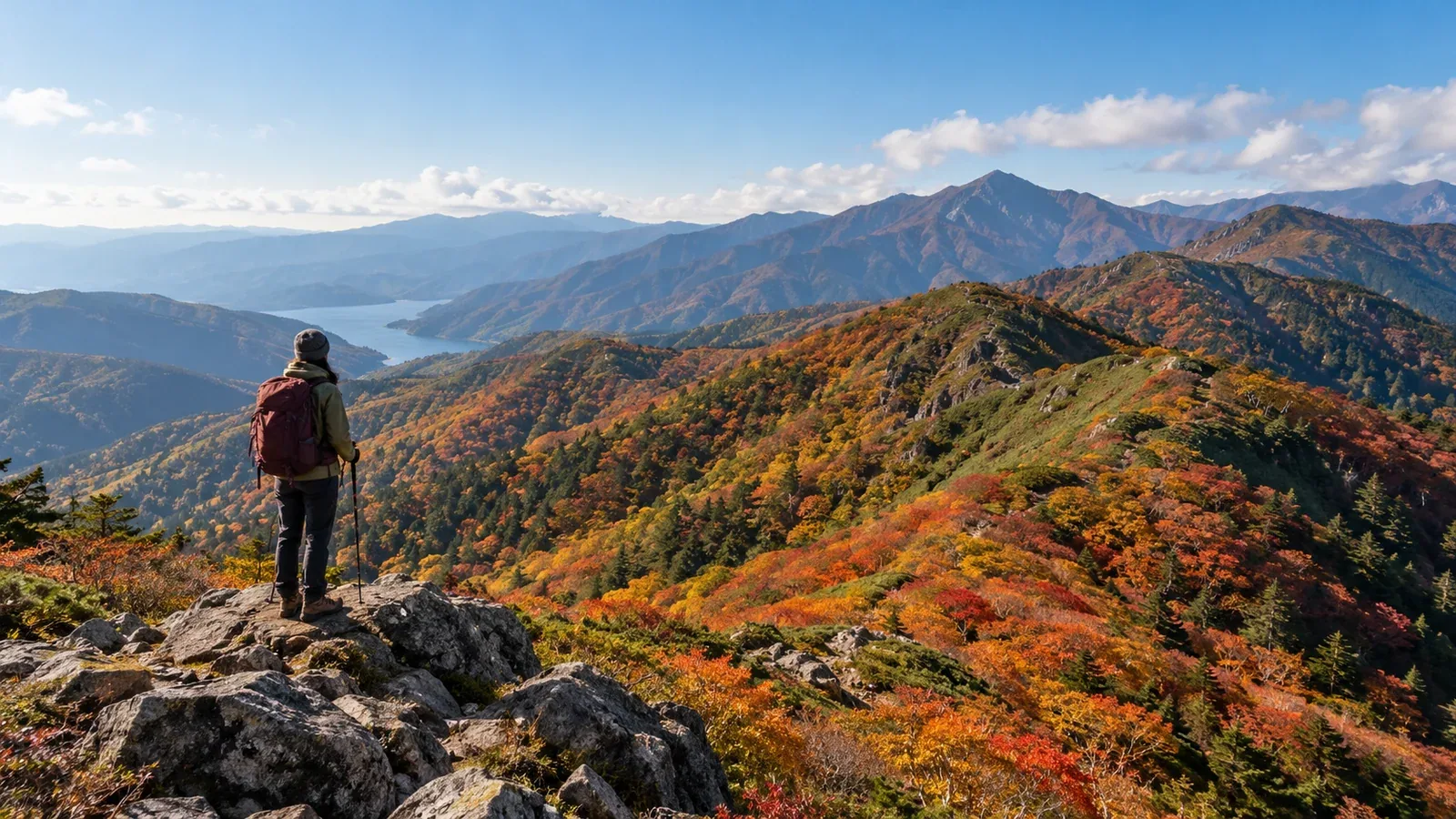
Where are the best fall colors in Japan’s mountains? The year’s temperatures, weather, time of day and elevation of the trail can all change the answer. One person can be dazzled by the same mountain that another found subdued. Even a famous destination can look different from what you expected.
Look at what makes fall colors stand out and choose a mountain that fits your tastes and dates. Four things guide the search: vegetation, terrain, light and timing.
What makes fall colors stand out
Three things largely shape how the colors look.
Range of colors. Red maples, orange-red rowans, yellow Erman’s birches and green evergreen conifers such as dwarf pine can give the mountainside depth. Some maples also turn yellow. The mix of species and the conditions that year shape the palette.
Intensity of color. Reds can be vivid one year and dull the next. The Nagano weather office points to a wide gap between daytime and nighttime temperatures, enough sunshine and suitable moisture. Temperatures change from year to year, even in places usually known for bright colors.
Where you see it from. Looking down from an open ridge feels different from walking in a valley. A ridge can reveal an entire colored slope, while a valley trail surrounds you with leaves. Terrain shapes the scale of the view.
Choose by vegetation
Species change with elevation. The boundaries between vegetation belts vary with latitude and slope, so these groups are a guide from high mountains down to the foothills.
Alpine and subalpine zones
In Hokkaidō’s Daisetsuzan, rowans and Erman’s birches change color, and mats of alpine bearberry can turn red. At Senjōjiki in the Central Alps, low alpine plants color first, then red rowans and yellow birches stand out against evergreen dwarf pine. High areas often turn earlier, but check the latest from huts or trailhead managers for the best time.
Montane forests
Some montane forests mix Japanese beech, mizunara oak and maples. Light through the yellow or brown leaves of a beech forest feels different from a valley marked by red maples. Around Lake Chūzenji and Senjōgahara in Oku-Nikkō, compare how the colors change with elevation and location.
Low mountains and foothills
Lower mountains can have Japanese maples, konara oaks and sawtooth oaks. Red maples mix with leaves turning yellow and brown. In some areas the best color comes in November. To find a lower, accessible mountain with the colors you want, check species and recent photos as well as elevation.
How to time your visit
Peak color often shifts. Start with the usual dates, then revisit them using this year’s temperatures from summer into fall and recent photos from the site. On a single mountain, different elevations and slopes can turn at different times.
Where to check first. Start with the sources closest to the trail.
- Hut and visitor center posts. People near the mountain often share dated photos that show current color.
- Official prefecture and national park sites. Some post updates on where color is at its best.
- Japan Meteorological Agency outlooks and temperatures. Compare recent temperatures and longer-range forecasts with normal conditions. Seasonal plant observations describe their observation sites, so compare them with reports from the mountain.
At the start of fall, green, yellow and red overlap. After the leaves fall, trunks and open sky bring out the shape of the mountain. Work out which phase you enjoy and a shift in timing may give you a different view worth seeing.
Read the terrain and the light
Different routes in the same area can give very different views.
Ridges and valleys. A ridge often lets you look across the whole colored mountainside. In a valley, you walk among the trees and notice light through the leaves and leaf litter underfoot. Look at the route on a map to choose the experience you want.
Light direction and time of day. Light coming through leaves can make their colors glow. In clear weather, east-facing slopes tend to get morning light and west-facing slopes afternoon light. Check the aspect and nearby ridges on a map, and account for the time the slope is in shadow.
The effect of weather. Leaves can look softer after rain or on an overcast day. Sunlight can make the colors stronger, and thin clouds can spread the light more evenly. Go ready to enjoy the light you get.
A checklist for comparing mountains
Check these details before you choose.
- Tree species. Look for beech, maples or low alpine plants, depending on the colors you want.
- Elevation, fitness and gear. Does the zone with the colors you want fit your hiking ability and equipment?
- Timing. Have you compared the usual dates with this year’s temperature trend?
- Terrain. Does the route follow a ridge or a valley?
- Recent local reports. Have you checked updates from huts or visitor centers?
- Access and crowds. Allow for busy trailheads and car parks when planning travel and arrival time.
This check helps you avoid arriving after the leaves have fallen or finding a different landscape from the one you expected.
What to do next
Check local authorities, national park visitor centers and huts for the latest color. Until you leave, compare Japan Meteorological Agency regional forecasts and warnings with a mountain forecast for your elevation. Dates and routes in hiking logs shared on Nordwand can also help narrow your options.
References
- Japan Meteorological Agency, seasonal observations of plants
- Ministry of the Environment and national park visitor center information
- Forestry Agency and regional forest office resources on trees and vegetation
References and sources
- Nagano Local Meteorological Office | Fall weather and foliage
- Japan Meteorological Agency | Seasonal observations of plants
- Hokkaidō Regional Environment Bureau | Fall colors on Aka-dake, Daisetsuzan
- Central Alps Komagatake Ropeway | Fall colors at Senjōjiki
- Ministry of the Environment | Oku-Nikkō wetlands and surrounding vegetation
- Kinki-Chūgoku Regional Forest Office | Low-elevation forest at Mount Tezutsu
- Tōhoku Regional Forest Office | Yellow fall leaves of Acer tschonoskii
- Japan Meteorological Agency | Weather forecasts and information