
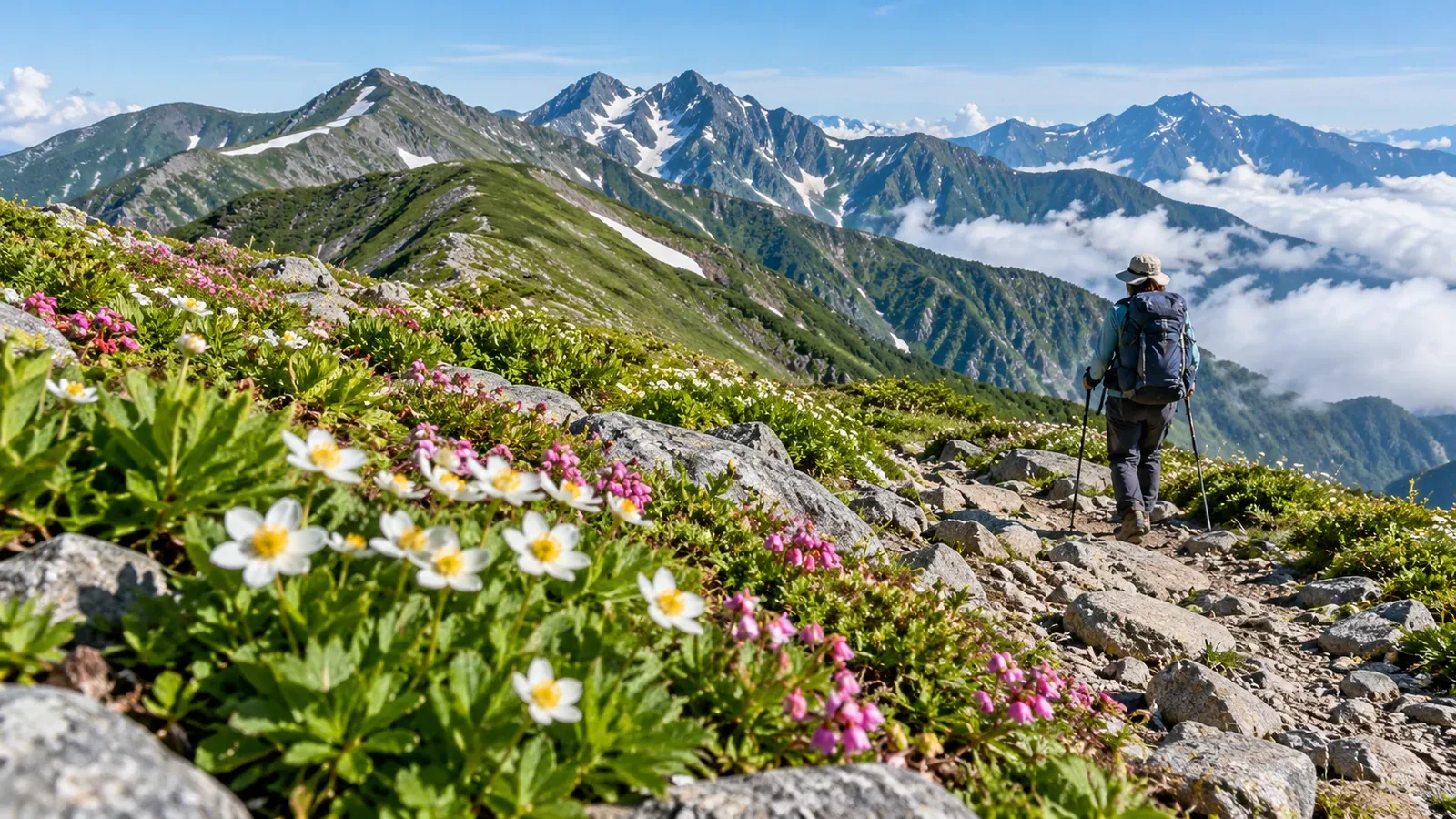
If you want to hike among alpine flowers, look at what makes them thrive before settling on a famous summit. Japan has several areas known for wildflowers, but even on the same mountain, the season, the route and the amount of lingering snow can make a big difference to what you see.
We’ll look at the conditions behind a rich display of alpine flowers and what distinguishes several well-known areas. The aim is to find an area that fits your fitness, travel dates and interests.
Four things that shape alpine flower displays
Geology, terrain, climate and the way trails are laid out all affect what you can see. Understanding those four factors makes it easier to choose an area.
Bedrock and soil chemistry influence which plants grow. Serpentinite and other ultramafic rocks support plants adapted to the soils they form. Volcanic scree and limestone terrain also support plant communities adapted to their own conditions.
Late-lying snowbeds shape flowering times and vegetation. Snow can linger on sheltered slopes and in hollows, where flowers bloom in succession as patches melt out. On the same mountain, exposed ridges that hold little snow can peak at a different time from snowbeds.
The elevation of the treeline tells you where a trail will enter the alpine zone. The treeline is the upper limit of continuous forest. In Japan, the subalpine zone generally lies below this boundary and the alpine zone above it. Latitude, climate, wind and snowfall all affect where it lies.
The route you take determines which habitats you can see. A ridge walk offers different plants from a trail that crosses marshes, scree and stream banks. Check which types of terrain the route passes through as well as its elevation.
Mountain regions known for alpine flowers
Each of these regions has something different to offer. Here is what makes the flowers worth seeking out in each.
Northern Alps (Hida Mountains)
Peaks around 3,000 m form long ridges with extensive alpine terrain. The meadows around Mount Shirouma are home to plants named after the mountain, including Shirouma asatsuki and Shirouma rindō. Depending on your route, you may see scree, snowbeds or wetlands such as Tsugaike and Kumonodaira. Some trailheads take time to reach. Check current trail and hut information with local authorities and hut operators, and allow time for the approach.
Southern Alps (Akaishi Mountains)
The Southern Alps also have extensive alpine terrain. Mount Kita is home to Kitadakesō, one of several plants found only in this range or its surroundings. Sika deer browse on alpine plants, and some sites are protected by fencing. Check transport to your trailhead and look up official road conditions if you plan to use the Minami Alps Forest Road.
Alpine areas in Tōhoku and Hokkaidō
At higher latitudes, you can reach alpine terrain at lower elevations. The Daisetsuzan range in Hokkaidō has alpine conditions around 2,000 m comparable to those at 3,000 m in Honshū. Flower meadows form around snowbeds that can last into midsummer. In Tōhoku, trails in places such as the Hakkōda Mountains offer a look at wetland plants. Check local reports, as peak bloom varies by area, elevation and snowmelt.
Wildflower hikes in Chūbu and Kantō
On Mount Shibutsu in Oze, look for Ozesō and other plants adapted to serpentinite soils. To decide between a day hike and an overnight trip, look at the route, elevation gain and trailhead access. Mount Shibutsu has seasonal closures and a one-way section to protect vegetation. Check the latest restrictions and trail conditions alongside bloom reports.
Timing your hike for the flowers
Once you’ve chosen a region, timing matters most. On the same mountain, a shift of two weeks can change which species are in bloom.
Flowering times by elevation are worth checking. A flower that has faded at the foot of a mountain may still be blooming higher up. At the same elevation, slope aspect, sunlight and snowmelt can change the timing. Look for recent observations on your route or at a comparable elevation.
Lingering snow affects flowering too. Around snowbeds, later melt usually means a later start to flowering. Start checking reports from huts and hiking communities a week or two before departure so you can adjust your plans.
The rainy season matters as well. Some areas have abundant flowers from mid-July to early August, but peak bloom varies by place and species. Prolonged rain may limit the days or routes you can hike. Check the Japan Meteorological Agency’s regional forecasts and alerts, along with a forecast for your mountain’s elevation.
Protecting alpine vegetation
Areas rich in alpine plants may have conservation rules. Restrictions on leaving the trail, picking particular plants or entering at certain times vary by location. Before your trip, check official information from local authorities, park offices and huts.
Alpine vegetation takes time to recover from trampling. Stay on marked trails and boardwalks, and stop for a break or a photo where you can stand without stepping on plants. Leave the flowers where they grow.
A checklist for choosing a wildflower hike
Use these questions to compare your options.
- Fitness and time: Can you hike it in a day, or do you need a night in a hut? Check ridge distances and total elevation gain.
- Plants or habitat: Are you most interested in ridge scree, snowbeds, wetlands or the zone just below the treeline?
- Best time: Check typical flowering dates with local authorities, huts and hiking communities.
- Access: Check buses, private-car restrictions and forest road conditions.
- Restrictions and protected areas: Find the official rules for plant conservation areas and special protection zones.
Write down your answers before comparing regions. They give you a clear reason to choose a mountain that fits your trip.
Next steps
Once you have a shortlist, use local government and national park websites to check seasonal opening dates, plant protection rules and trail conditions. As flowering time approaches, hut blogs and recent hiking reports can help you judge when to go. Nordwand’s Base Camp and shared hiking logs are another way to hear from people heading to the same area.
References
- Ministry of the Environment information on national parks and alpine plant conservation
- Japan Meteorological Agency regional forecasts, weather alerts and rainy-season information
- Official mountain and nature park information from prefectures and municipalities
References and sources
- Ministry of the Environment: Chūbu Sangaku National Park
- Ministry of the Environment: Minami Alps National Park
- Ministry of the Environment: Alpine plant conservation in the Southern Alps
- Ministry of the Environment: Daisetsuzan National Park
- Tōhoku Regional Environment Office: Seasonal flowers in the Hakkōda Mountains
- Oze Conservation Foundation: Serpentinite and plants on Mount Shibutsu
- Ministry of the Environment: Mount Shibutsu in Oze National Park
- Ministry of the Environment: Monitoring Sites 1000 alpine survey
- Ministry of the Environment: National park visitor etiquette
- Japan Meteorological Agency: The rainy season
- Japan Meteorological Agency: Weather forecasts