
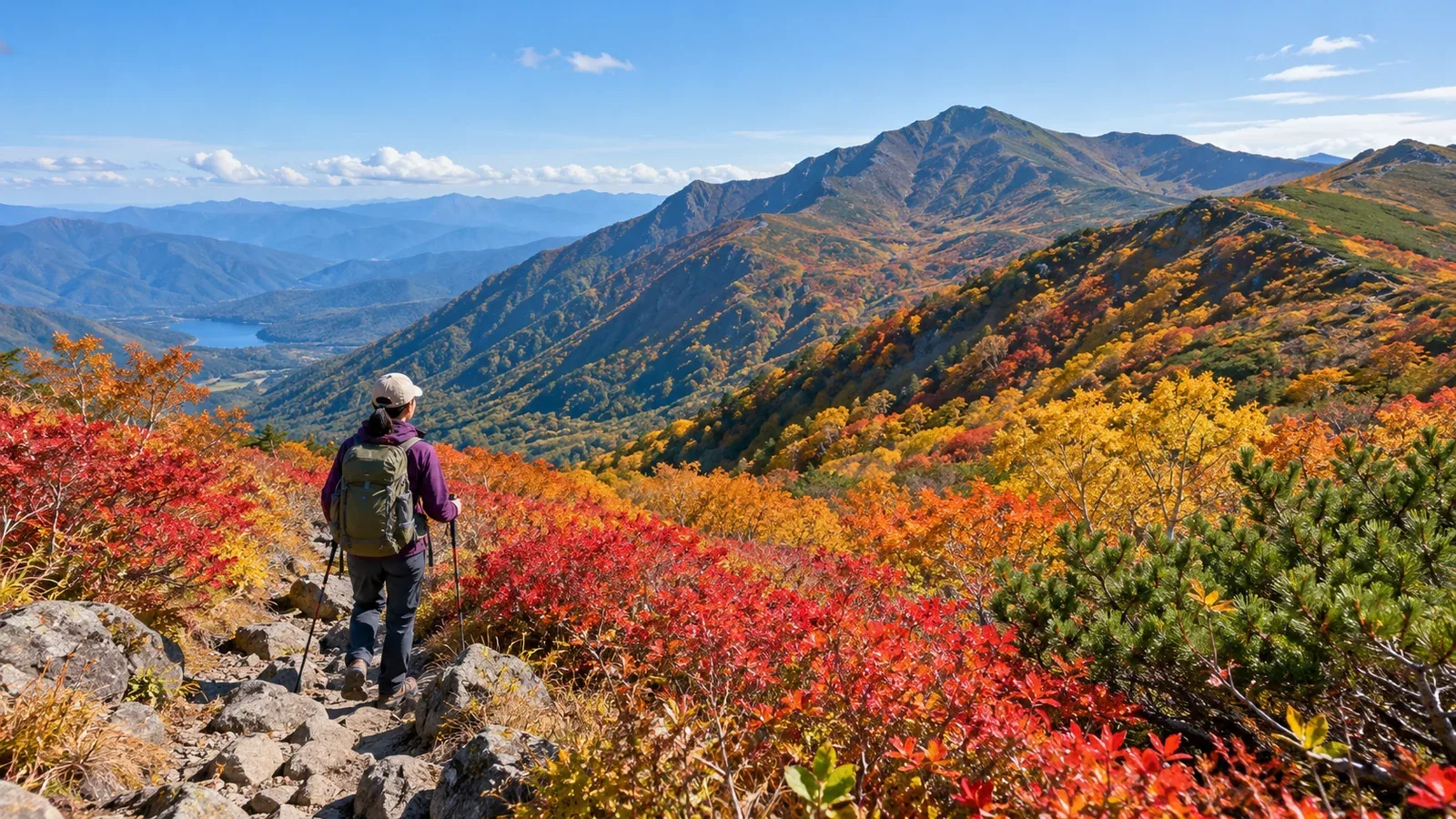
In autumn, yellow, red and brown leaves can share the same mountainside. The colors come from pigments and changes inside the leaf as the tree prepares to shed it.
Even in the same species, sunlight, temperature and the leaf’s water status affect the colors. That helps explain why the same mountain can look different from one year to the next.
Follow what happens inside the leaves, then see why the timing varies by elevation and slope and what to check before a hike.
Pigments that produce yellow and red
As leaves age in autumn, trees recover some nutrients, including nitrogen, and the green fades. Yellow and orange become more visible in some leaves, while others make red pigments.
Yellow and orange: pigments already present become visible
Chlorophyll, which plants use in photosynthesis, gives leaves their green color. Leaves also contain yellow and orange carotenoids. As chlorophyll breaks down in autumn, carotenoid colors become easier to see. This is what happens when ginkgo and beech leaves turn yellow.
Red: anthocyanins that build up in autumn
Some plants, including maples, make anthocyanins in autumn, bringing out red. Pigment levels depend in part on leaf sugars, light and temperature. As the leaf gets ready to fall, a separation layer forms at its base.
Why colors vary from one slope to another
Elevation, slope direction and wind exposure change the sunlight, cooling and moisture conditions that leaves experience.
In an experiment on sugar maple, cooling the branches increased leaf sugars and anthocyanins. Cooler autumn conditions also affect color in mountains, though the response varies by species and location.
Light also plays a role in red pigment production. On one tree, sunlit leaves and leaves deeper in the canopy can color differently.
Severe drought or a hard frost can damage leaves, turn them brown and cause early leaf fall. Look at signs of damage alongside signs of color change.
Weather that affects this year’s color
When leaves turn and how vivid they become depend on the species and the conditions the leaves experienced that year.
- Autumn sunlight. Light can help increase red pigments in some species.
- Cool nights. Cooling affects leaf aging and color. It can arrive at different times on ridges and in valleys.
- Moisture. Severe drought can damage leaves, which may wither or fall before they turn.
- Frost and strong winds. Frost can injure leaves and winds can bring them down, shortening the time when you can see the color.
The Japan Meteorological Agency records events such as ginkgo yellowing at observation sites. For the slope you plan to walk, check recent observations or photos from local managers.
Elevation and species affect the timing
Where high ground cools first, color can work its way from the upper slopes to the foot of the mountain. Around Mount Rausu in Shiretoko, you can see this progression. The difference in days between elevations depends on the area and the year.
In alpine areas, alpine bearberry and chinguruma can turn red, with rowans and Erman’s birches coloring nearby slopes. In lower forests, maples and other trees stand out. Their colors do not all peak on the same day.
At the same elevation, slope direction, tree species and cold air pooling in valleys can all change the view. When checking local updates, note when and where the photos were taken.
Why leaves turn brown
Beeches and mizunara oaks can have leaves that go from yellow to brown. As leaves age, pigments break down and leaves dry. Brown compounds such as tannins can become more visible.
After frost or strong wind, a route can look different from the previous week. Compare photos of ridges that turn early with valleys where leaves remain to choose the section you want to see.
Before choosing an autumn hike
Check the latest reports from huts, parks and local authorities for the color at your intended elevation and the date of the photos. Also review forecasts and trail information, then choose a section suited to wind, temperature and sunset.
Sources for further reading
- Ministry of the Environment explanations of autumn color and field observations from Daisetsuzan and Shiretoko.
- U.S. Forest Service materials on forest seasons and leaf damage, and studies of pigments and leaf aging.
- Japan Meteorological Agency seasonal observations.
References and sources
- Tōhoku Regional Environment Office: forest walk with an arborist
- Chūbu Regional Environment Office: how autumn leaves change color
- U.S. Forest Service: forest physiology and phenology
- Schaberg and colleagues: experimental branch cooling, pigments and sugars in sugar maple
- Keskitalo and colleagues: a cellular timetable of autumn senescence
- U.S. Forest Service: abiotic foliage damage
- Hokkaido Regional Environment Office: autumn foliage on Mount Akadake
- Rausu Visitor Center, Shiretoko: autumn foliage in Rausu
- Japan Meteorological Agency: seasonal observations of ginkgo leaf yellowing