
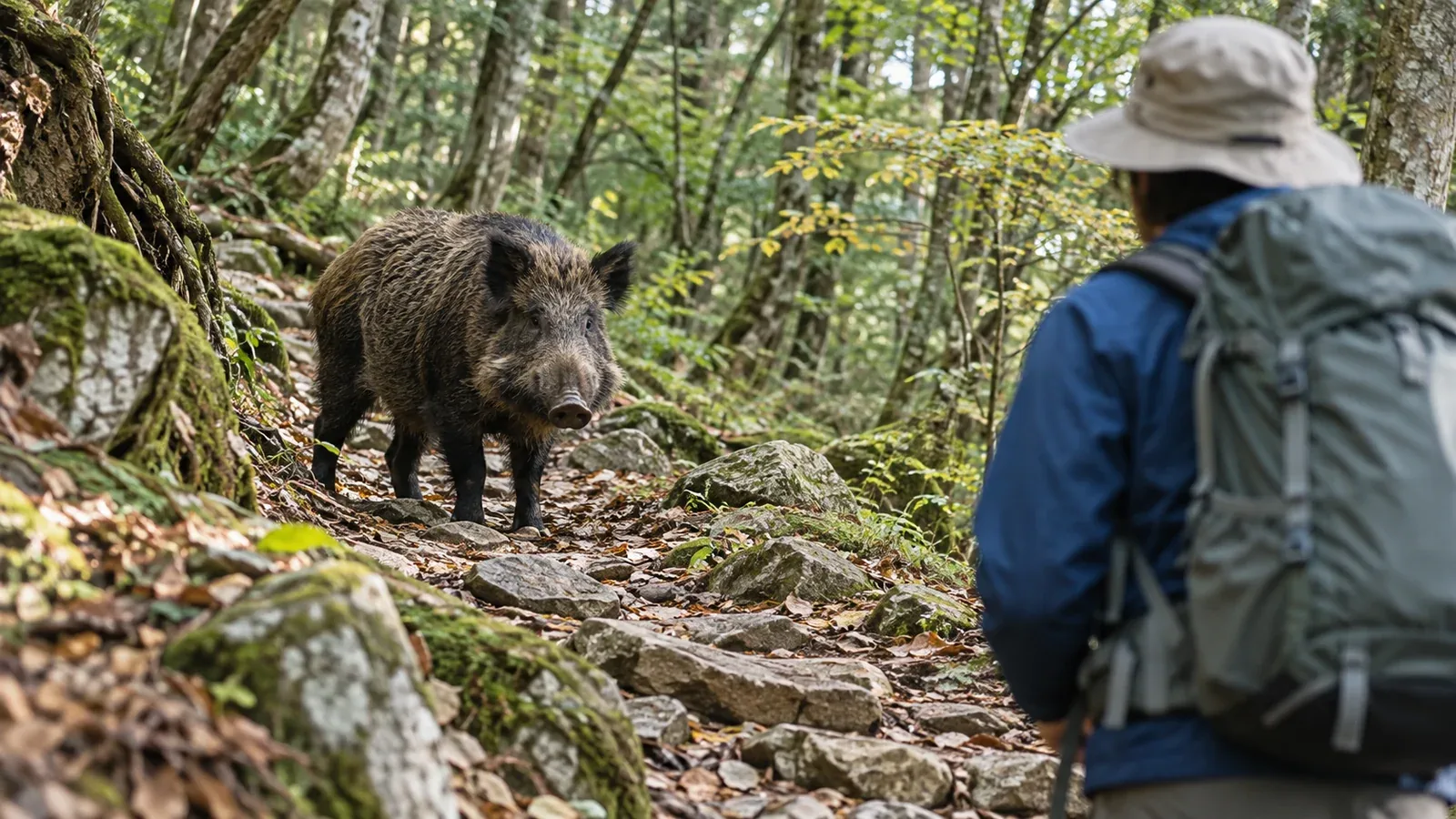
You round a corner and find a wild animal on the trail. Wild boar, Japanese macaques and sika deer call for different precautions, especially when an animal is feeding, guarding young or blocking the route.
Give wildlife room and an escape route. This guide covers what local Japanese authorities advise for these three animals.
Wild boar: avoid startling or cornering it
A boar may move away if it has room. A close surprise, blocked escape or an animal already agitated can make the encounter more dangerous.
What to do when you see a boar
- Pause and avoid running, shouting or throwing anything.
- Move back slowly and calmly while keeping track of where it is. Use a solid barrier if one is safely available.
- Once clear, wait, take an approved alternative or turn back. Leave the animal an open way to go.
Keep food and rubbish sealed and take it with you. If you see piglets, give them room and leave quietly. An adult may be nearby.
Rooted soil and muddy wallows can show that boars use the area. Give brush and blind corners room and follow local advice if recent activity has been reported.
Japanese macaques: put food away and avoid staring
Macaques that have obtained food from people may approach or stay close. If you see a group, give the animals plenty of room and do not walk between them.
Keep food out of view and never feed them. Feeding can encourage macaques to approach people again.
What to do around macaques
- Avoid direct eye contact and prolonged staring.
- Avoid shouting, baring your teeth or threatening gestures.
- Close your pack and keep food out of view.
- Keep away from infants and leave room for the group to move.
If a macaque approaches, leave slowly without trying to chase it away. Let it pass and follow any instructions posted by the park or municipality.
Sika deer: keep your distance even from habituated animals
A deer that stays near people can still injure them. Give extra room to antlered males during the autumn breeding season and to any deer with young.
In autumn, keep well clear of deer that are close to one another or behaving restlessly. Move away quietly. Do not try to read their behavior from a single gesture.
If deer block the trail, give them time to move. If they stay, turn back or use an approved alternative. Avoid forcing a way through the group.
Other things to keep in mind around deer
- Droppings, hoofprints or browsed plants can indicate that deer use the area.
- Watch for deer when visibility is poor, including early or late in the day.
- Do not touch or feed wild deer on a trail. Follow local signs at managed sites.
How to decide what to do
Look at the animal’s position, whether it has noticed you and whether you have a safe way out.
- It has not noticed you. Leave quietly without getting closer.
- It is watching you. Avoid sudden movements and give it more room. With macaques, avoid direct eye contact.
- It approaches. Keep food out of sight and move toward a safe exit or barrier if available.
- It threatens or blocks you. Keep your distance and seek shelter or a way back. Do not force a passage.
Move calmly and check your footing. Leave the animal room to go and give the other hikers around you a chance to step back.
If someone is injured, move out of danger if safe, apply direct pressure to bleeding and call 119 for urgent medical help or 110 for police in Japan. Avoid forcing an injured person to walk. Follow the dispatcher’s instructions.
Check local guidance before you go
Reports and rules vary by area. Check municipal wildlife notices and the responsible park office. Read signs at the trailhead and follow any restrictions.
Japan regulates the capture and killing of wild animals. Leave handling to the authorities and avoid trying to catch or drive an animal away. Bear spray instructions for bears do not establish how to use it on other species.
Before your next hike
Look up recent notices for the area and agree on what the group will do if wildlife blocks the trail. A report from another hiker can help you know what to look for. Use local official notices for decisions about access.
References
- Japan Ministry of the Environment wildlife management information
- Ministry of Agriculture, Forestry and Fisheries wildlife damage guidance
- National Police Agency mountain incident statistics
- Official local wildlife notices and safety guidance
References and sources
- Japan Ministry of the Environment — Wildlife protection and management
- Ministry of Agriculture, Forestry and Fisheries — Wildlife damage prevention
- Niigata Prefecture — Responding to wild boar
- Osaka Prefecture — Responding to macaques
- Nara Prefecture — Deer and autumn breeding season safety
- National Police Agency — Japan’s 2025 mountain incident figures
- Japanese Red Cross Society — Severe bleeding
- Japan’s wildlife protection and management law