
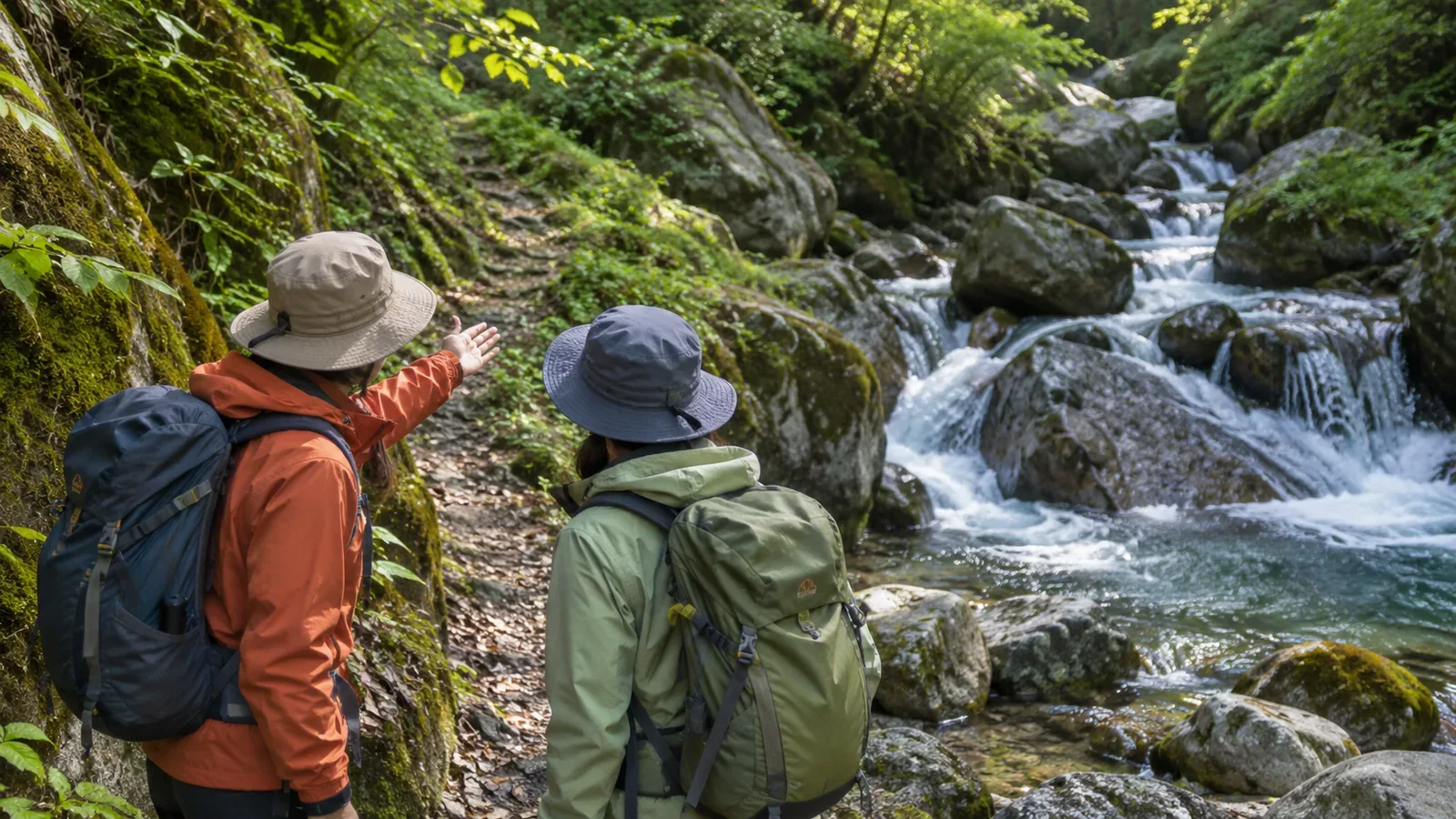
The sound of a stream can be lovely, yet it can also make a hiking partner hard to hear. Even if you call out at your normal volume, the other person may miss it. Review the route and any signals before entering the noisy stretch, and check whether what you said was understood. Take time to enjoy the sounds while staying aware of one another’s position.
Notice when the water gets louder
Near a stream, running water can mask speech. A U.S. Department of Defense bulletin explains how background noise can interfere with speech using aircraft noise as its subject. It gives no measurement for a particular stream or spacing for hikers. Check how well the group can hear in the actual conditions.
If the stream gets louder, notice whether you can hear the people ahead and behind and see each other. If speech is getting lost, find a safe place to stop and move closer to speak without repeatedly shouting while walking. Watch your footing, keep the trail clear, and avoid getting absorbed in conversation where it is hazardous to stop.
How loud the stream sounds depends in part on where the path lies in relation to the water. It can change over a short distance. Before a junction or bridge that requires a decision, agree on the next place to regroup so you have less to sort out once it gets noisy.
Agree on a plan before entering the noisy stretch
Use the itinerary or map to review streamside sections, junctions, bridges, and planned breaks. Agree, for example, to wait at the next junction until everyone arrives, or to stop somewhere safe if you lose sight of someone. Adapt what you agree to the group’s experience and the trail conditions, and revise it if conditions change.
If voices may not carry, you can agree on a few simple hand signals, such as “stop” and “come this way.” Check that everyone understands them. Bends and trees can block the view, so keep close enough to see one another even if you have signals.
The Nagano Prefecture Mountain Accident Prevention Association advises groups to match the pace of the slowest hiker. Keep anyone who feels unwell or falls behind with the group. Hikers in the middle also need to watch the gaps ahead and behind. If walking speeds differ, discuss breaks and the order before the noisy stretch. Regroup on firm footing and resume together without rushing to close the gap.
Check for a response after speaking
For an important message, get close enough to see the person’s face and speak briefly. Give a specific location and action, such as “wait at the next bridge,” and look for a reply or action that confirms they understood. If you can’t hear the response, repeat the message somewhere quieter and safe.
At a junction, the sound of water can drown out a call from behind when someone is about to move ahead. Check the direction together before the junction and have the leader wait for the group so there’s less need to call anyone back. How well a signal or voice carries still depends on the site.
If you realize someone missed the message, reconsider where and how you are speaking without blaming them. Distance, wind, and the direction you face can affect hearing as well as water noise. If conditions change, update the signals or meeting place in a way everyone understands.
Make time to listen
The U.S. National Park Service’s soundwalk activity recommends scouting the route for safety and keeping an eye on the group. If you stop to listen to the stream, tell your group first and check your footing and other trail users. If you record, stay aware of what’s happening around you while using the recorder or headphones. Listen before sharing and leave out conversations when the speakers’ wishes are unknown.
Listen from the open trail and follow local instructions. A loud stream is no reason to add a crossing or approach the bank. The U.S. National Park Service’s trip planning guide recommends planning around the weather and your group’s abilities. If the weather, trail, or a group member’s condition differs from the plan, revise the hike before spending time on the recording.
Once you leave the stream, briefly discuss where it was hard to hear. It can help with your next hike in similar terrain. People hear differently, so ask what each person noticed.
Agree before it becomes hard to hear
Before a stretch with loud water, check junctions, meeting points, and any signals you need. Look for a response once you’ve called out.
If someone can’t hear, move closer in a safe place and repeat the message. Stay aware of where everyone is, and enjoy listening without losing track of the trail or your plans.