
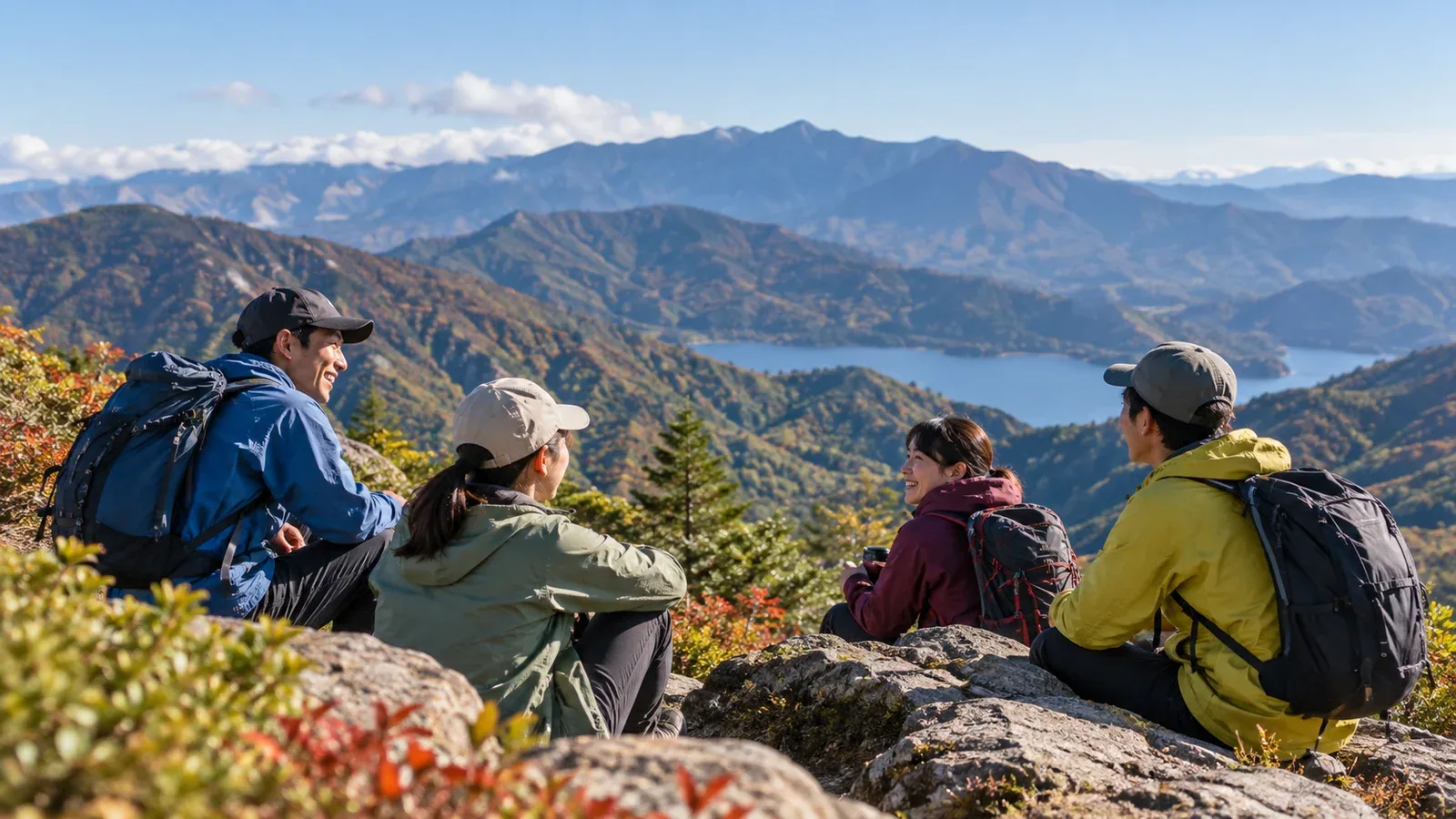
If you have no one to hike with, you can join an existing group or start your own. Joining is easier, but the group’s destinations, pace or schedule may not suit you. Starting a club takes some work and lets you decide what kind of outings you want.
This article walks through group size, communication and rules, from getting started to the first outing. It focuses on the decisions small clubs often have to make.
How many people to start with
Trying to gather ten or more people right away can make scheduling take weeks. It also brings a wider range of fitness and experience, which can make group decisions harder.
Three to five people is a practical starting point. With a group that size, it’s easier to settle on dates in LINE or another messaging app. Even a small group can spread out on the trail. Walk at a pace everyone can manage and have the front and back of the group check in with each other.
One point at which to consider growing is after at least three outings with the same people. By then you may have a shared pace, ways of taking breaks and preferences about meals. These are easier to explain to new members once you’ve seen how the group works.
The upper limit depends on the club. For an outing with all members, you might try ten or fewer and adjust for trail rules, experience and how easily the group can communicate. For larger groups, split into small teams with experienced leads or organize separate outings by difficulty.
Choosing how to keep in touch
The tools you choose affect how easily the group runs. When everything goes into one place, important information can get buried in conversation.
Scheduling and urgent updates are easy to handle in LINE or another group messaging app. Share meeting times and weather changes, and ask people to acknowledge important updates. Keep confirmed meeting locations, times, parking and escape routes somewhere easy to find. Agree on how you’ll communicate on the trail if there’s no mobile service.
Shared notes and documents work for trip records and gear checklists. Collecting them in one place makes it easier to bring in new members. Store emergency contacts where only the people who need them can see them.
Sharing trip records is another use for a hiking app that can link routes and photographs to a map. Nordwand’s trip-record feature is one option.
Once you choose a communication channel, explain where members should look for updates and how they should acknowledge them. A member who misses a change can cause confusion on the day of the hike.
Writing the club rules
Long rules can go unread and make joining feel harder. Keep them short and use language everyone can understand.
Rules worth writing down
Eligibility and difficulty: Examples include “at least three previous day hikes” or “able to manage a route with a standard map time of four to five hours.” Say whether people can try one outing before joining.
Sharing expenses: Decide in advance how to split actual transport, parking and hut costs. For a shared ride in a private car in Japan, stick to actual expenses such as fuel and tolls, with no extra payment to the driver for driving.
Cancellation and turnaround criteria: Use objective examples such as canceling if the 6 p.m. check the evening before shows a thunder advisory or storm warning near the route. Decide who makes the call, then check current information and conditions again that morning and during the hike. Make sure everyone can consult the Japan Meteorological Agency forecasts and warnings and a forecast for the mountain.
Reply deadlines: Set dates and procedures, such as “confirm a week before the hike” or “call this number if you need to cancel that day.” A deadline helps avoid reaching the day without a reply.
What can stay brief
You can skip a long list of trail etiquette. Write down short safety rules such as staying with anyone who falls behind and speaking up immediately if you feel unwell. Go over them at the first meeting or before setting out.
Planning the first hike
The first outing sets the tone. Give priority to a route everyone can walk comfortably.
Aim for a route that the person with the least experience or fitness can finish comfortably. An unhurried hike gives people time to talk and get to know one another.
The standard time printed on a map is a starting point. Fitness, pack weight and season all affect it. For the first trip, you could start with 1.2 to 1.5 times that estimate, then factor in breaks, daylight and the group’s pace so you can descend comfortably.
Get current information on the route, restrictions and hut operations from local authorities, huts or signs at the trailhead. Old information can remain online, so make a habit of checking directly before departure.
Finding members without growing too quickly
You can invite people you know through work, school or friends, or post a notice through social media or a hiking community.
Starting with people you know gives you some trust to build on. If no one around you wants to hike, a dedicated community can help you meet others nearby. Nordwand’s Base Camp is one place to look for local hikers.
If you post an open invitation, state the eligibility and difficulty criteria up front. Say where you plan to go and the level you expect so people can judge whether the group suits them.
What to do next
Start by finding three people who might be interested, then talk about dates and destinations. After the first outing, ask everyone what went well and what they would change. Use the answers to put the basic rules on one page. You can also look for members through Nordwand’s Base Camp or interest-based communities.
References and sources
- National Police Agency of Japan: 2025 mountain incident overview and safety guidance
- US National Park Service: outdoor emergency plan
- Japan Meteorological Agency: weather warnings and advisories
- Japan Ministry of Land, Infrastructure, Transport and Tourism: guidance on transport that does not require a license or registration