
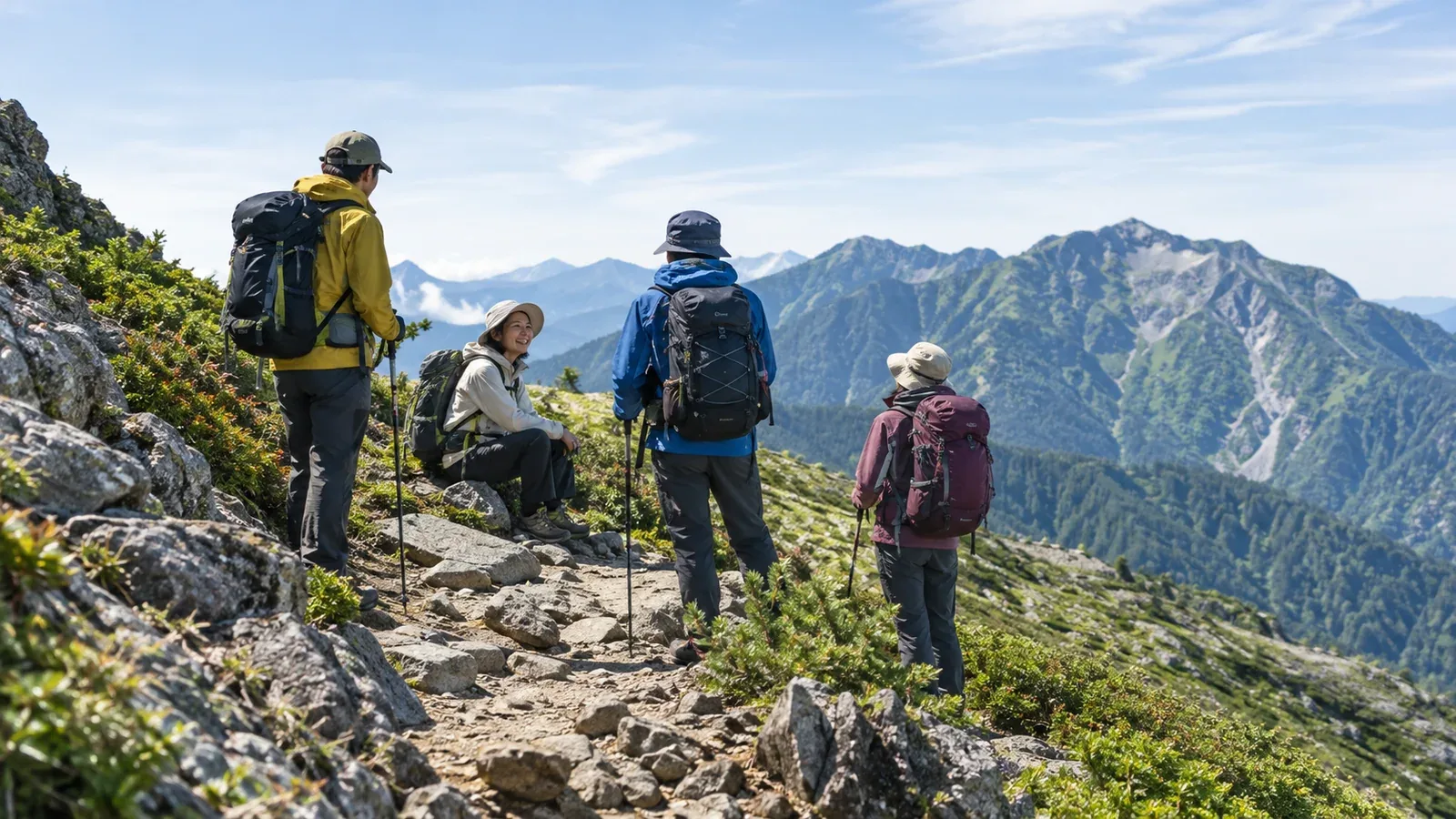
It happens at every level. Faster hikers go ahead and spend a long time waiting. Slower hikers push themselves and run out of energy later. Sometimes nobody brings it up and everyone gets tired. Communication is often the first thing to address.
If the gap grows, the person behind may use up energy and lose fluids trying to catch up. Someone far ahead on their own may take longer to find if they get lost or fall. Both are safety risks. When you notice a gap, speak up early and calmly.
This article looks at why paces diverge and how to talk about it and respond in each situation.
Work out why the group is spreading out
Start by finding out what’s causing the difference. The right response depends on what’s going on.
Differences in fitness or experience. Groups with different hiking experience or exercise habits often spread out more on climbs than descents. Fitness differences may become clearer later in the day.
Different pack weights. Even when two people have similar fitness, a heavier pack can be tiring on climbs. Someone carrying more of the tent or cookware may wear out faster.
Changes in how someone feels. A person who was fine at the start may feel different after gaining altitude or because of temperature, poor sleep or how much they ate. Someone with early altitude illness symptoms such as headache, nausea or fatigue may slow down suddenly.
Different walking habits. People who walk fast and take long breaks may have a different sense of pace from people who walk steadily and take short breaks.
If someone feels unwell or altitude illness is possible, consider whether you need to descend. A change of pace alone may not be enough.
How to bring it up when it feels awkward
“I’m the only one going slowly” or “I don’t want to criticize the people ahead” can make the conversation hard before it starts.
If you’re the slower person, share what you’re feeling and what you need. Instead of leaving it at “Could we slow down?”, try “I’m having trouble catching my breath. Can we stop at the next safe spot and decide whether I can keep going after a rest?” It gives the group a clear next step.
If you’re walking faster, avoid labeling someone as slow. “Let’s check how the pace feels for everyone” or “Let’s get back together at the next junction” keeps the focus on the group.
If there’s a leader or someone experienced, ask them to help adjust the pace. A message addressed to the whole group can make it easier to change how you’re walking.
“For safety, can we check something?” is a useful opening. Framing the pace as a safety issue can make it easier for people to listen.
What to do in different situations
When someone keeps falling behind
- Speak up early. Notice the gap while it’s still small and suggest a break. That puts less pressure on the person than waiting for the gap to grow.
- Agree on when everyone will stop. A rule such as “We’ll all stop after [number] minutes” helps the person at the back avoid trying to catch up at any cost.
- Share the load. If the pack weight is causing the problem, someone with energy to spare can carry part of it. Ask them before adding weight to their pack.
- Change the walking order. Put the person who needs the gentlest pace near the front so everyone can match it. At the back, they can get worn out trying to match the people ahead.
When faster hikers go ahead
- Agree before leaving that no one will go ahead alone. A person on their own may get lost or be harder to find after an accident. Agree to wait where you can no longer see each other.
- Choose frequent points to regroup. “We all stop at the next sign” gives even the person out front a clear place to wait.
- Choose someone who can set a group pace to walk in front. The person in front sets the pace. Choose someone who can match the hikers who need to go more slowly.
When someone may be unwell
A sudden drop in pace, a change in complexion, confused answers, headache or nausea calls for more than slowing down.
Stop in a safe place and ask what symptoms the person has. If altitude illness is possible, don’t go higher. Consider descending if symptoms don’t improve with rest, and descend if they worsen. Clear confusion, trouble walking straight or shortness of breath at rest can be signs of severe illness. Call for rescue immediately and go lower if you can do so safely. Make sure everyone knows the group is giving up the summit.
For advice on a specific medical situation, consult a doctor and check guidance from mountaineering organizations and rescue services.
Talk about pace before leaving
Once people are spread out, the conversation is harder for everyone. Take five minutes before leaving to check these points.
- Share your recent experience and fitness. Saying “It’s my first hike in a while” or “I hurt my knee recently” helps everyone set expectations.
- Agree to speak up when the pace feels wrong. Telling everyone “Say something if you’re struggling” makes it easier for them to do so.
- Decide when you’ll turn back. “If we aren’t at this point by [time], we’ll turn back” makes the decision easier. Agree on weather and health conditions that would also make you turn back.
Standard route times are estimates and can vary a lot with the group. Check official information from local authorities or mountain huts about trail conditions, closures and restrictions before leaving.
Try this on your next hike
Take five minutes before the start to compare pace and fitness and agree when you’ll turn back. If you’re looking for companions or want to hike with someone more experienced, Nordwand’s Base Camp and its option to request a certified guide are two ways to get started.