
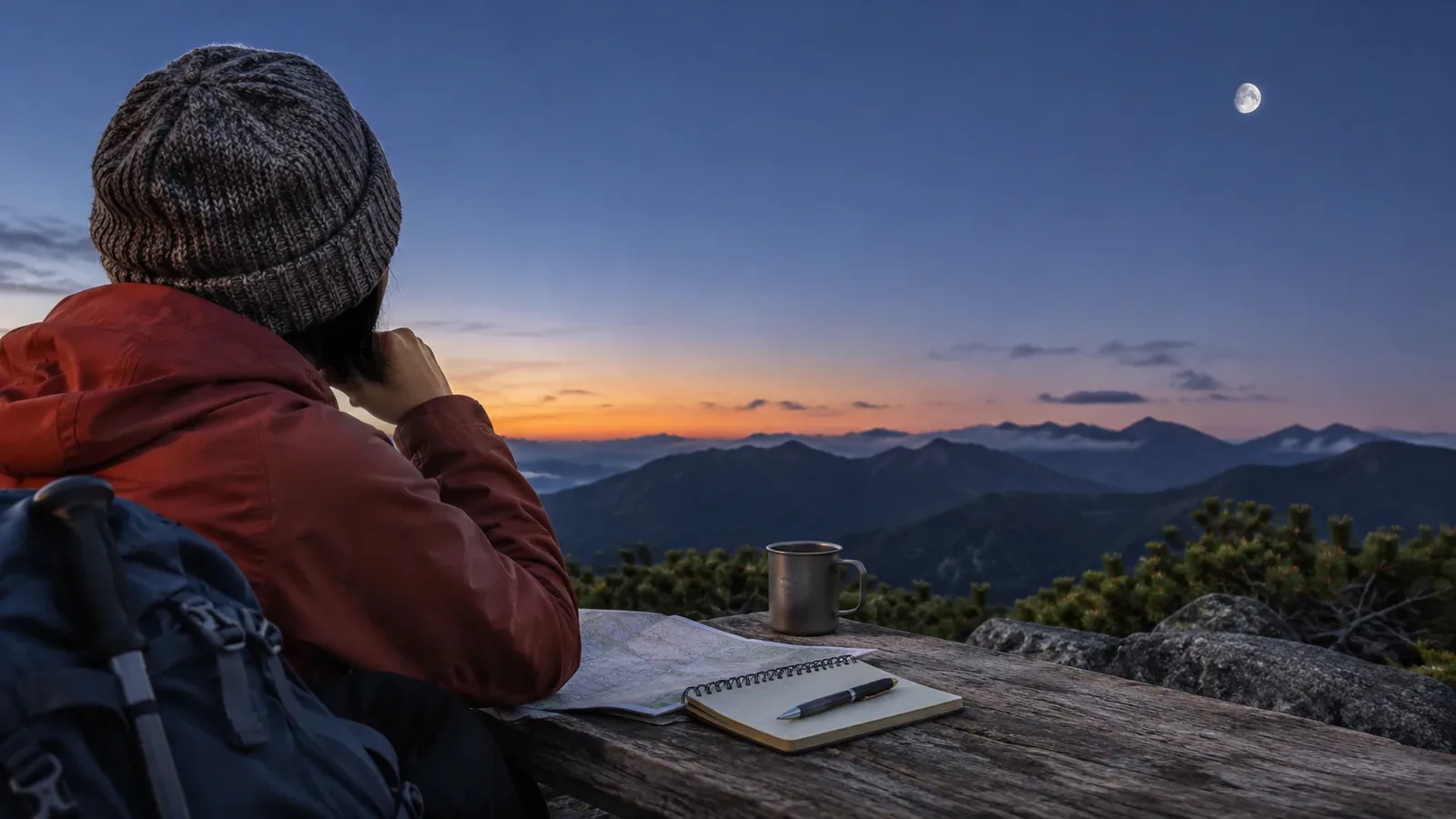
When choosing a date to watch the stars, check moonrise, moonset and the time after sunset alongside the Moon’s phase. Use the National Astronomical Observatory of Japan’s Tokyo table for October 2026 to find periods with less moonlight.
Check moonlight and city lights
Joshua Tree National Park recommends checking moon phase, moonrise and moonset because bright moonlight makes fewer stars visible. Shenandoah National Park similarly points to moonless nights with little cloud for viewing the Milky Way. Times before moonrise or after moonset can work too.
Japan’s environment ministry describes skyglow as the brightening of the night sky when upward artificial light scatters in the atmosphere. Light from a large city can affect observations more than 100 km away. Check for city lights in the direction you plan to look as well as the Moon’s position.
Read moonrise and moonset in date order
The Tokyo table for October 2026 lists moonrise and moonset, their directions, meridian transit and altitude, and lunar age at noon. Rise and set occur when the Moon’s center meets the horizon in the calculation. Use both the time of rise or set and the Moon’s phase in your plan.
On 26 October, the table shows a lunar age of 15.5 days, moonrise at 16:36 and moonset at 05:45. That moonset is in the morning. The Moon that rises at 16:36 sets at 06:58 on 27 October. On 11 October, the lunar age is 0.5 days, moonrise is at 06:07 and moonset at 17:09. When your observing period crosses midnight, use the surrounding dates and put the times in chronological order.
Compare 28 and 29 October in Tokyo
On 28 October, the lunar age is 17.5 days, moonrise is at 18:02 and moonset at 08:13. On 29 October, the age is 18.5 days, moonrise is at 19:00 and moonset at 09:26. On both days, the Moon is below the horizon from morning moonset to evening moonrise. On the 29th, moonrise is 58 minutes later than on the 28th. Look up when the sky gets dark to see how much of that period is suitable.
Write down moonrise and moonset for your date and the following day. Mark when the Moon is above the horizon on a timeline. Find where the sky is dark and the Moon is below the horizon. Joshua Tree gives 20–30 minutes as a guide for dark adaptation, and Shenandoah around 20 minutes. Allow time for your eyes to adjust before observing.
Choose another day if the interval with less moonlight is short and conflicts with closing hours or travel home. Mountains or trees can change when you see the Moon, so leave a margin around the calculated times.
Look up the actual time and viewing location
Use the Tokyo example as a guide and look up moonrise, moonset and when the sky gets dark for your own date and viewing site. Save the source, date checked and location used in the calculation. Consider the height of surrounding ridges.
Before leaving, check cloud cover in the forecast and the manager’s latest rules for night access and staying on site. To look at notes or your screen in the field, stop on stable ground where you will not block the way.
Match the moonless period to your return plans
Find a dark time when the Moon is below the horizon and allow time for your eyes to adapt. Use the planned date and viewing location, and choose a day that fits the site’s hours and the return journey. If the timing would make it difficult to return on schedule, go another day.
References and sources
- U.S. National Park Service: Stargazing in Joshua Tree National Park
- U.S. National Park Service: Night sky in Shenandoah National Park
- National Astronomical Observatory of Japan: Moonrise and moonset in Tokyo, October 2026
- Japan Ministry of the Environment: Light pollution and stargazing
- Japan Ministry of the Environment: Light pollution guidelines, March 2021 revision
- National Astronomical Observatory of Japan: Local calendar