
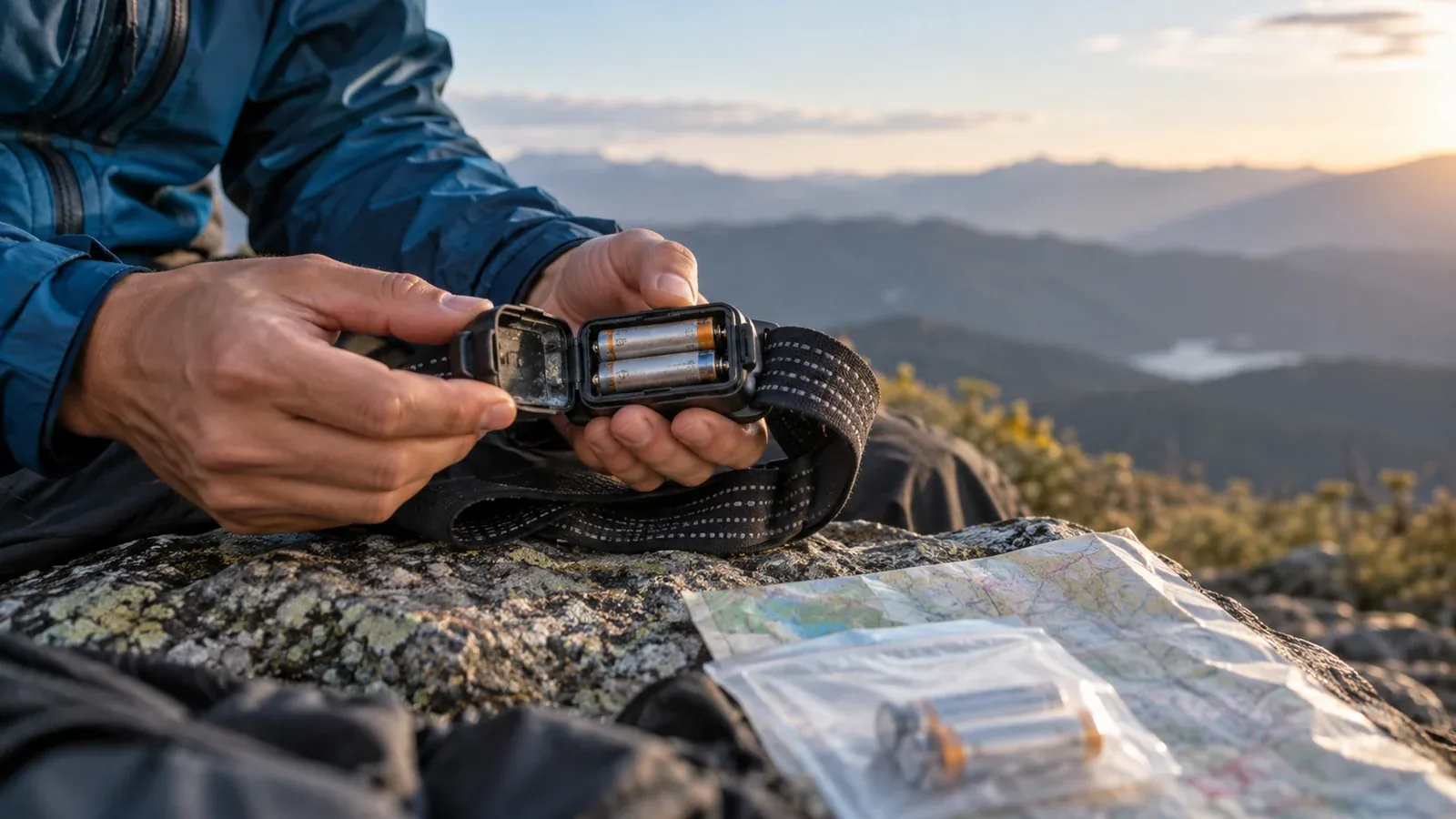
If you open a headlamp after a long break and find white powder or discoloration inside the battery compartment, suspect a leak. Escaping electrolyte can damage the contacts and leave the lamp unable to turn on. Check the lamp and batteries before departure so you can rely on them at night or in an emergency.
To prevent leaks, use compatible batteries, remove batteries that are designed to come out before prolonged storage, and store them in suitable conditions. This guide also covers choosing batteries and what to do if you find a leak.
Conditions that can lead to battery leaks
Batteries may leak as they degrade in storage, when spent batteries stay in the device, or when batteries are inserted or combined incorrectly.
One issue is long gaps between uses. When several months pass between trips, it is easy to leave partly used or depleted batteries in the lamp. Remove spent batteries promptly and follow the instructions for removing batteries before extended storage.
Another is exposure to heat or moisture. Leaving batteries somewhere hot, such as a car in summer, can lead to deterioration or leakage. Store them in a dry place and follow the headlamp's instructions for drying it if it gets wet in the rain.
A third issue is mixing old and new batteries or different types. Avoid mixing battery types or brands, and match the plus and minus ends to the markings in the lamp.
Three steps before putting your lamp away
When you return from a hike, take these steps before storing your headlamp.
- Remove removable batteries before long-term storage. For a model with a built-in rechargeable battery, follow the manufacturer's charging and storage instructions without taking it apart.
- Inspect the battery compartment and contacts. If you see white powder, liquid, or discoloration, stop using the lamp and avoid touching the affected area with bare hands. If it looks normal, clean and dry it as the manufacturer directs.
- Separate new and used batteries. Keep fresh spares apart from partly used batteries and dispose of spent ones through your local collection system. Treat a battery indicator or tester as a guide.
Store batteries away from direct sunlight, heat, and humidity, out of reach of children. Carry spares in their original packaging or a battery case so their terminals cannot touch keys, coins, or other metal items.
Battery types and how to choose
Battery compatibility depends on the headlamp. Even if the size and shape match, use only the specified type and voltage. Check the manual for compatible disposable cells, rechargeables, and dedicated battery packs.
Alkaline batteries are widely available, but their output can drop in cold conditions. Remove them promptly once depleted and do not recharge them.
Primary lithium batteries differ from rechargeable lithium-ion batteries. They may be suitable for cold conditions, but use only models that your headlamp's manual allows. Do not recharge primary cells.
Rechargeable nickel-metal hydride (NiMH) batteries can be reused in compatible lamps. How much charge they lose in storage varies by product, so check before leaving. Use only the specified lithium-ion battery pack and charge it as directed.
For a lamp that takes several cells, replace them together with matching batteries of the specified type and brand. Do not mix fresh and partly used cells.
What to do if you find a leak
Avoid touching liquid or white battery residue with bare hands. Alkaline battery electrolyte is strongly alkaline. If it gets into your eyes or onto your skin, rinse at once with plenty of clean water without rubbing and seek medical attention as soon as possible.
If you find a leak, stop using the headlamp and take these steps.
- Check the battery and headlamp manufacturers' instructions. Wear waterproof gloves and safety glasses if handling removable leaking batteries. Do not force out a battery that will not come free.
- Never reuse a leaking battery. Ask your local waste collection service how to dispose of it, as the method depends on its type and condition.
- Follow the headlamp manufacturer's instructions to clean the compartment. Avoid improvised cleaning with vinegar or similar substances. If liquid may have seeped inside or the contacts are corroded, ask the manufacturer to inspect it.
- If a rechargeable battery swells or heats unusually, stop using and charging it and contact the manufacturer. If you see smoke or fire, move away, get to safety, and call 119 in Japan.
Do not rely on a headlamp that has leaked until the manufacturer confirms it is safe to use. Turning on does not establish that it is undamaged or free of corrosion. Take a working lamp on your next hike.
Checks before and during a hike
As well as storing the lamp properly, get into a routine of checking it before and after each hike.
The day before your hike, check the battery level, switch the lamp on, and try its brightness settings. A successful light test does not tell you how much run time is left. Pack compatible spare batteries or a backup lamp. Keep spare batteries in the original packaging or a battery case somewhere you can reach easily.
During the hike, change batteries from a stable position and match their plus and minus ends to the markings. Keep spare cells in their case away from water and metal, and follow the manufacturer's specified temperature range.
After the hike, check for moisture and dirt and inspect the contacts. If the lamp will be unused for a while, remove the batteries as instructed and dry the lamp before putting it away.
What to do next
Check your headlamp manual for approved batteries and storage instructions. If you find white powder or discoloration inside the battery compartment, avoid touching it with bare hands and check the manufacturer's cleaning or inspection guidance. You can share gear care tips with other hikers in the Nordwand community.