
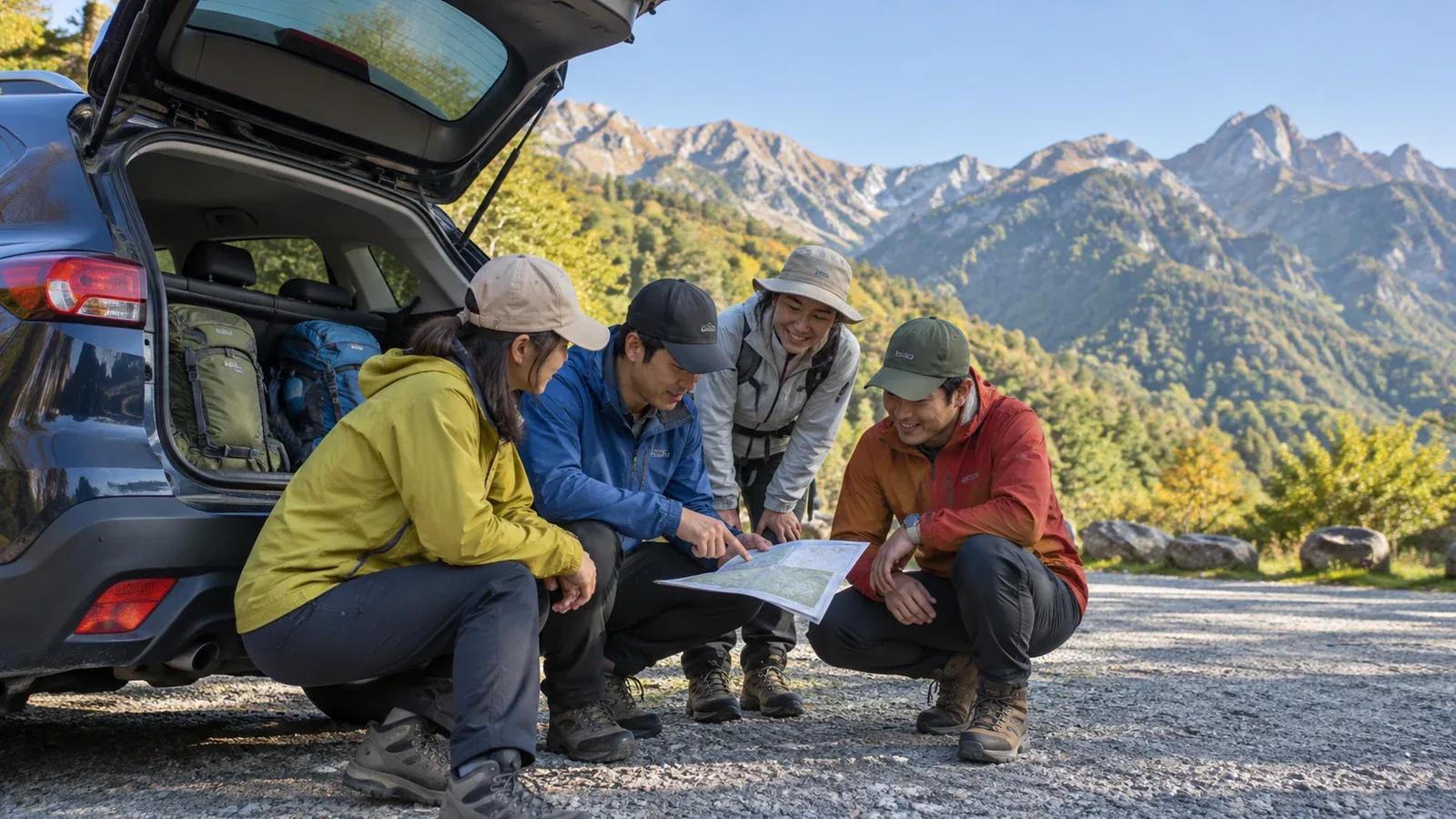
“How should we split the travel costs?” is a surprisingly hard question when you’re planning a hike. For a train or bus, everyone can pay their own fare. When you ride in someone’s car, splitting fuel, tolls and parking can get vague. Even if the driver says, “Don’t worry about it,” the passenger may feel awkward, and the driver may feel the cost if it happens every time.
There’s no single formula for how much everyone should pay. You can agree on what to include and how to propose a split. This article also covers outings that mix cars and public transport and ways to raise the subject without leaving people feeling shortchanged.
When an equal split needs a little thought
Splitting the cost by the number of people is the simplest option and works in many cases. An equal split can feel uneven in these situations.
- People start from very different places. If someone travels much farther before you meet but pays the same share for the car, they may be spending more overall.
- Only the driver owns a car and regularly pays for maintenance, insurance, vehicle inspections and tire wear. Those expenses aren’t reflected when you split fuel and tolls.
- Some passengers get in or out along the way. Charging the same amount to someone who rides all the way and someone who joins or leaves midway can cause resentment.
It’s fine to split evenly if everyone has considered those circumstances and agrees. Friction tends to come when nobody raises the question and the split is left to assumption.
Work out the actual costs
1. List what the trip costs
For a car trip, the main expenses fall into four categories.
- Fuel. Divide the distance by fuel economy and multiply by the price of fuel. Actual fuel economy on motorways and mountain roads gives a better estimate than the figure in the brochure.
- Motorway tolls. Check what you’ll pay after any ETC electronic toll discounts and remember both directions.
- Parking. For a trailhead or railway station car park, check the price and any time limit in advance. These can change, so use current information from the operator or on-site notices.
- Other toll roads, bridges and ferries. In some mountain areas, forest roads also charge a toll.
2. Divide the total by the number of people in the car
Start with total actual costs divided by the number of people riding, including the driver. That gives you a per-person figure to use when discussing adjustments.
3. Adjust who pays what within the actual total
Owning and maintaining a car costs more than fuel and tolls. To acknowledge the work of driving, passengers can cover some or all of the driver’s share. Japan’s transport ministry guidance allows fuel, tolls and parking costs to be shared for an otherwise unpaid ride. Keep the amount collected within the actual total, and leave any driving fee or the car’s existing insurance premiums out of the split.
When a trip mixes trains, buses and cars
A hiking trip might involve taking the train out and coming back by car, or driving to a station and catching a bus. Working out each leg separately can prevent disagreements.
Here’s one way to do it.
- Train or bus leg. Each person buys their own ticket or settles up later.
- Car leg. Calculate the actual costs and split them among the people who were in the car.
Breaking the trip into legs takes a little longer, but it avoids asking people to pay for a leg they didn’t take. Before leaving, agree on where the car portion starts and ends.
How to bring up the cost
Many people find it awkward to talk about money. If you leave it vague, people can feel they paid too much, or that the driver always ends up covering more. Over time that can affect how the group gets along.
Here’s how you can bring up the split.
- Share your estimate before leaving. “Fuel and tolls look like about ¥X for the round trip. That comes to ¥Y each.” Giving the figures early means nobody has to guess how much to pay.
- Let the driver make a proposal. It’s fine for the driver to say, “Would you cover part of my share within the actual costs?” Make it easy for everyone to say what would work for them.
- Use an expense-splitting app if it helps. When several people pay up front, an app can work out who owes whom. A record everyone can see makes later misunderstandings less likely.
Handle situations that can be awkward
When the driver says “Don’t worry about it.” They may feel awkward accepting money. Ask once if you can contribute to fuel. If they decline, respect that. You can also offer to buy them a drink or a meal as a thank-you.
When the number of people changes on the day. A cancellation can raise questions about costs already committed, such as tolls or parking bookings. Agree in advance whether the split stays as planned or is recalculated for the people who ride.
When the split comes to an awkward figure. If it works out to something like ¥1,234 each, settle to the yen or adjust individual shares so the combined payment stays within the actual cost.
Before the next hike
Estimate fuel, motorway tolls and parking, divide the total and share the numbers with the group before you leave. Giving people a figure to discuss makes the conversation easier. Ask how everyone will travel while you’re still looking for companions so you can estimate costs. If you meet nearby hikers through Nordwand’s Base Camp, share your departure points and transport options early.