
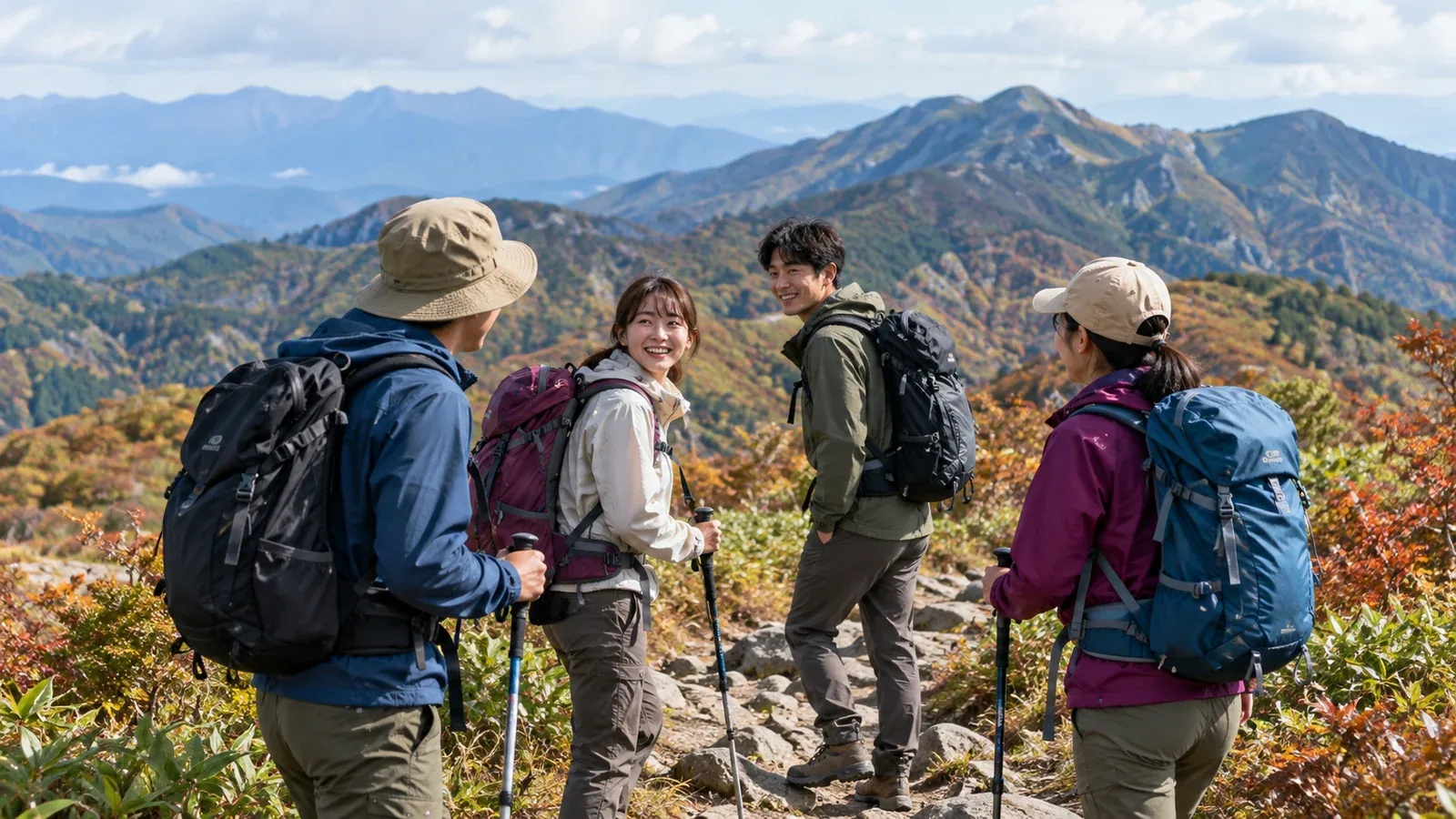
You may have come across the term yama-kon, used in Japan for events that combine hiking and meeting potential partners. They give people who share an interest time to get to know each other outdoors. It’s natural to wonder how to choose one and how safely it’s run.
This guide covers different event formats, what to check when choosing one and what to keep in mind before and after taking part. Start by checking whether the outing is well planned as a hike. That gives you room to enjoy it and meet people.
What kind of event is a yama-kon?
There are roughly three formats. First, companies specializing in dating or matchmaking may organize a singles event that takes the form of a walk. Mixed groups often follow maintained paths, which can make it easy to join without hiking experience. Second, hiking clubs or mountain guides may run social events where the hike itself is the main activity. These usually assume some fitness and equipment. Third, people may organize informal hikes through social media or hiking community apps. The organizer’s background and safety practices vary widely.
The format affects the equipment and fitness you need and the risks involved. Find out which sort of outing it is before signing up.
How to assess the organizer and the event
Look at how the hike is managed and how the organizer handles personal information and checks who is taking part.
Check how the hike is managed
- Is the route’s difficulty clear? Even if the event welcomes beginners, look for the elevation gain, estimated time and trail conditions. Ask the organizer if those details are unclear.
- Do they tell you what gear to bring? Requiring hiking footwear, rain gear and drinking water shows some thought has gone into safety. If everyday clothes and sneakers are listed as suitable, check for yourself what the terrain will be like.
- Will a trip leader or certified guide come along? Who leads affects how the group can handle an emergency, especially on your first outing or when some people are new to hiking.
- Are cancellation and change policies for severe weather clear? “We’ll go ahead in rain” leaves questions. Find out how they handle thunderstorms, strong winds and trail closures.
Check what you can find out about the organizer and participants
- Does the organizer publish a contact and address? Take care if they only give a personal contact.
- Does the organizer verify who is taking part? This can involve an identity document. Matchmaking events may also check participants’ age or proof of single status. Ask each organizer how they handle it.
- Do they give an idea of the gender mix and age range ahead of time? If you’re going to meet potential partners, a group composition you didn’t expect can disappoint people on both sides.
Prepare before taking part
Gear and fitness
Prepare for the actual route. If the event involves a hike, skimping on gear can lead to injury and put extra demands on companions or rescuers. Check the elevation gain, trail surface and expected temperatures, and bring suitable footwear, clothing, snacks and water.
Hiking clothes can be practical and presentable. Quick-drying fabrics and a coordinated outfit can do both jobs. Heeled shoes and jeans are poor choices for a hiking route.
Personal information
Keep details such as your full name, employer, address and personal social media profiles private when meeting someone for the first time. You decide whether to share your contact details with someone you meet on the day, and you can decline.
On the day
Keep to a pace you can manage
If conversation makes you forget to drink or take breaks, you can run out of energy later. Pay attention to your pace and how you feel when walking with the group. Pushing yourself to keep talking can make the experience worse.
What to do if something goes wrong
If someone says something unwelcome or pressures you on the trail, you can say you need some space and move closer to the leader or other participants. If someone keeps contacting you after the hike, know how to ask the organizer for help ending that contact.
Find out ahead of time whether the organizer has a way to report problems.
Enjoy the hike and let conversations grow from it
People who love hiking can often tell if someone is there only to meet a partner and isn’t enjoying the outing. Sharing what catches your attention about the view, ridge or plants gives you a natural way into a conversation about your shared interest.
Extra checks for informal groups
When a singles hike or informal group comes together through social media or a hiking community, it can be especially hard to tell how well the organizer manages safety or what they intend.
If you’re joining an informal group for the first time, check these points ahead of time.
- Can you find records of several previous outings that show the group has been active?
- Are several people coming, so you won’t be alone with the organizer?
- Can you tell a family member or friend where you’re going, when you’ll meet and when you expect the event to end?
- Can you arrange to check in with someone after the hike?
These checks overlap with basic hiking safety. They apply whenever you go into the mountains with people you’re meeting for the first time.
Before you sign up
If you have an event in mind, ask the organizer for route details and whether a leader will accompany the group. A clear, thoughtful reply gives you something to go on when assessing the organizer. To meet hiking companions more generally, you can also use Nordwand’s Base Camp to keep in touch with hikers near you. See the official website for details.