
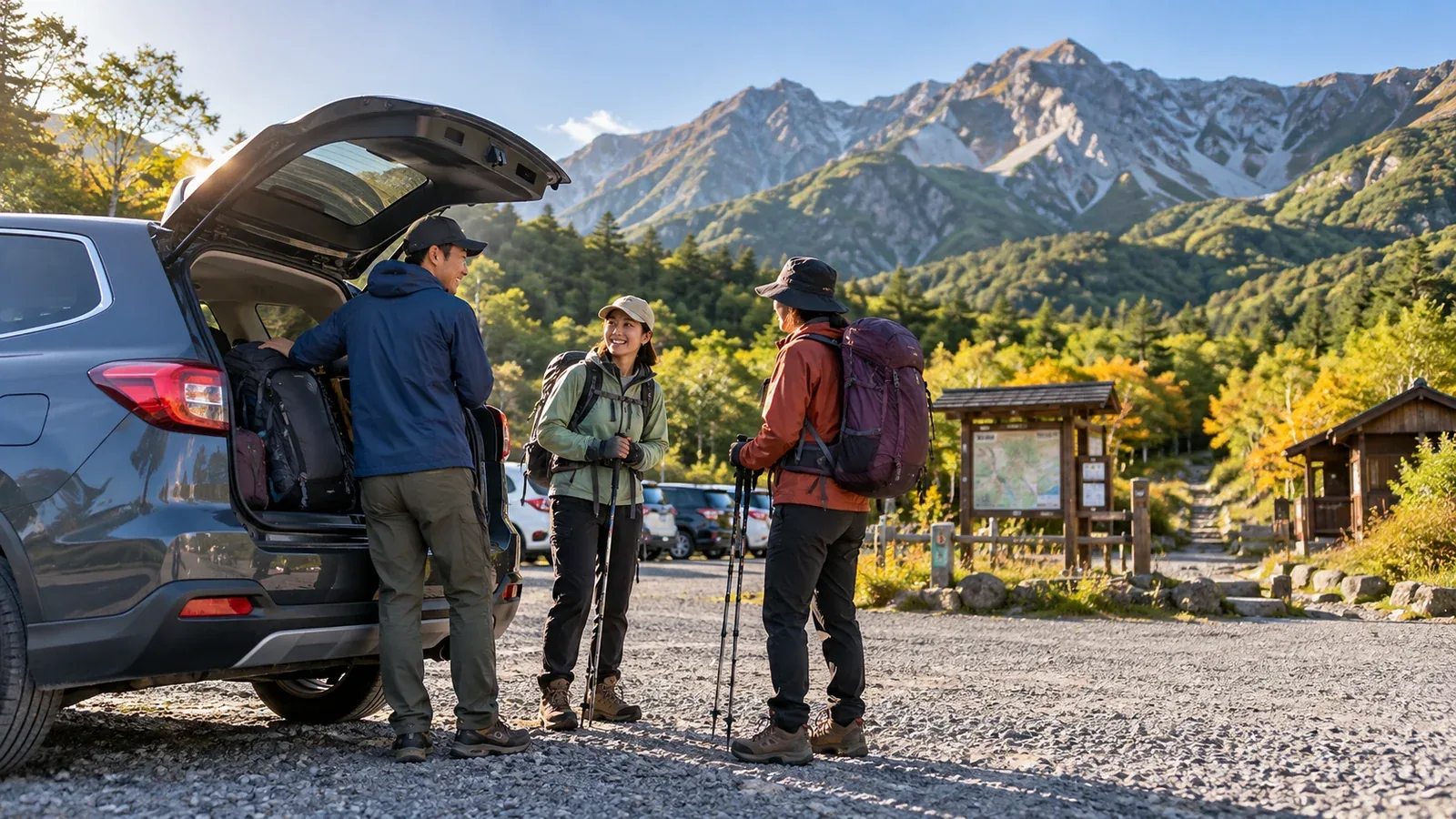
Carpooling to a trailhead is practical in areas with limited parking. You may want to share a ride when there’s no early bus, when restrictions on private cars leave you some distance from the trailhead, or when you want to split the cost with others.
Even friends can overlook some agreements: how to split costs, what happens if someone is late or ill, and what insurance covers if there’s a crash. Discussing these before you leave helps keep things easy between you and gives you a plan if something changes.
This article covers the costs, arrangements for the day and questions to ask about insurance.
Agree how to split the costs
First decide which costs to share and how to divide them. Splitting fuel and tolls evenly is easy to understand and can prevent disagreements. Parking can be shared the same way.
Some groups ask passengers to cover a larger share of the actual expenses because the driver is doing the driving. Agree before the trip if the driver pays nothing or only half their share. That makes expectations clear when it’s time to settle up.
An estimate is enough to start. For example, use the round-trip distance and the car’s fuel economy to estimate the cost in yen before you set out. Then settle the bill on the day or the day after so it doesn’t get forgotten.
Cost sharing and paid transport
The way you accept money for a lift can affect how the arrangement is treated under Japanese law.
Under Japan’s Road Transportation Act, paid passenger transport in a private vehicle generally requires permission or registration. The transport ministry’s guidance allows sharing actual costs such as fuel, tolls and parking for an otherwise unpaid ride. A payment above actual costs can be treated as a fare and may require permission or registration, depending on the arrangement.
If you post “seats available, ¥X per person” in an app or on social media, explain how you calculated the amount and what actual costs it covers. Repeatedly offering rides to the public for a fee can raise regulatory issues. Ask the transport ministry’s regional bureau or the relevant local transport office about a specific arrangement if you’re unsure.
Insurance if there’s a crash
Before you ride, check what compensation a passenger might receive if the carpool is involved in a crash.
Third-party bodily injury liability insurance can pay for injuries to others where the insured is legally liable. A friend riding as a passenger may also be covered under personal injury protection or passenger accident insurance. Who is covered, for what and up to how much depends on the policy and circumstances.
Check these three points.
- Whether the policy includes personal injury protection. It can cover eligible occupants in the insured car up to the policy limit without reducing the calculated loss by their share of fault. Check who is insured and the scope of the policy.
- Whether there is passenger accident insurance and how much it pays. This often pays an amount set in advance, which may be less than the actual loss.
- The voluntary policy’s limits for injury and property damage liability. Compulsory motor liability insurance in Japan pays up to statutory limits for injury or death. Property damage requires separate coverage, and serious injuries can exceed those limits.
Drivers can check their policy and ask their insurer whether personal injury protection covers passengers. Passengers can check whether their own mountain or personal accident insurance covers a road crash on the way to or from the trailhead. Coverage for accidents while hiking doesn’t automatically extend to the drive.
Etiquette on the day and plans for changes
Carpooling means coordinating everyone’s time. Many hikes start early, and a delay at the pickup point can affect the whole itinerary.
Meeting time and place are best confirmed in writing by the night before, for example in a messaging app. Write down the time and the specific service area or interchange you mean so there are fewer questions on the day.
Illness and last-minute cancellations are worth discussing early. Agree, for example, that the whole group decides what to do if someone falls ill, or choose a backup driver in advance in case the original driver can’t make it.
Rules inside the car are worth a quick check too. Agree where muddy boots go, whether to bring a separate bag, how to deal with mud and sweat on the return trip, and whether eating and drinking in the car is okay. Small things people hesitate to mention can matter.
Make the next carpool easier to arrange
If a carpool goes well and you want to do it again, make the arrangements easy to repeat.
Keep a template in a LINE group or message thread for the cost breakdown, meeting time and place, and cancellation rules. Settle expenses on the day so nobody has to reconstruct the amount later.
If the group grows, check what insurance everyone has again. It’s considerate to raise the subject when someone is riding with you for the first time.
Before your next ride
Before leaving, check the driver’s policy to see whether passengers are included in personal injury coverage. Share the agreed split of fuel, tolls and parking in writing. This can prevent many misunderstandings. If you need a ride or have room in your car, Nordwand’s Base Camp can help you meet hikers in your area.
Further reading
- Japan’s Road Transportation Act and Ministry of Land, Infrastructure, Transport and Tourism guidance
- Japan’s Automobile Liability Security Act and compulsory insurance information from the transport ministry
- General Insurance Rating Organization of Japan overview of compulsory motor liability insurance
References and sources
- Ministry of Land, Infrastructure, Transport and Tourism · Guidance on transport that does not require a permit or registration
- Ministry of Land, Infrastructure, Transport and Tourism · Compulsory motor liability insurance FAQ
- General Insurance Rating Organization of Japan · Compulsory motor liability insurance
- General Insurance Association of Japan · Personal injury protection
- General Insurance Association of Japan · Passenger accident insurance