
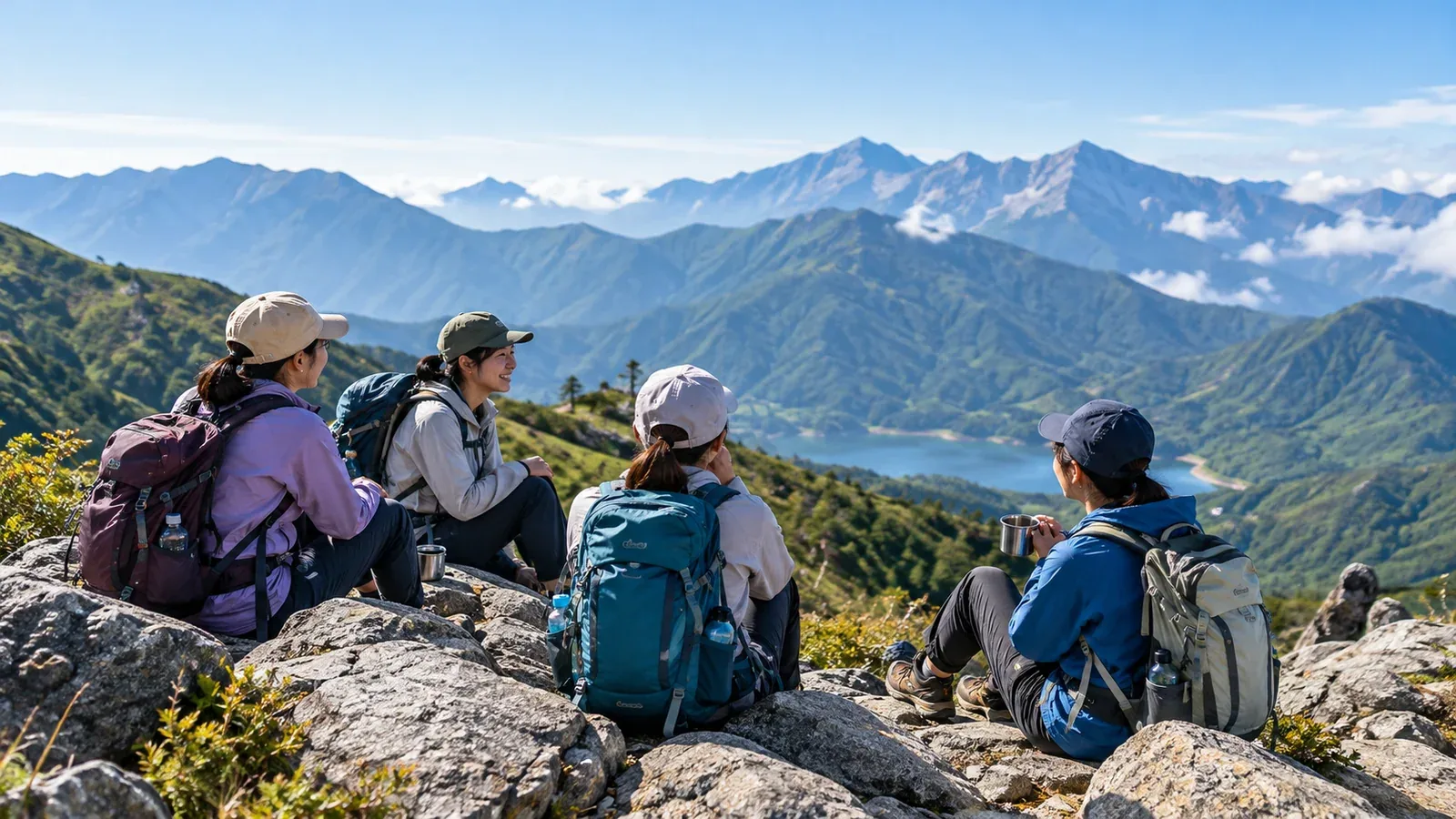
Maybe you’d like to start a women’s hiking group or join one and aren’t sure where to look. People choose these groups for different reasons. A mixed group may feel intimidating, or you may want companions you can talk to comfortably about pace and breaks.
Here’s where to look, what to ask before joining and what to decide if you start your own group. The aim is to give you criteria you can apply to your own situation.
Why some hikers look for women’s groups
People may have practical reasons for choosing a women’s group. In some mixed groups, it can be harder to raise differences in fitness, pace, toilet facilities, shared gear or how much risk people are willing to take.
Pace is one example. Actual hiking times vary considerably. Trying to keep up until you’re exhausted or feeling guilty about slowing the group can take the enjoyment out of the day. Some women find it easier to share those concerns frankly in a women’s group.
Where there are few toilets or places to change, some women also feel more at ease with other women. These practical concerns help explain why people look for women-only or women-led outings.
Where to look
Hiking community apps
A hiking app such as Nordwand lets you create or search for groups by interest. Try terms such as “women only,” “women-led” or “beginners welcome” to find groups in your area or in a particular mountain range. You can also meet nearby hikers and get to know them through a group activity.
Mountaineering and hiking clubs
Some clubs affiliated with prefectural federations have many women members or run activities for women. The prefectural websites and the Japan Mountaineering & Sport Climbing Association (JMSCA) list affiliated organizations. Clubs with a formal membership may make their activities and safety procedures easy to check. Ask how joining works and whether there are fees.
Events run by outdoor shops
Outdoor retailers and local specialists sometimes organize day hikes or courses for women. One event can lead to a regular group. Check the shop’s website or social accounts for upcoming activities.
Independent groups on social media
Hashtags on Instagram or X (formerly Twitter) can help you find invitations. They’re often easy to respond to, and organizers vary in how they run trips and think about safety. Check the points below before joining.
What to check before joining
Ask a few questions before deciding whether the group suits you.
Do the routes suit your experience?
A group for women can still include people with a wide range of skills. Ask what routes the group normally takes. “Beginner-friendly” means different things to different people. Recent examples and a gear list help you work out whether you’ll be comfortable.
Does everyone know what to do in an emergency?
Ask who leads, who files and shares the hiking plan, and how the group checks insurance coverage. It helps to know who will do what if someone is injured or feels unwell. An unclear plan can create confusion when something goes wrong.
Is it clear how decisions are made?
Knowing who will decide and which criteria apply makes it easier to turn back if the weather worsens or someone is struggling. If the group follows the mood or a majority vote, a quieter voice can get lost. Ask how decisions are made before your first outing.
How is personal information handled?
A group on social media may have no clear rules about sharing names, addresses or workplaces. Ask how trip photographs are shared and whether names or faces appear in public. There’s no need to publish a home address or workplace. Ask permission before posting someone’s name or an image in which they can be identified.
Starting your own group
If you haven’t found a group you like, you can start one. Write down what it’s for and how you want it to work.
Choose the area and difficulty: Examples include “easy hikes in the Kanto region” or “for women planning their first overnight trip with a tent.” The clearer you are, the easier it is for people to decide if it suits them.
Set eligibility and maximum group size: Explain what “women only” means, including whether transgender women are welcome, and state any age limit and the maximum number for each outing. That makes expectations clear from the start.
Put expense sharing in writing: Agree in advance on how to split actual costs such as transport, parking and huts. For shared trips in a private car in Japan, keep any reimbursement within actual costs such as fuel and tolls, without adding a payment for driving.
Set rules for emergencies and trip plans: Decide who files the plan, how to share emergency contacts privately with the people who need them and how to check each person’s insurance and coverage. Check the local requirements for where to file the plan.
Explain how to leave or close the group: Make clear from the start that people can leave if it isn’t a good fit. That can make joining easier and reduce pressure to stay involved.
What helps a group last
A group can last when it walks at a pace everyone can enjoy, makes it comfortable to speak up and explains its decisions. Depending on one leader or a set of unwritten rules can make it hard for new members to join in.
Fitness and experience shape how people walk and make decisions. When you choose a women’s group, pay attention to its approach to safety, how people communicate and how decisions are made.
What to do next
Look for local women’s groups through Nordwand’s community search or Base Camp. If you’re starting one, write down the target experience level, expense sharing and emergency procedures and include them in your invitation. Before joining a group, consider whether you can ask about these things openly.
Sources
- Japan Mountaineering & Sport Climbing Association (JMSCA)
- Prefectural mountaineering federations: affiliated clubs
- National Police Agency of Japan: mountain incident overview and safety guidance
References and sources
- Japan Mountaineering & Sport Climbing Association: member organizations
- Japan Mountaineering & Sport Climbing Association: mountain insurance
- National Police Agency of Japan: 2025 mountain incident overview and safety guidance
- Japan Ministry of Land, Infrastructure, Transport and Tourism: transport that does not require a license or registration