
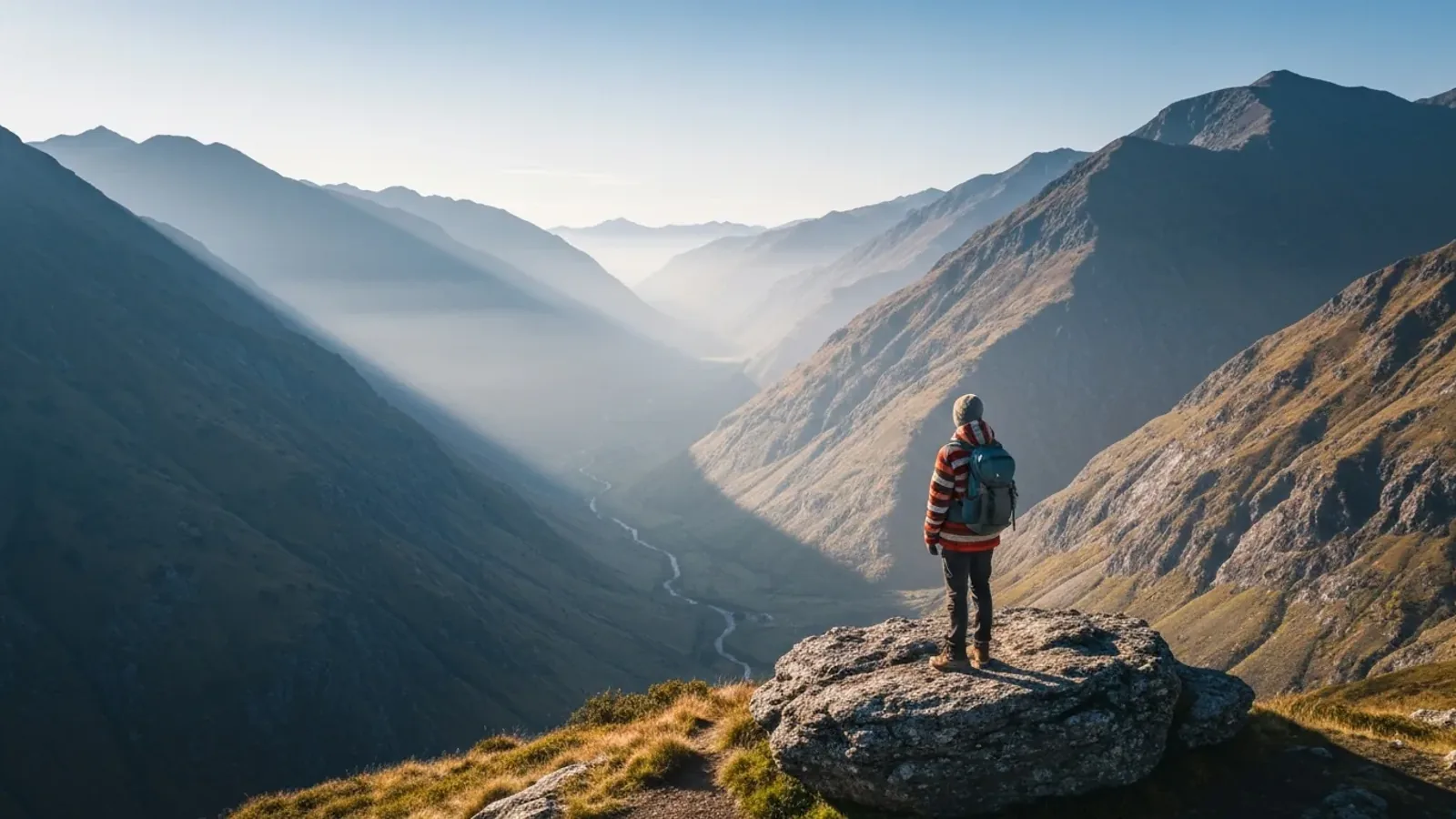
Have you ever stood on a summit with nobody beside you and felt a quiet satisfaction? Hiking alone gives you a rare kind of freedom. It also brings risks that come with being on your own. Here's what draws people to solo hiking, what the figures tell us, and how to prepare for an outing on your own.
Three reasons to hike alone
The biggest draw is the freedom to decide everything yourself. You set the departure time, pace, breaks and route. You can avoid the pressure of trying to keep up or the disruption of stopping to wait for others. It's easier to take in the mountain when you're walking at a pace that suits you.
You can also pay closer attention to the mountain. Chatting with friends is fun, and it can also draw your attention away from wildflowers, birdsong or a change in the wind. On your own, your senses sharpen and you have time to notice what's around you.
Solo trips also develop judgment and self-reliance. Taking responsibility for everything from finding the trail to monitoring your condition makes you a more capable hiker. Small wins, like getting a tricky junction right, give you confidence for your next outing.
What the numbers say about solo hiking risks
That freedom comes with real risks. The incident figures help put them in perspective.
According to the National Police Agency's 2024 statistics, about 13.7% of solo hikers involved in mountain incidents died or went missing. For parties of two or more, the figure was about 5.9%. Among hikers who got into trouble, that makes the share killed or missing more than twice as high for solo hikers. The figures are for people already involved in recorded incidents, including some activities other than hiking.
One practical risk is having fewer ways to call for help in an emergency. If you fall and can't move, companions can share tasks like giving first aid and calling for rescue. If you lose consciousness while alone, it can take longer for anyone to find you. The report does not measure the effect of this factor.
Losing the trail is another risk. At about 30%, it was the most common category among people involved in reported mountain incidents in 2024. If you're unsure you're on the right path, stop and check your position before continuing.
Use these figures to understand the risks and put precautions in place so you can enjoy your time out alone.
Practical precautions for hiking alone
Prepare for three situations: before you leave, while you're walking and when something goes wrong.
Before you leave
- Always file a hiking plan. More prefectures now accept plans online. Also tell a friend or family member your destination, route and expected finish time. Rules and forms vary, so check the latest information for your prefecture and mountain area.
- Build a margin into your route plan. Nobody is there to cover for illness or a wrong turn. As a guide, allow 1.2 to 1.5 times the published route time and plan to be off the mountain two hours before sunset. Adjust for conditions.
- Know your escape routes. Knowing another way down can make a difference if the weather turns or you feel unwell.
While you're walking
- Turn back if something feels off. Knowing when to call it a day is one of the most important solo hiking skills. The temptation to press on because you came all that way can lead to trouble.
- Check your position regularly. Carry a paper map and compass as well as a map app, so you have options if the battery dies or reception disappears.
- Greet other hikers when you pass. If a search becomes necessary, someone remembering where they saw you can be a major help.
Equipment for emergencies
These items are especially important when you're on your own.
- Headlamp and spare batteries. Essential if you have to come down after dark.
- Emergency bivy shelter or emergency blanket. Carry one in case you have to spend an unplanned night out.
- Whistle. It lets you signal for help when you can't shout.
- Power bank. Keeping your means of communication working can be a lifeline.
If first aid is needed, follow advice from medical professionals or other qualified specialists.
The freedom and responsibility of hiking alone
A solo hike is a chance to experience the mountain at your own pace, a pleasure that holds up however often you go. Take seriously that among hikers involved in incidents, the share who die or go missing is more than twice as high for solo hikers. File a hiking plan, allow plenty of time, be ready to turn back and carry emergency gear. Prepare carefully and take a moment to greet other hikers or exchange information along the way. You can walk alone and still be part of a community.