
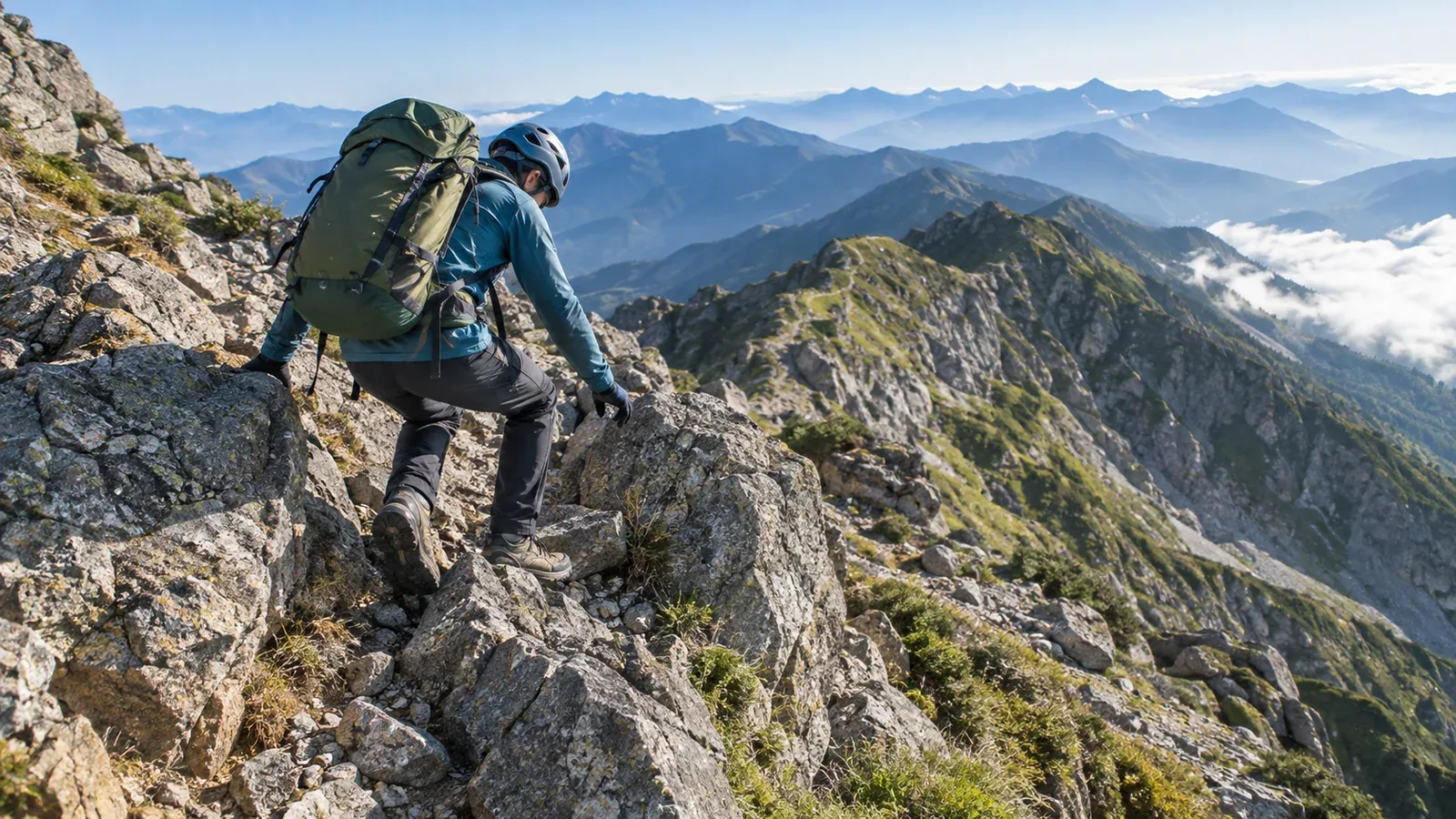
On rocky trails, assess where a slip could turn into a fall, whether handholds and footholds are sound, and whether you can still turn back. Weather, fatigue and the condition of the route and equipment can change that assessment along the way.
Experience on long hiking days can help, but steep rock also requires controlled movement and decisions before a difficult section. This guide looks at situations you can recognise and respond to on the trail.
Japan’s National Police Agency reported that in 2025, 19.2% of people involved in reported mountain incidents nationally were classified under falls at ground level and 17.3% under falls down a slope. These figures cover mountain incidents across terrain types. They do not show the relative risks of different movements or times of day on rocky trails.
Four situations to watch for
Taking the first step down
From above, the next foothold can be harder to see. Stop on stable ground and look at the descent before moving. Use secure holds, keep your hands free and move one hand or foot at a time when the terrain calls for it.
Check the next foothold for moisture, loose material and room for your shoe. Keep your other supports steady while assessing it and transfer weight only when you can do so in control. If the next step or the exit is unclear, pause or choose a safer route.
Relying on a fixed chain or rope
A hiking chain or fixed handline can help with balance and movement. Check local information about closures or damage, and choose another route if the installation looks damaged or you cannot find a way through with stable support.
Keep stable handholds and footholds while using a fixed aid. Avoid sudden loading or swinging. Treat fall protection as a separate system that requires suitable equipment, verified anchors and training.
Moving when fatigue builds
As you tire, you may stumble, rush decisions or take longer to find stable placements. Notice repeated slips, hesitation and changes in pace. Plan a rest, a shorter route or an earlier return while you still have room to act.
Pay attention to grip and hand dexterity. If either is fading, stop on stable ground outside the fall line before entering the next section. Reassess after resting and choose a bypass or turn back if you still cannot move reliably.
After a change in weather
Rain, ice, wet vegetation or loose debris can reduce grip. Check the condition of each hold and your soles before committing weight. The rock type alone cannot tell you how much grip you will have.
Shaded or mossy rock may remain damp after rain stops. Nearby weather records can tell you whether it rained, while the trail surface needs a direct check. Take a suitable bypass or turn back if you cannot move with control.
Decisions that become harder under pressure
Even on a familiar route, stop before the exposed section to check the party’s condition, the weather and the options for retreat.
Relying on previous success. A previous trip tells you what you managed on that day. Assess the current rock, weather, footwear and energy before deciding to proceed.
Putting off the turnaround. Distance already covered can make it harder to give up the plan. Agree before departure on a turnaround time and the conditions that would make you stop earlier.
Following others through. The person ahead may have different reach, strength or experience. Make space for each person to say whether they can safely continue. Choose a route that fits everyone.
Avoiding rockfall you could cause
A stone loosened by a hand or foot can reach hikers below. Watch the ground above and below you, and wait on stable ground away from the likely path of falling stones when a section is occupied.
Pay particular attention in these situations.
- Stepping onto a loose stone without checking it
- Pulling on a handhold without checking whether it moves
- Brushing or kicking loose stones downhill as you descend
If you dislodge a stone, call out immediately with a clear warning, such as “Rock!” Wear a well-fitted mountaineering helmet before exposed rock. Give other parties space and avoid stopping where stones could fall.
Signs that it is time to stop and reassess
These signs can give you time to rest, change the route or turn back. Use a stable spot away from exposure and rockfall.
Changes in movement. Repeated stumbles, difficulty finding footholds or taking longer to read the route can indicate fatigue or poor visibility.
Feeling rushed. If you feel pressure to hurry through or make way for a group behind you, wait in a secure spot and allow time to check the next move.
Equipment problems. Loose laces, mud on soles or a shifting pack can affect how you move. Check and fix them on stable ground before entering steep rock.
Before setting out
Check the route authority’s latest notices and the weather. Share your turnaround time and alternatives with the group. In Japan, call 110 for mountain rescue if you cannot get down safely. Give your location, coordinates if available, the route name, the number of people and any injuries, then follow the operator’s instructions.
Further reading
- National Police Agency annual mountain incident reports
- Prefectural police mountain safety and incident information
- Japan Meteorological Agency historical weather records
References and sources
- National Police Agency · 2025 mountain incident report
- National Police Agency · Mountain incident reports
- Nagano Prefectural Police · Mountain information and incident reports
- Nagano Prefecture · Mountain safety guidelines
- Nagano Prefecture · Mountain patrol safety advice
- Japan Meteorological Agency · Historical weather data
- Japan Meteorological Agency · Warnings and advisories
- Nagano Prefecture · How to request mountain rescue