
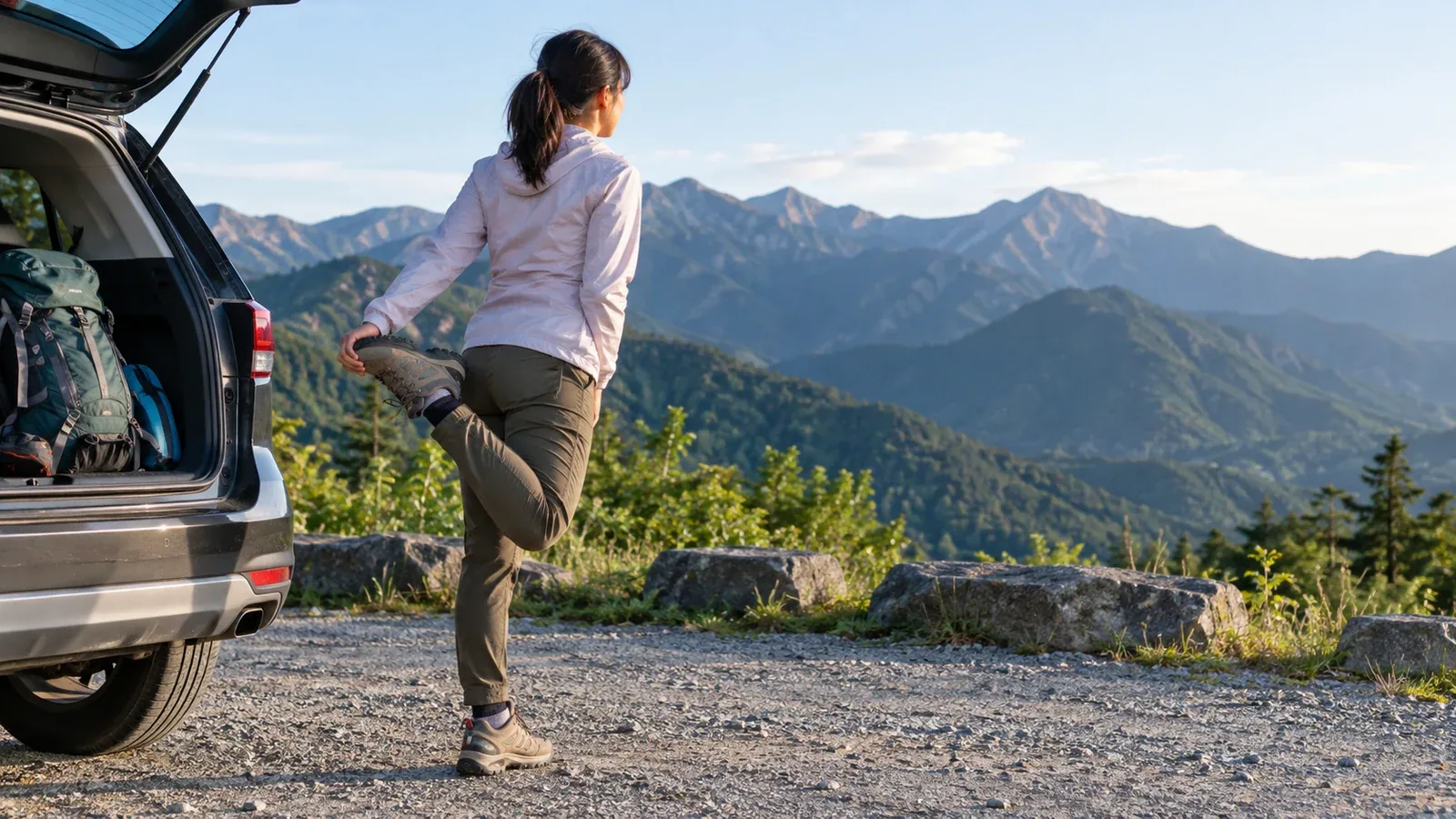
The morning after a hike, your legs may feel heavy or too sore to get out of bed easily. When you brake on a downhill slope, the thigh muscles work while lengthening. Unfamiliar exercise with a lot of this movement, called eccentric contraction, can leave your muscles sore later.
Stretching before or after exercise hasn’t been shown to make much difference to soreness the next day. Think of these as gentle ways to move your legs when they feel stiff. Here are movements you can try in a suitable space after the hike and the following morning.
Why muscles can feel most sore the next day or later
Soreness that develops hours after exercise is called delayed-onset muscle soreness, or DOMS. It often peaks 24 to 72 hours after exercise.
Your quadriceps, on the front of the thigh, lengthen under load every time you brake on a descent. Your calves help keep your ankles steady. Carrying a heavy pack adds work for your core and glutes.
Walk a little first to see how easily you can move. Ease into each stretch without bouncing or pushing into pain.
Three leg stretches to try after a hike
Put down your pack and find level ground out of the way of other people. Use a fixed support if you need help keeping your balance.
Quadriceps (front of the thigh)
Stand on one leg, hold the opposite ankle and slowly bring your heel towards your buttocks. Keep your knees close together. Hold for about 20 seconds where you feel a gentle stretch in the front of the thigh. Hold a stable wall or railing for balance and repeat on both sides.
Hamstrings (back of the thigh)
Put one heel on a low, stable step. Keep your back straight and lean forward slightly from the hips. Keep the knee relaxed and hold where you feel a gentle stretch behind your thigh for about 20 seconds. You can also sit and extend one leg in front of you.
Calves (gastrocnemius)
Put both hands against a wall, step one foot back and keep that heel on the ground. Straighten the back knee and shift your weight forward to stretch the upper calf. Bending the back knee slightly lets you stretch the deeper soleus, too. Hold each stretch for about 20 seconds on both sides, within a comfortable range.
Movements to try once you feel settled after a bath
Once you feel steady after the bath, you can try these movements in a dry rest area. Avoid slippery floors and walkways. If you feel unsteady, sit and rest.
Seated hip and glute stretch. Sit in a chair and place one ankle across the opposite thigh to make a figure four. Keep your back straight and lean forward slightly. Hold for 20 to 30 seconds where you feel a gentle stretch from the buttock to the outside of the hip. Stop if your knee hurts. Switch sides if comfortable.
Kneeling hip flexor stretch. Kneel on one knee and shift a little weight onto your front leg without arching your back. Hold for about 20 seconds where the front of your back hip feels a gentle stretch. Put a towel under the knee if you need padding. Repeat on both sides within a pain-free range.
Gentle movements for stiffness the next morning
If you feel stiff in the morning, try moving your hips and ankles slowly within a pain-free range. There’s no need to push for more range or exercise through pain.
- Hip circles. Hold a wall or other support, lift one foot slightly and draw small, slow circles from the hip.
- Ankle circles. Sit on a chair and rotate your ankle gently in both directions.
- Knee to chest. Lie on your back and bring one knee slowly towards your chest. Pause at a comfortable point and lower the leg. Alternate sides.
You can take a short walk if it doesn’t make the pain worse. If the pain is severe, a joint is swollen or warm, or you struggle to put weight on the leg, avoid forcing it and seek medical advice.
What to watch for after a hike
These are common pitfalls to keep in mind.
- Sitting all the way home. Sitting a long time may leave you stiff. If there’s a safe place to stop, get out and move as much as is comfortable.
- Stretching hard when you’re cold. Avoid bouncing or forcing a stretch when your body has cooled down.
- Massaging a sore spot hard. Avoid strong pressure on swelling or severe pain and seek medical advice if needed.
- Forcing yourself to reach a target number of repetitions. Let how you feel and any pain guide what you do that day.
For your next hike
If your legs feel tight, start with movements that feel comfortable. If you have an ongoing knee or back condition or persistent pain, check which movements are suitable with a doctor or another qualified clinician. Use your Nordwand log to note what you did and how you felt the next day. It can help you plan your next hike.