
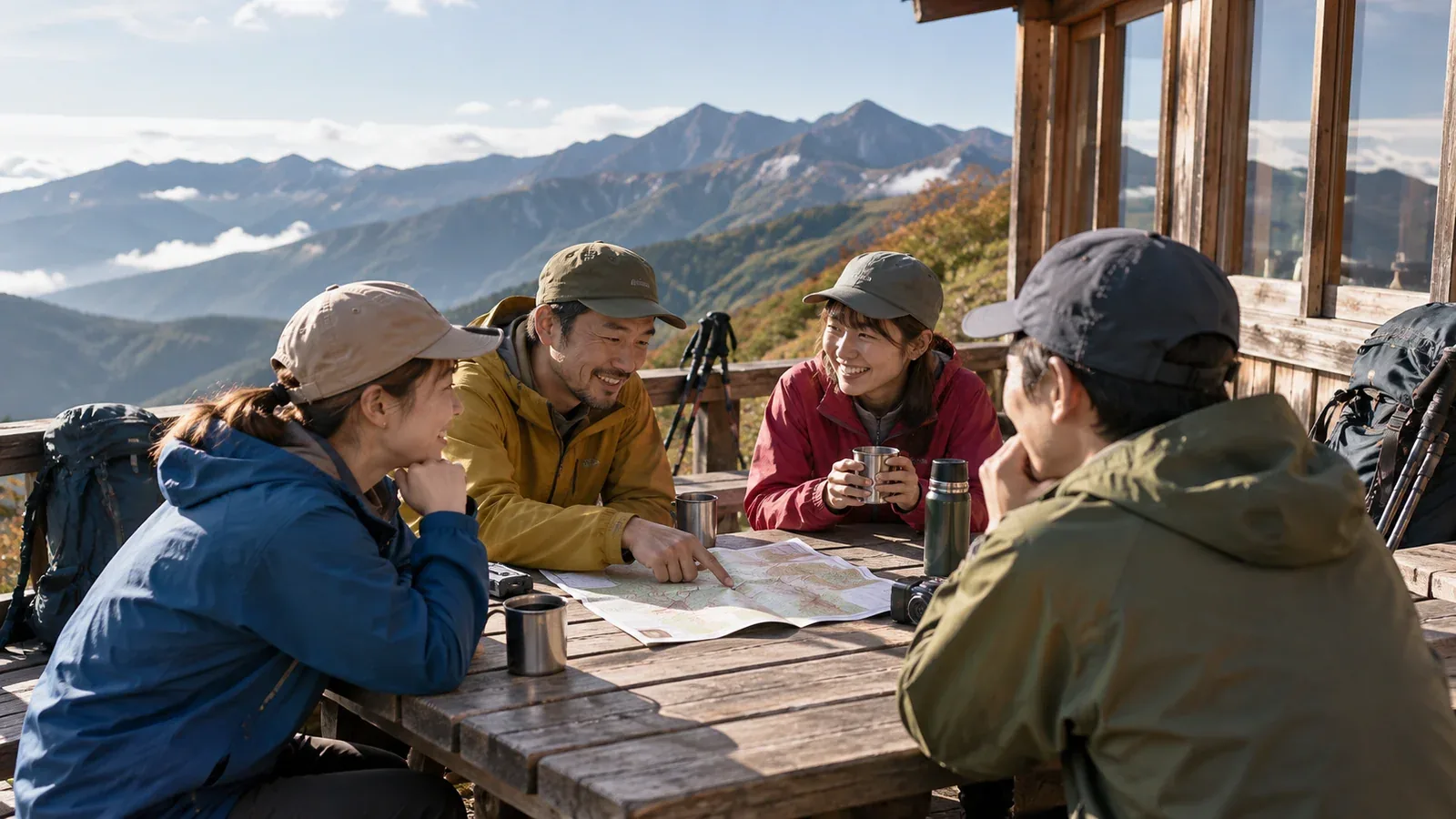
Right after you come down from a mountain, you may feel a sense of achievement and want to go again. Talk about the hike while it’s fresh and use what you learned to plan another outing.
A casual chat can end at “That was fun” or “I’m tired,” leaving little to use next time. A conversation that’s all about route choice and gear can leave some people out. Here’s how to organize a debrief that helps make the next outing safer and more enjoyable.
Give the debrief two purposes
A debrief can do two things: help you remember what happened and let the group share what each person learned.
Details such as when the weather changed, what a confusing junction looked like or when you started to tire become harder to remember over time. Try talking within 24 hours of coming down. You can fill in gaps in each other’s memories and put together a record to use next time.
People on the same hike may have seen different things. The person in front may not have noticed someone getting tired at the back. Someone at the back may never have heard why the leader made a decision. Discussing those differences can help the group manage safety next time.
Start with what went well
A debrief can sound like a meeting about mistakes. Starting there may put people on the defensive and keep important details from coming out.
Try this order.
- Start with what went well. Discuss what made the gear choice, start time or pace work. Once you know what helped, you can do it again deliberately.
- Describe what differed from the plan in neutral terms. “It went differently than expected” is easier to talk through than “That was a mistake.” Common topics include the weather, when people started tiring and how your actual times compared with the estimates.
- Decide what to carry into the next trip. Turn “We’d like to do this differently” into an action. Otherwise the conversation may end at impressions.
This order gives everyone a chance to speak and leaves you with specific things to improve. On a group hike, make room for each person to say something, including those who weren’t leading.
What to keep a record of
It’s easy to forget a spoken conversation. Keep at least the following details in text or photos so you can use them when planning again.
Route and timing
- Actual walking times for each section
- Sections that took much longer or less time than planned, and why, such as crowds, a navigation mistake or waiting for weather
How the gear worked
- Things you carried and didn’t use
- Things you wish you’d brought
- Things you’d review for performance, weight or upkeep
How you felt and what your fitness allowed
- When or where people started to tire
- How much food and water people used and when they ate or drank
Weather and surroundings
- How the weather actually changed compared with the forecast
- When you noticed the temperature or wind change
Store the notes in a group chat, shared document or hiking log app, anywhere all participants can access them. What matters is being able to look up what happened when you plan the next hike.
Use the debrief to prepare the next outing
A good conversation can help the group plan what to do next. You can leave the date and route open. Sharing a direction, such as the kind of mountain you’d like to hike next, helps the group stay connected.
Ask questions like these when you start planning.
- Given how our fitness and skills held up, what difficulty suits the next hike?
- What season or area would suit us next, given what we experienced with the weather this time?
- Which mountain would let us put what we learned about gear or fitness into practice?
This helps you develop skills and build trust as a group. After several hikes together, you know more about each person’s fitness, strengths, difficulties and judgment. That experience gives you a better basis for deciding when to take on a more demanding hike.
Debrief online when you’re apart
If you can’t meet in person or people live far apart, a debrief online can work well.
Photos and map screenshots help show terrain and what a junction looked like when text alone is hard to follow. A voice or video call can help with finer details.
You can also reflect at different times if everyone keeps a record. Each person can post what they noticed after the hike, then you can use those notes to plan.
Some hiking community apps let you share hike records. Publishing a record can start a conversation with people interested in the same mountain and help you meet hikers beyond your group. Nordwand offers ways to share mountain experiences and take part in communities. Check its official website if you’re looking for people to plan the next hike with.
Try it after your latest hike
Write down what went well, what differed from expectations and what you want to do next time. Even those three notes can help later. If you’re looking for people to share a debrief with, try Nordwand’s Base Camp or an interest-based community. What you learned on the last hike can make the next one safer and more enjoyable.