
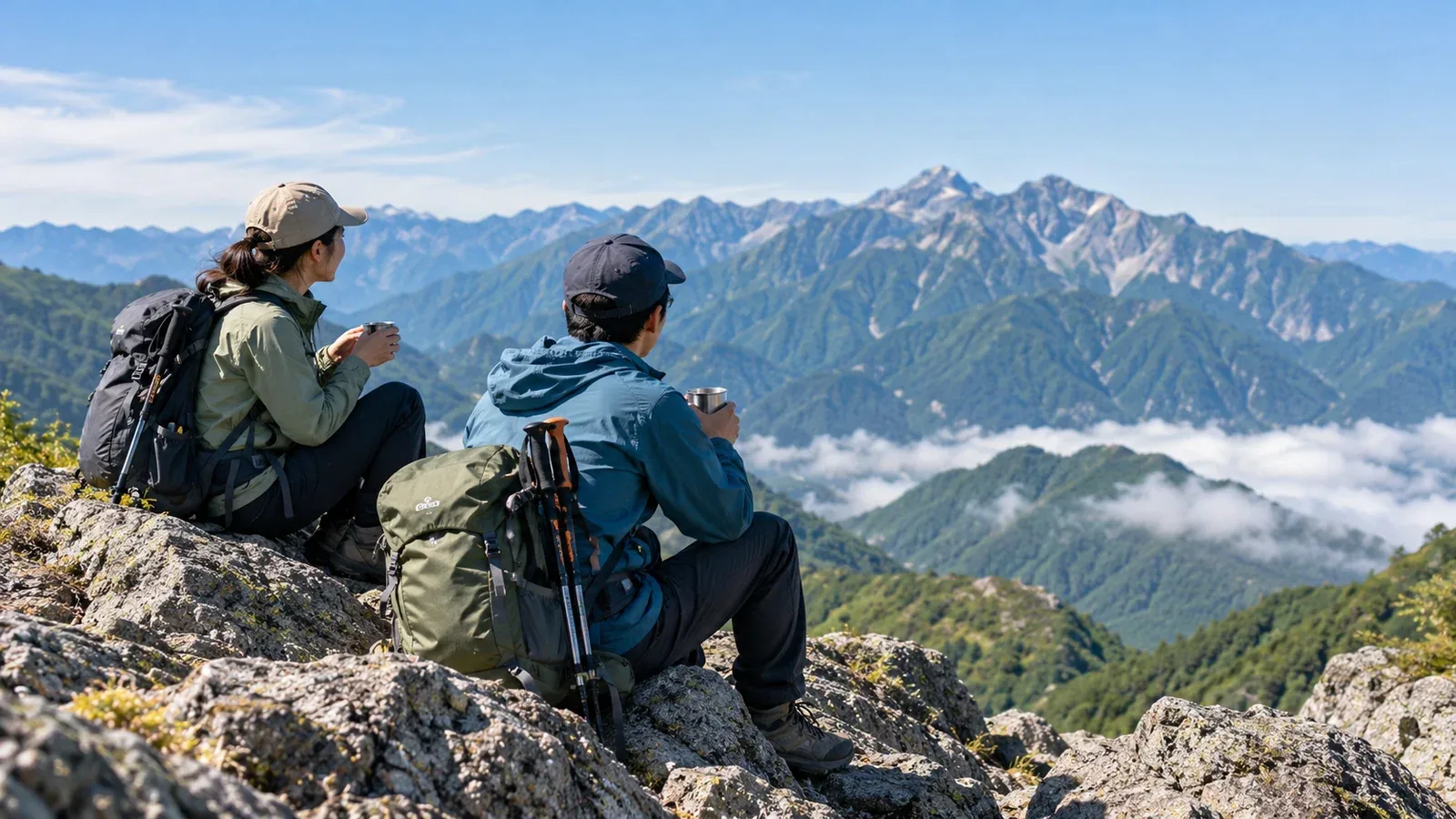
Someone you chatted with at the summit sends you a follow request after the hike. A person you shared a room with at a mountain hut starts messaging you often the next day. Someone who helped you at the trailhead asks for your address or phone number. Any of these can happen to a hiker.
People can feel close more quickly in the mountains than in everyday life. You head for the same goal, help each other when you’re tired and share time away from your usual routine. That makes it harder to judge how much closeness feels right. A connection made in the mountains can mean a lot, and it helps to know what personal information you’re comfortable sharing and where you want to set a boundary.
This article looks at decisions about social media and personal information when you meet someone hiking. It gives practical ways to decide what to share and what to say when you want to decline.
Why it can be hard to judge boundaries on a hike
The setting can bring people closer quickly. When tired or under pressure, we may be more willing to rely on someone else or feel closer after helping them. Sheltering from a sudden change in the weather or getting a snack from someone when you’re exhausted can create a sense of solidarity in a short time.
The sense of connection can be genuine. It becomes harder to judge when the feeling turns into a reason to give out personal details. You may think it would be rude to decline after getting along so well or feel pressure because helping each other is part of hiking. You still get to decide what to share.
The activity itself also makes certain topics come up naturally. When talking about a route or a plan, you can end up mentioning where you started, how you’ll get home, what mountain you’ll hike next or where you live. Taken together, the details can lead to an uncomfortable situation even when the other person meant well.
How to decide whether to share a social media account
Following each other or swapping contact details often comes up after a hike. “Let’s go out together again” can make it feel hard to say no.
Ask yourself whether you’re comfortable with this person seeing what you’ve posted. Depending on your settings, an account can reveal old posts, your current location, daily routines and who you know. Imagine that this person keeps seeing your updates, and decide whether you’re comfortable with that.
Here are ways to respond in different situations.
If you want to leave it as a chance encounter. You can say, “I keep my contact details private,” or, if true, “I don’t really use that account.” Adding “Maybe I’ll see you on another hike” can end the conversation warmly without promising to stay in touch.
If you’d like to hike together again and want to be careful. You could use a closed hiking community or an account that only shows hike records. An account with less of your private life on it gives you a way to stay in touch while limiting what you share.
If the other person sends a follow request. If the platform lets you approve followers, you can take time to decide whether to share your posts. Review who can follow you and who can see your posts using the settings for your service.
What to say when someone asks for personal information
Phone numbers, addresses, workplaces and license plates are personal details. They can come up in situations like these.
“Let’s exchange numbers in case of emergency.” It’s useful to agree how you’ll contact the people you’re actually hiking with. You can keep your phone number private from someone you’ve just met. If it fits your situation, say “Thanks. I’ve left my contact details with my family.” In an emergency, get help from companions or a hut as appropriate and request rescue from police or fire services.
“I’d like to share the plan for our next hike.” You can keep detailed plans private when you’ve just met someone. File a trip plan with the designated local authority or police where required and share it with someone you trust. “I keep my detailed plans private” is enough.
“Would you like a lift?” Even a well-meant offer from someone you’ve just met deserves thought. If you’re hiking alone, relying on them for transport can limit your options later. You can say “Thanks, I’ve already arranged a ride” or “I’m taking the bus,” if that’s what you’ve planned.
A short, calm answer usually works. A long explanation can invite more suggestions about how to get around it. You can give one reason and stop there.
What to do if contact continues after the hike
Messages after a hike can lead to a good hiking friendship. It helps to know what to do if the contact starts to feel one-sided.
If you want less frequent contact, reply when you feel ready. Instant replies can set an expectation that you’re always available. Taking longer to reply may help reset the pace of the conversation.
If contact still feels one-sided, state what you want clearly. “I won’t be available to message for a while” can work if you want a break. If messages continue, you can use blocking or message controls to protect your privacy.
If someone repeatedly contacts you, tracks your whereabouts or monitors you online and you’re worried about stalking, speak to police early. In Japan, call 110 in an emergency. For a non-urgent consultation, contact the nearest police station or call #9110. You can also report problems in a hiking community to the app operator or community moderators.
Ways to meet hiking companions with clearer expectations
A chance encounter can be a welcome way to meet someone. If it’s your only way to find companions, you often have little information about the other person when you decide whether to stay in touch.
Communities that state their purpose, experience level and area give you common ground from the start. Both sides can choose what to share. Starting with a group outing can reduce some of the pressure that arises when you’re alone together.
Requesting a certified guide can be a good way to hike with people you haven’t met before. A guide can provide technical help and help the group communicate.
Try this before you share an account
Check your social media visibility and see whether it’s easy to work out where you are or how you spend your time. A hiking-only account or a private profile is one step you can take today.
If you’re looking for new hiking companions, start somewhere that gives you a sense of the group’s purpose and experience level, such as Nordwand’s Base Camp or one of its interest-based communities. You’ll have more information for an initial decision.
References and sources
- Personal Information Protection Commission of Japan · Examples and precautions for handling personal information
- Japan’s National Police Agency · Police advice and emergency contacts
- Japan’s National Police Agency · Recognizing stalking
- Nagano Prefectural Police · Mountain information: filing a trip plan and leaving a copy with someone you trust