
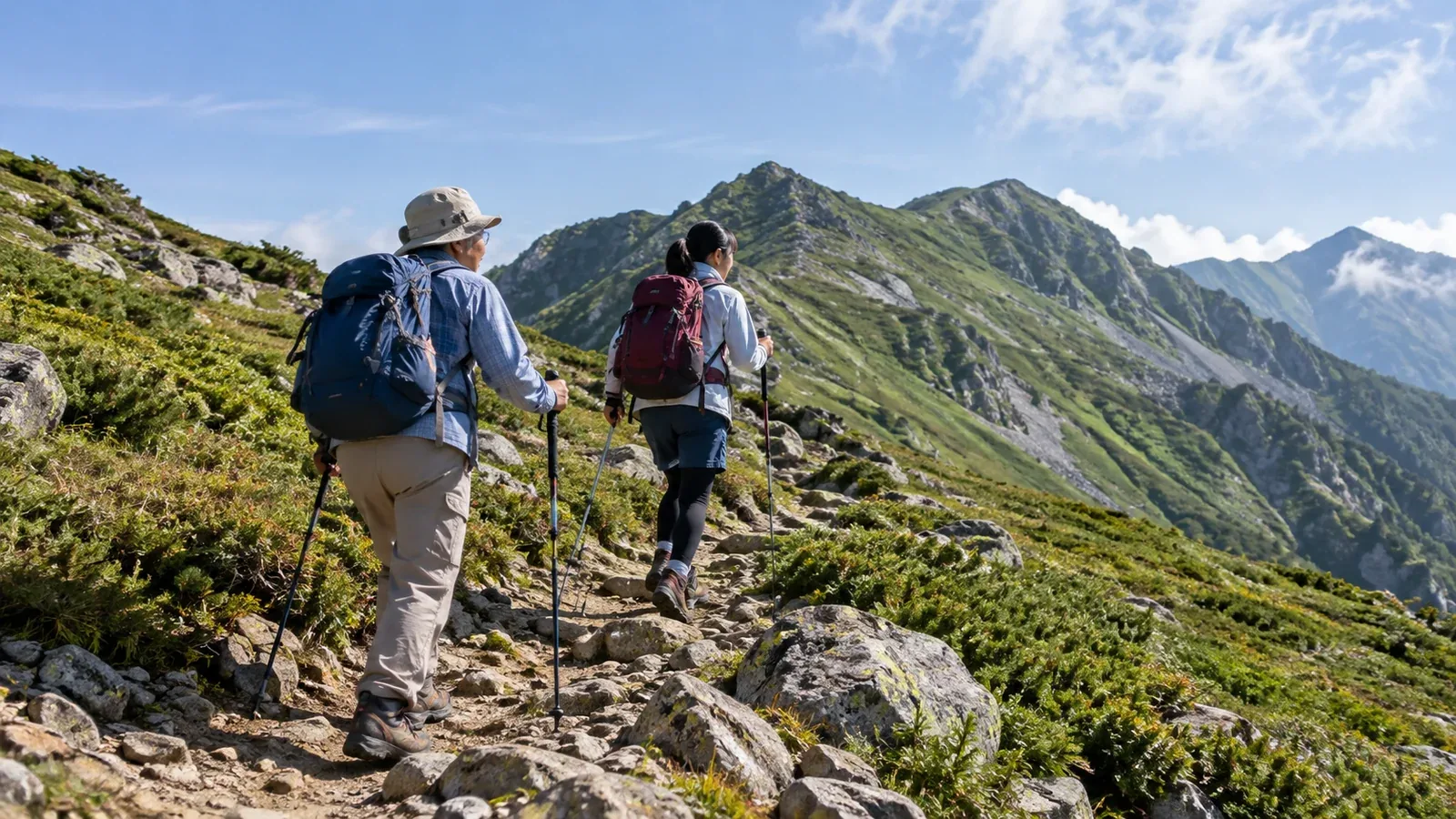
“I’d like to hike together, but can we find a pace that suits us both?” It’s a common concern when hikers are years apart in age. A teenager and someone in their sixties can hike the same mountain with a plan that suits them both. Setting off and hoping it’ll work out can leave one person exhausted, the other bored and both feeling awkward.
Here’s how to account for differences in fitness, pace and attitudes to risk. With a few decisions ahead of time, hiking across generations can become something you do regularly.
Plan around current fitness
Age gives you a rough indication of what to expect. A person in their sixties who hikes every week may keep a steadier pace than a beginner in their thirties. What matters is everyone’s current endurance, leg strength and ability to recover.
When planning as a group, start by sharing where you hiked recently and how long it took. “Last month, I took 1.2 times the standard route time to hike this mountain” tells you more than the person’s age. Use those examples to estimate how much time your group needs relative to the route’s standard time.
If there’s a large difference in fitness, reconsider the original route. Choosing a shorter one from the start gives you more margin than trying to make up the difference by shifting pack weight or having the slower hiker start ahead of the others.
How to find a pace you can all keep
One common problem is that the person walking more slowly pushes too hard and gets worn out. Someone may think they’ve slowed down for the group and still be going too fast for another person.
Try these steps to find a pace that works for the whole group.
- Let the hiker who needs the gentlest pace walk near the front. The people behind can match their pace, so they don’t have to spend energy trying to catch up.
- Pick rest stops by location. “We’ll stop at that junction” lets everyone know what to expect, regardless of their pace. It can be clearer than “We’ll stop after 30 minutes.”
- Agree on a turnaround point and time before you leave. “If we haven’t reached this point by this time, we’ll turn back.” Agreeing on that rule before setting out takes some pressure off if you fall behind.
You can also make the most of breaks. Hikers who feel ready to keep going can practice reading the map, look at plants or landforms, or take photos. The same break can be worthwhile for everyone.
Agree on how to respond to risk
One thing mixed-age groups can overlook is how differently people judge risk. Experience and current fitness both influence that judgment. Someone new to hiking may underestimate the hazards, while an experienced hiker may underestimate how much their fitness has changed. Either can misjudge what the group can handle.
Before you leave, talk through three decisions.
- When to turn back because of the weather. Be specific. For example, if you hear thunder, leave the ridge and seek safe shelter as soon as you can.
- What to do if someone feels unwell. Pair symptoms with actions. For example, if someone develops a headache after gaining altitude, stop going higher and consider descending because altitude illness is possible. Seek medical advice for suspected altitude illness or a sudden change in someone’s condition.
- Who makes the final call. Agree on a leader. The person most familiar with the route may be a better choice than simply going by age.
Check the latest weather information right up to departure. Use regional forecasts from the Japan Meteorological Agency and forecasts for the mountain you plan to hike. Conditions can deteriorate in the afternoon even after a clear start, and people with different experience may interpret the signs differently.
What different generations bring to a hike
An age difference can take some planning and also make the outing richer.
People with years of experience may be able to explain maps, terrain, plants and weather as you walk. Younger hikers may be familiar with smartphones, GPS apps and tools for sharing hike records. Both can help the group. Give everyone a chance to contribute what they do well and differences in pace may be easier to accept.
A person trying to reach the top quickly and someone taking time to look around can come away with different impressions of the same mountain. If fitness varies across the group, give the outing goals beyond reaching the summit. A slower pace can give you more time to notice what’s around you.
Build habits that make it easier to hike together again
Even when one outing goes well, getting the same people together again takes some work. For a group of different ages, talking about how the hike went afterward can help you keep going together.
Talk honestly about questions like “How did the pace feel?” and “Where did it get physically hard?” Having these conversations early helps you make a more realistic plan for next time. Use the conversation to share information and make decisions together.
People’s fitness changes with the season, workload and health. The pace that suited someone six months ago may no longer suit them. Regularly ask how recent hikes have felt so the group can keep choosing outings that work.
Try this before your next hike
Start by sharing your most recent mountain and how long the hike took with the people you want to go with. Choose a route everyone can walk with time and energy to spare. That can resolve many concerns about age differences. If you’re looking for companions, Nordwand’s Base Camp and interest-based communities can help you meet nearby hikers. Knowing each other’s pace, experience and goals makes it easier to plan a first outing.