
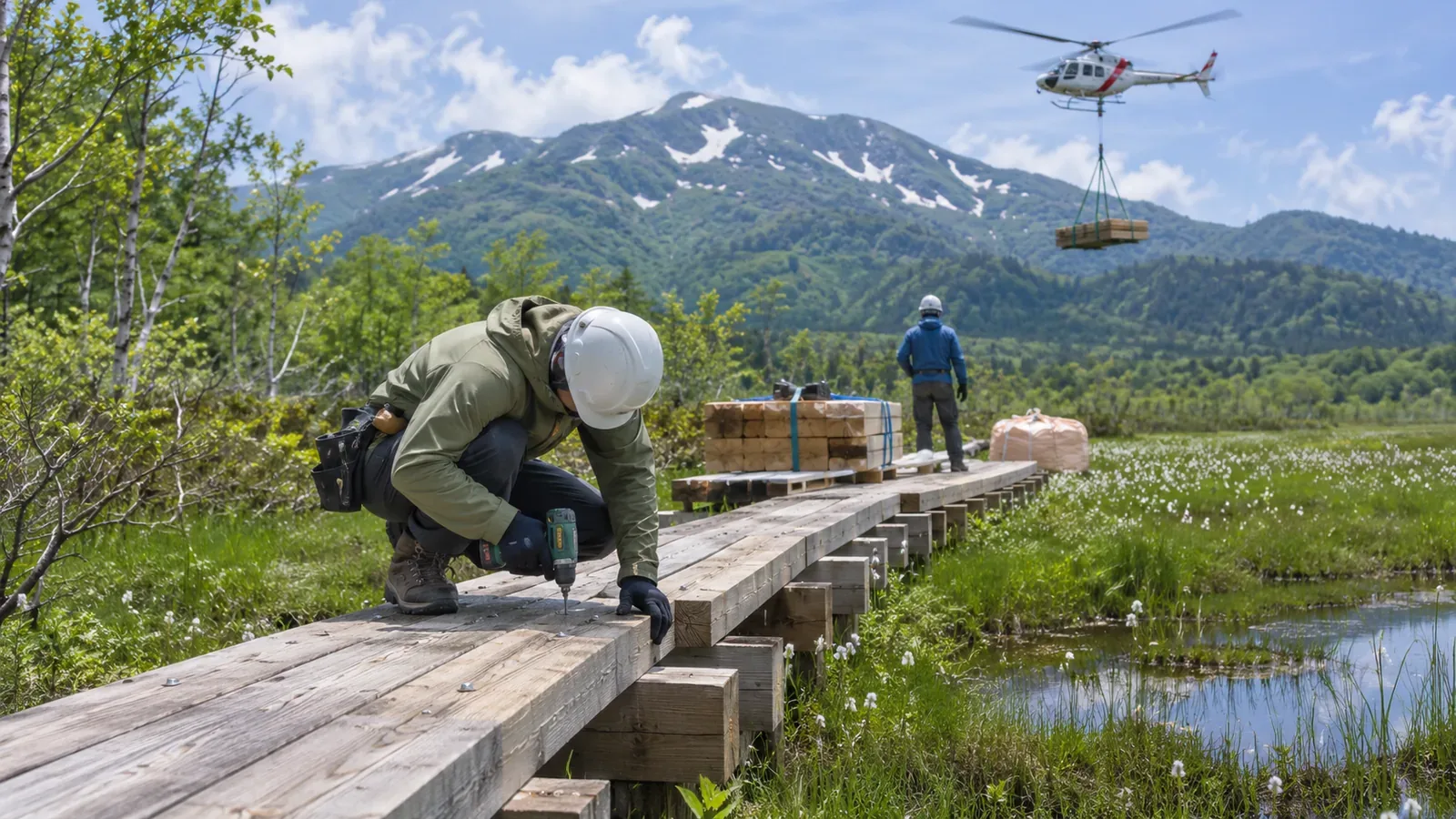
Keeping Oze’s boardwalks in service takes helicopter deliveries, hand installation and removal of the old timber. When you know what went into the boards beneath your feet, it is easier to see why pole tips and conduct around worksites matter. Oze’s public records describe the repair process and how walkers can prepare. Other mountain areas may move materials and build differently.
Materials arrive by air and crews lay the boards by hand
Gunma Prefecture explains that when heavy machinery cannot reach a boardwalk replacement site, materials go in by helicopter and crews do the work by hand. Fukushima Prefecture also describes a largely manual process apart from the helicopter transport. Once materials reach the site, crews set the boards in place one by one.
The Ministry of the Environment’s management plan requires the old timber from a replacement to be taken out of the national park. The 2025 repair notice for the section between Ryūgū and Miharashi lists separate dates for helicopter deliveries and removals.
The notice explained that weather or progress could change the flight schedule and that marshals would restrict access on either side of the unloading point. Around a worksite, follow signs and marshals’ directions, and keep away from the crews and materials. Check the manager’s latest information before setting out.
How long the boards last and what maintenance costs
Gunma Prefecture says that wetland boards can rot or break after around seven to ten years. Fukushima Prefecture gives a service life of roughly ten years, depending on conditions. These are estimates. Look at the plank in front of you for cracks or signs it has tilted.
Fukushima Prefecture’s article quoted installation costs at the time of at least ¥100,000 per metre for one side of the boardwalk. It also noted growing difficulty recruiting workers. Costs vary by project and date. The figure gives an idea of the work involved in moving materials and building by hand.
In June 2025, the Yamanohana Visitor Center showed a brand mark on the boardwalk between Hatomachi Pass and Yamanohana. TEPCO identified the installer and 2024 was the installation year. The mark gives you a clue to who installed the boards and when. Check it only if you can see it from a place where it is safe to stop.
Why the boardwalk is worth maintaining
The early boardwalks made it easier to avoid mud. Their purpose shifted to protecting the wetland. Gunma Prefecture records that many visitors stepped into the wetland in the late 1950s and early 1960s when boardwalks were still scarce. Fukushima Prefecture explains that peat builds up at about 1 mm a year and that wetlands formed over thousands of years deteriorated in a few years. Conservation work at Ayamedaira began in 1966, and some areas were still recovering 55 years later, when the article was written.
Replacing boards keeps a route walkable. Restoring a trampled wetland takes much longer and needs ongoing care. Keeping to the designated route during works helps prevent fresh damage.
What walkers can do before leaving
Check your gear and access notices in advance to reduce the need to stop on narrow boards or near a worksite.
First, check your poles. The Oze Preservation Foundation asks you to fit tip caps and keep the tips within the trail. Sharp tips can damage plants and soil and wear out the boards sooner. Check at home that the caps fit and hold securely. Shapes and fitting methods vary, so read the instructions for your model.
Second, plan where to put on and remove equipment. The foundation asks walkers to remove crampons where there is no snow, and keep tripod legs and feet out of the wetland. The trekking guide also notes injuries from metal fittings and splinters. Leave replacement materials and removed boards alone and keep a safe distance from them.
Third, check the route. Find the boardwalks and rest areas on a map, and pack so you can reach rain gear or adjust your poles away from narrow sections. Look at brand marks only after stopping on steady footing without blocking the way. If you cannot see a mark clearly, leave it. Near works, use the indicated waiting points and routes. Keep away from workers and materials when taking photos.
Follow local directions around worksites
Maintaining the boards takes deliveries, hand installation and removal of old timber. Fit pole caps and remove crampons where there is no snow. Keep your feet and tripod legs out of the wetland and follow local instructions around worksites.
References and sources
- Japan Ministry of the Environment, Kanto Regional Office: 2025 Boardwalk Repairs Between Ryūgū and Miharashi
- Fukushima Prefecture: The History of Conservation in Oze, Part 2, Managing Overuse
- Gunma Prefecture: Boardwalks and Vegetation Restoration in Oze (booklet extract)
- Oze Preservation Foundation: Trail Etiquette in Oze
- Oze Preservation Foundation: Oze Trekking Guide (booklet)
- Japan Ministry of the Environment: Oze National Park Management Plan, Chapter 6, Boardwalk Replacement
- Oze Preservation Foundation: Yamanohana Visitor Center, Hatomachi Pass to Yamanohana (June 24, 2025)