
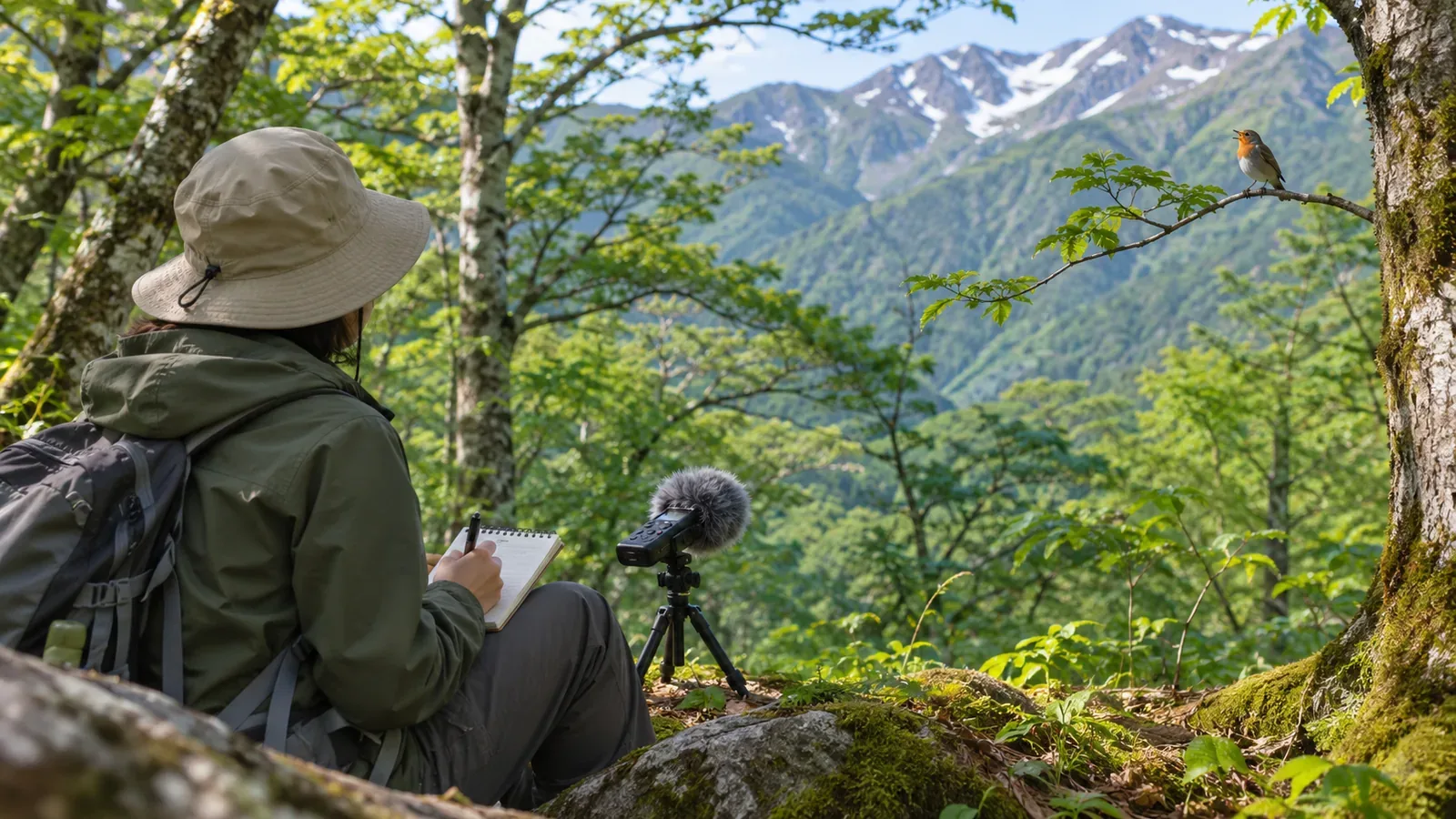
Before sharing mountain sounds, review both what the recording contains and the location information you plan to include. Even a post about birdsong can draw crowds to a precise spot and affect birds and other visitors. Japan’s national park guidance, the Wild Bird Society of Japan’s guidelines and advice on field recording can help you decide how to listen on the trail and what to share afterward.
Record what you can hear from the trail
Japan’s Ministry of the Environment asks national park visitors to stay on trails and boardwalks. This reduces the chance of getting lost, trampling plants or eroding soil. If a sound makes you want to move closer, stick to what you can hear from the trail. The ministry also encourages visitors to check weather and trail conditions in advance and plan within their abilities. Allow time for listening stops in your route plan.
The Wild Bird Society of Japan explains that publishing precise photography locations can attract crowds, interfere with access and affect local people. Think about whether adding an exact location to an audio post could do the same. Keep precise notes for yourself and focus public posts on the sound, time of day and weather. Check for local conservation guidance before sharing.
Keep speakers off and give wildlife room
Leave animals where you find them. The Wild Bird Society of Japan asks people to keep their distance and move away quietly if a bird’s behavior changes. A bird can stay still even when you are too close. When you hear a call, check your footing and leave room for others before stopping. If there’s nowhere safe to stop, skip the recording and make a short note at your next rest stop.
The society also asks observers to avoid attracting birds with recorded calls or bird-call devices. These can prompt territorial defense and cost birds energy. Compare unfamiliar calls at home. If you need to check a recording in the field, stop somewhere safe, stay aware of your surroundings and listen briefly through earphones.
Context helps others interpret the audio. The Macaulay Library suggests noting the date, time, location, bird behavior and any use of playback. For these observations, leave playback off and note any sound coming from other people’s devices. If you can’t tell whether a sound is a wild call, leave the species unknown. You can leave an unclear section out of the clip you share.
Use timestamps to keep track of recordings and file splits
If you plan to share audio, learn how storage and file limits work on your recorder. Sony lists different maximum times by setting on the PCM-A10 and splits LPCM files at 4 GB and MP3 files at 1 GB. Check footnotes on conditions such as external power for continuous recording. Plan the session using both the estimated battery life and the available storage for your device.
To keep recordings organized, match times from your reference clock to filenames, especially if a hike produces several files. You’ll be able to find a particular sound in a long recording and include its approximate time when you share it.
Save the filter settings with each recording. Sony’s low-cut filter (LCF) attenuates low frequencies, which can include natural sounds you want to hear as well as wind rumble. Test your settings first. The Macaulay Library also recommends keeping equipment details such as filter settings. Those details help you consider whether the weather, the animals or the way you recorded explains a difference between days. Check your model’s manual for available functions and controls.
Practice deciding what to share
The Wild Bird Society of Japan asks observers to keep precise photography locations private and avoid posting pictures of nesting birds or fledglings on social media. A post that identifies the location can bring people closer to the animals. Before sharing sound, check whether your clip gives away the same details. We suggest considering three levels: what to share publicly, what to share with someone for a specific purpose and what to keep private.
Once you’ve checked for sensitive details, you can usually share the sound’s characteristics, time of day and weather. Even a broad mountain-area name can narrow down the location, so consider the context. Share precise locations with people who need them for a clear purpose such as conservation or research. Keep private conversations and clues that could lead people to nests or resting sites out of public posts. If you need to report something for conservation, give the site manager or responsible team the details they need.
Practice at home. Spend a few minutes by a window or in a garden noting natural sounds and the time, while leaving other people’s conversations out. Decide which of the three levels fits each note. You can do the same with notes from an earlier hike. Apps and devices vary in whether they attach location data automatically. Check those settings and listen to the whole clip for conversations or spoken clues about the place before posting.
In brief: Share the sounds and handle exact locations with care
Listen from permitted paths and observation areas. Give birds space and leave call playback off. For your own records, keep the time, place, filenames and equipment settings. Before sharing, consider who needs the location and listen for private conversations. Check your recorder’s manual and follow local instructions in the field. A written description can also convey what you heard.