
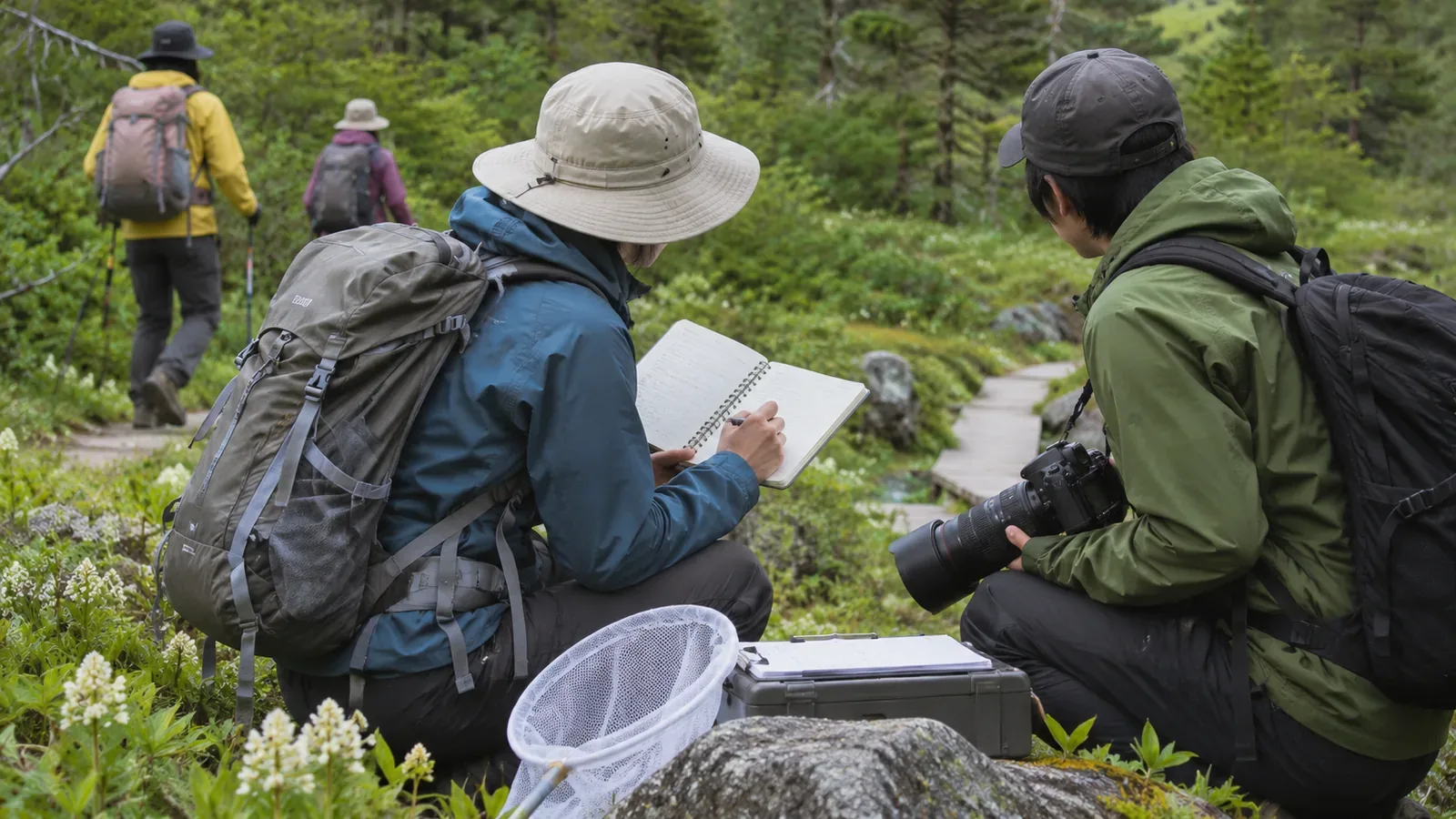
When planning research or filming in a nature park, record the zone and what you will do on site, such as collecting samples or setting up equipment. Check each activity even if you use the same paths as hikers.
List what you will do on site
Write down each task, such as walking on a trail, taking photographs, collecting plants, setting up equipment or gathering a group. Add where, when, who and how much space each task will take, so the manager can understand the plan.
The Ministry of the Environment lists activities that need permission or notification by national park zone. Those requiring permits in Special Protection Zones include plant collecting and campfires. Explain both the research or filming purpose and what you will actually do on site.
If you plan to leave equipment in place for a long time or go off-trail, look up the relevant guidance and check what procedures these actions require.
Check the zone and the site manager
Use the official zoning map to locate the trailhead, work sites and exit in relation to Special Protection Zones and other areas. If scale and legend leave a boundary unclear, identify the site by name or map landmarks when you ask the responsible office.
Check the landowner’s or facility manager’s conditions and procedures under other laws. The ministry says separate procedures may apply under laws on wildlife protection or cultural property, among others.
Tokyo’s Minamitama visitor guide asks groups to stay on trails and avoid taking over shared facilities. Place equipment so paths stay clear and vegetation is left undisturbed. If working near a mountain hut, ask its manager about using the grounds.
Check the conditions for your filming method
The Kanto Regional Environment Office says that drone flight, takeoff and landing in a national park in themselves need no permit or notification under the Natural Parks Act. Landowners or managers may prohibit flights. Check aviation law and whether related work, such as installing structures, requires a separate procedure.
The office asks operators to avoid flying in wildlife habitats and crowded places and to respect privacy near accommodation. Mark the proposed flight route and takeoff and landing points, then identify the site manager and the offices responsible for the relevant laws.
Ground photography also depends on equipment, group size and time on site. At Kusasenri, Aso City says personal photography with one handheld camera generally needs no notification. Television or commercial shoots require advance notification or coordination. Reflectors, light stands and camera rails are prohibited. Check the conditions for your location and method.
Prepare a specific plan and ask early
Include a map location, dates, group size, purpose, activities, equipment, and any planned installation or sample collection. If you may change the site or method, describe the possible changes.
The ministry recommends consulting its local office or the relevant prefectural department in advance to confirm where to file. Check paperwork and processing time, and leave room to adjust after receiving a reply.
Record the response with the places, dates, activities and conditions it covers, and share it with participants. Recheck any change outside those conditions and plan how you will remove equipment afterward.
Check conditions for changes and removal
For several research sites, list each location and activity. As zones or managers may vary, also share routes between sites and what has or has not been confirmed.
For sample collection, explain what you intend to collect, how much, by what method and how you will handle samples afterward. Consider at the planning stage whether observation alone would meet the goal.
Tell the group when you will change or cancel filming, such as if a spot gets crowded or wildlife appears nearby. Pick a site and method that keep paths clear and avoid affecting plants, animals and other people.
Revise the plan if consultation shows that part of the activity is unavailable. If you move it, check the new zone and manager and look up the requirements again.
List the research or filming tasks for each site, then check Natural Parks Act procedures, site conditions and other laws. Ask the managers and authorities early, and share the confirmed conditions with all participants.
References and sources
- Japan Ministry of the Environment: Activities requiring permits or notices in national parks and the relevant forms
- Japan Ministry of the Environment: National park notifications and permit applications
- Kanto Regional Environment Office: Using drones in national parks
- Tokyo Metropolitan Government: Rules for visiting natural parks in Minamitama
- Aso City: Photography and filming rules around the Nakadake crater and Kusasenri