
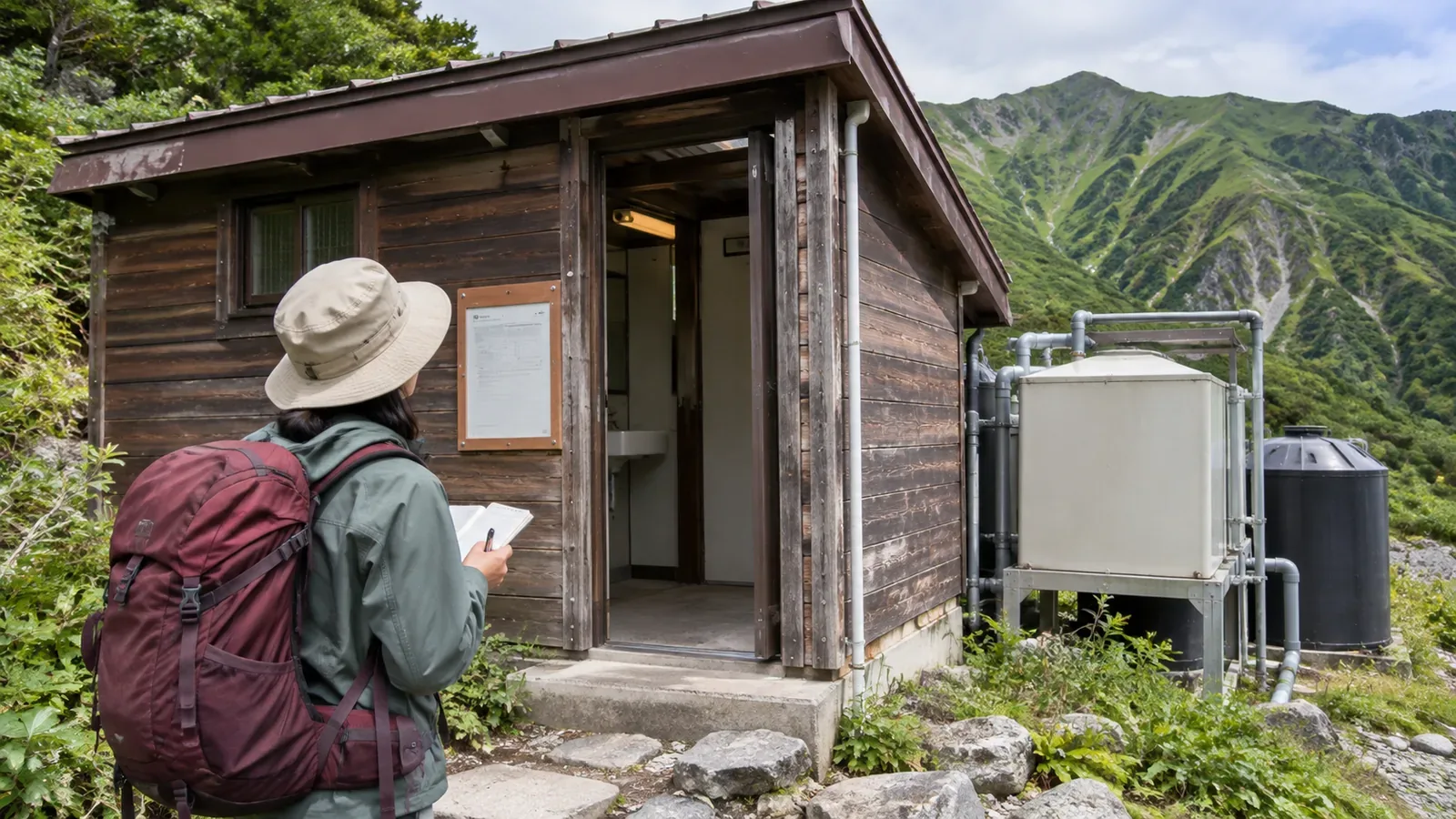
Two mountain toilets may both flush, yet what happens beyond the bowl depends on the facility. Systems include incineration, biological treatment, recirculating flush water and pump-out tanks. The rules for paper and use also vary. Past examples from Mount Fuji and Environment Ministry guidance show how the systems work and what to check before you leave.
What a flush does and does not tell you
The Environment Ministry’s February 2012 guide covers systems designed in principle to avoid discharging treated water. It describes systems that clean and reuse flush water as well as waterless systems. That is the scope of the guide. Other mountain toilets may work differently. Water flowing through a bowl does not tell you whether it goes to a sewer or to another kind of treatment system.
A ministry report on mountain hut toilets describes earlier practices in which untreated human waste seeped into the ground or was discharged at the end of the season. These practices caused odors, polluted water sources and damaged the landscape. Look beyond the bowl when checking a facility. Find out where the waste and the products of treatment go.
Water supply also affects the design. A 2014 ministry notice explained that water was so hard to obtain on Mount Fuji that even cleaning the toilets had to be done with limited water. The official Mount Fuji FAQ also notes how scarce water is at the huts. Follow the posted operating instructions and leave water or cleaning products out of the system unless the facility calls for them.
Common mountain toilet systems
In 2022, an Environment Ministry ranger described systems used at or above the fifth stations on Mount Fuji. Incinerating toilets used heat, including electric incineration, to reduce waste to ash. Biological toilets used microorganisms to break it down. The ministry’s 2014 notice listed biological treatment at the summit and at the Yoshida descent trail’s seventh station. At the Fujinomiya fifth station, the system treated and recirculated flush water. These were examples of different facilities on the same mountain.
The ministry’s guide explains that a holding tank stores waste for transport by vacuum truck or other means to a treatment plant. In some places, helicopters take replaceable tanks down to the foot of the mountain. With a portable toilet kit, you carry the used bag out and dispose of it at a designated collection point or according to local waste rules. To understand the system, ask whether waste is treated on site, removed from the facility or carried out by the user. On-site treatment can also produce sludge or spent material that staff have to take out.
How the system affects use and maintenance
The ranger’s 2022 account describes the public toilet at the seventh station on the Yoshida descent. The bowl separates urine from solid waste. Urine goes to a tank and solids go to a treatment chamber filled with buckwheat hulls. Heat and a screw that stirs in air help aerobic microbes break down the waste. According to the ranger, decomposition and evaporation reduce the amount of waste to 10% or less of the original. The signs at the time asked people to put used toilet paper in a box beside the bowl. Staff collected and incinerated it. Standing to urinate could send urine into the treatment chamber and make it too wet for effective breakdown. Visitors were asked to use the urinal or sit down in the stall. Those instructions described that particular seventh-station toilet. Check the signs for the one you use.
Foreign objects can damage equipment. The ranger notes that getting and transporting replacement parts is difficult if a machine breaks. The ministry’s guide also lists rubbish in tanks and incorrect use as causes of problems. It stresses clear instructions about keeping rubbish out and separating paper where required. The official Mount Fuji FAQ asks people to follow the instructions at each facility because systems differ.
Make a note of the facilities before setting out
For each toilet you might use, note five things: where it is, the treatment system, what to do with paper, when it opens and what you will do if it is unavailable. Use the official information from the park, local government, hut or other manager. For paper, useful categories are flush it, put it in the box, carry it out or other. If you find no instructions, mark the entry as unknown. Check the sign when you reach a facility marked unknown and bring a portable toilet kit as a backup.
The official Mount Fuji site says toilets are spaced differently on different routes and on the ascent and descent. It recommends checking ahead and planning when to use them. It also asks you to bring a portable toilet kit in case you need it and to carry the used bag out. Use information for the year you visit to check opening dates, where you can use the kit and how to dispose of it.
Read the instructions before use. If they differ from your notes or you cannot read or understand them, ask the manager or hut staff. Stop on stable footing and leave the passage clear if you need to take notes or use your phone. Notes and photos can wait, but check where the paper goes and how to use the toilet before you use it.
Check the manager’s information and the signs at the facility
Mountain toilets include incinerating, biological, recirculating and pump-out systems, and portable kits are another option. The look of the bowl will not tell you the treatment system, where paper goes or what might damage the equipment. Note the system and paper rules before leaving, and bring a portable kit in case you cannot use a facility. The Mount Fuji equipment described here comes from 2014 and 2022 records. Check current information and the posted instructions before use.
References and sources
- Japan Ministry of the Environment, Kanto Regional Office: 2014 Opening Periods for Public Toilets on Mount Fuji
- Mount Fuji Ranger Diary No. 110: The Toilet on the Yoshida Descent Trail
- Japan Ministry of the Environment: Future Provision and Maintenance of Mountain Hut Toilets, Chapter 2
- Japan Ministry of the Environment: Guide to Toilet Waste Treatment in Natural Areas
- Official Mount Fuji Climbing Site: Frequently Asked Questions
- Official Mount Fuji Climbing Site: What to Know Before Climbing Mount Fuji