
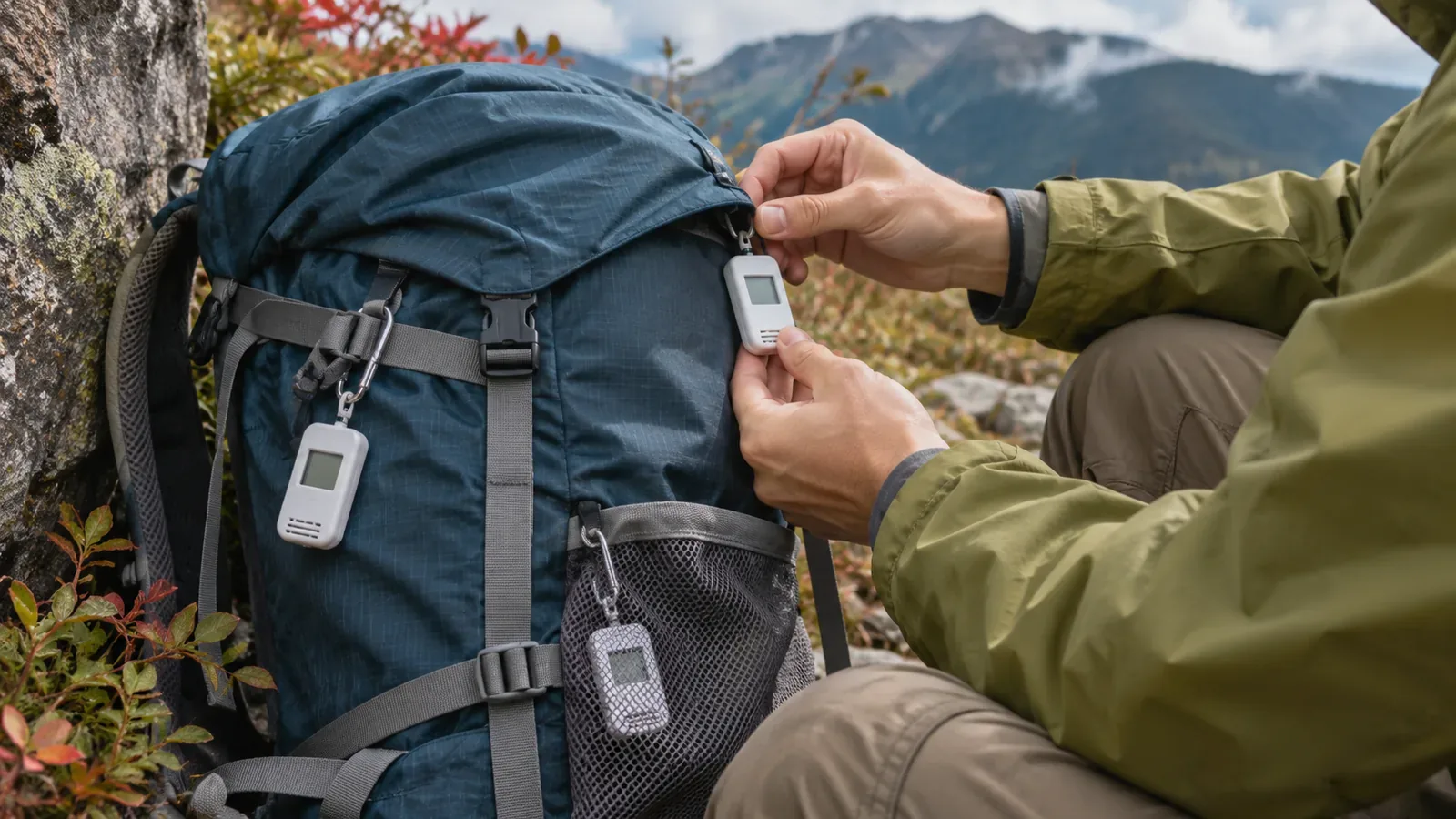
Where you mount a pack thermometer affects its exposure to sunlight, body heat and airflow. If you want to use the display as a guide to air temperature, check the manual for how to position it and note the conditions when you took the reading. Comparing positions can help you understand the device, but it does not establish the true air temperature or a correction factor.
Three conditions official measurements control
The Japan Meteorological Agency’s standard is to measure air temperature with an electric thermometer 1.5 m above grass at an open, well-ventilated site. It uses a platinum resistance thermometer, which measures platinum’s electrical resistance and converts it to temperature. The sensor sits in a stainless-steel shield that keeps off precipitation and direct sun. An electric fan at the top continuously draws in outside air from below.
Official observations limit interference from sunlight, ventilate the sensor with outside air and standardize the site and height. The agency’s observation guide also explains how siting conditions and instrument checks affect data quality. For a thermometer on a pack, conditions change when you walk, stop or set the pack down. Its reading can differ from an official observation.
How conditions may vary around a backpack
Our editors infer the following from those three conditions. We found no measurements comparing locations on a pack, so treat these as possibilities to check with your instrument.
Near your back or in contact with clothing or hands, a thermometer may pick up heat from your body or nearby objects. The top lid may catch direct sun, and even a shaded side can become exposed when the pack turns. At the side, check whether the instrument can catch on branches or rock. Keep it close to the pack and move it only somewhere safe.
Airflow lets outside air reach the sensor in the way the device requires. Putting it in a sealed bag or pocket to keep the sun off can make its conditions differ from the open air. Note if you move it between walking and resting. Check its manual and actual conditions each time you pick a position.
Compare positions during a break
You can compare positions at home or somewhere safe before leaving. On the trail, do only what you need at a safe rest spot and avoid staying exposed to cold and wind to get a reading. Limits for direct sun, water resistance and operating temperature vary by model. Keep your comparison within the manufacturer’s instructions.
If you have two thermometers, first put them side by side under the same conditions and record any difference. That alone cannot tell you which is right. When you move one, note the time, sunlight and wind too. If you use one thermometer and move it from place to place, the air temperature can change in the meantime. Keep that in mind before attributing a difference to position alone.
Keep a one-line record: position, time, sun, wind, whether the pack was on, time since placement and reading. Use locations you can reproduce, such as “back panel” or “beside the top lid.” Note whether the sensor was wet or touched fabric or metal. If you take a photo, stay where the footing is safe.
If you repeatedly see a higher reading, do not assume that subtracting the difference will always give the right temperature. Sun, airflow, nearby heat and sensor response can change. Use the comparison to spot positions that are prone to interference and to improve your setup. For accuracy checks or adjustment, follow the manufacturer’s instructions and compare against a reliable reference.
Understand sensor response time before interpreting readings
Instrument maker BARANI DESIGN models a sensor’s delayed response to changes in air temperature. The time constant is the time to reach about 63.2% of a sudden change. In the model, five times the time constant takes the reading to about 99.3%. This does not set the wait for your thermometer. Check what percentage and conditions your manufacturer uses in its response-time specification.
Portable instruments also have specific instructions. CASIO’s Operation Guide 5463 lists body heat, direct sun and moisture as influences. It says to take the watch off, place it somewhere ventilated out of direct sun and wipe moisture from the case. The case takes about 20–30 minutes to reach the surrounding temperature. That timing applies to this watch. Follow your own instrument’s instructions and wait time.
A display that has stopped changing does not prove the thermometer is reading the air temperature correctly. Rounding, update intervals or steady heating from the sun can still affect it. Note when you began measuring and when you read it, and mark any value that was still changing. Record wetness in rain or fog. Ways of keeping the device dry can change its contact with the air.
In short: get to know your thermometer before choosing a position
Choose a position based on sunlight, distance from your body, airflow and how likely it is to snag. Record the time and conditions with the reading and avoid using a difference as a fixed correction. Check the instructions for settling time and keep safety ahead of waiting for the display. Also consider the forecast, changes around you and how people are doing.